 Bug FAQ
Posturing Arta Moth
Arta statalis · Order: Lepidoptera · Family: Pyralidae
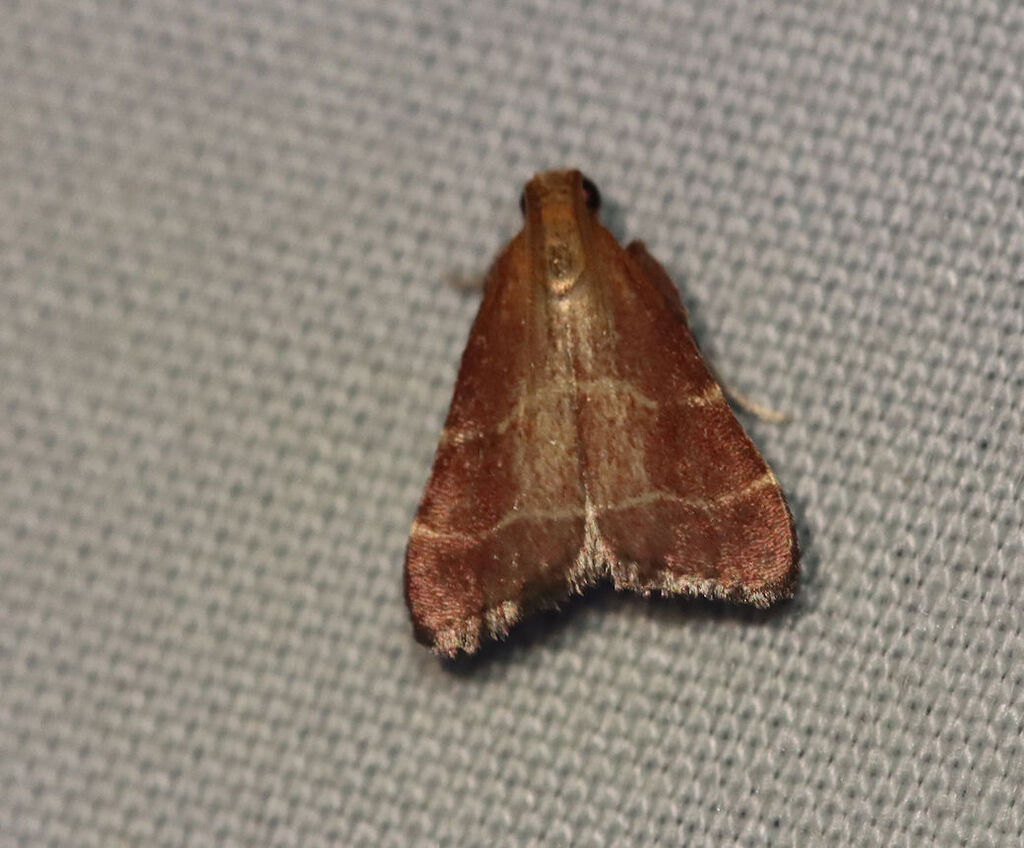
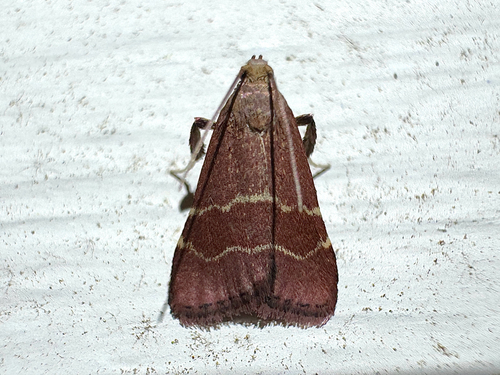
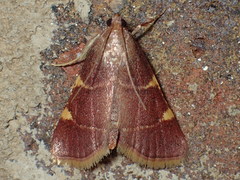
The posturing arta moth has a wingspan of roughly 15 mm. Its forewings show brown shades divided by thin pale lines, and the yellow-brown antennae rest flat behind the head over the wings when it is at rest. It lives in woodlands, residential areas and along lake shorelines across many eastern and central U.S. states.
Source: Wikipedia
How to recognize it
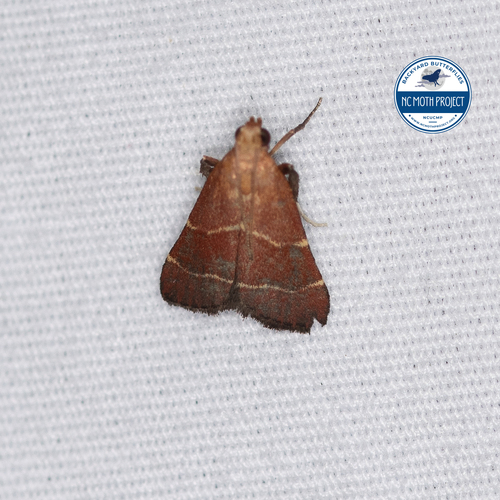
The forewings are brown with thin pale lines separating the shades.
Source: Wikipedia
Size
The wingspan is about 15 mm.
Source: Wikipedia
Where it lives
It prefers woodlands, residential neighborhoods, and lake shorelines.
Source: Wikipedia
What it eats
The larval host plants are unknown and adult moths may not feed at all.
Source: Wikipedia
Where it is found in the US
Recorded in 37 of 51 states and DC. Most records: Massachusetts, Alabama, North Carolina, Virginia, Maryland, Pennsylvania, New Jersey, Georgia.
Darker = more records. Counts are museum and citizen-science records, not population size.
Source: GBIF
Status: native in North America; native in Canada; native in United States. Source: iNaturalist
Months it is reported in the US
Source: GBIF
More photos
Questions people ask
What do the wings and antennae look like?
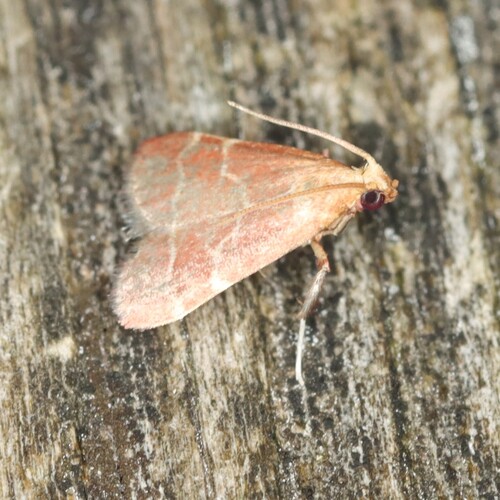
The forewings are brown with thin pale lines, and the yellow-brown antennae lie flat behind the head over the wings when the moth rests.
Source: Wikipedia
Where might I find this moth?
It lives in woodlands, residential areas and along lake shorelines in many eastern and central U.S. states.
Source: Wikipedia
What does the adult moth eat?
Adults may not eat at all, and the larval host plants are unknown.
Source: Wikipedia
Same family (Pyralidae)
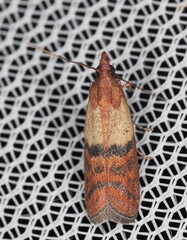 Indian-Meal MothPlodia interpunctellaCan damage your home
 Greater Wax MothGalleria mellonella
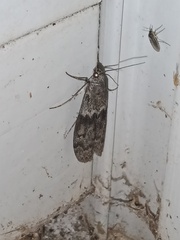 Mediterranean Flour MothEphestia kuehniellaCan damage your home
 Meal mothPyralis farinalisDamages trees, gardens or crops
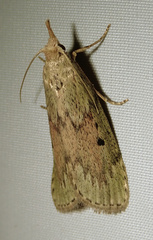 Bee MothAphomia sociellaNuisance, not dangerous
 Yellow-fringed Dolichomia MothHypsopygia olinalis
Sources
- Wikipedia: https://en.wikipedia.org/wiki/Arta_statalis
Look it up elsewhere: GBIF · iNaturalist · BugGuide · Wikipedia
Text written 2026-10-23 from the sources above and checked sentence by sentence against them. Data fetched 2026-10-23.