 Bug FAQ
Postica Lady Beetle
Hyperaspis postica · Order: Coleoptera · Family: Coccinellidae
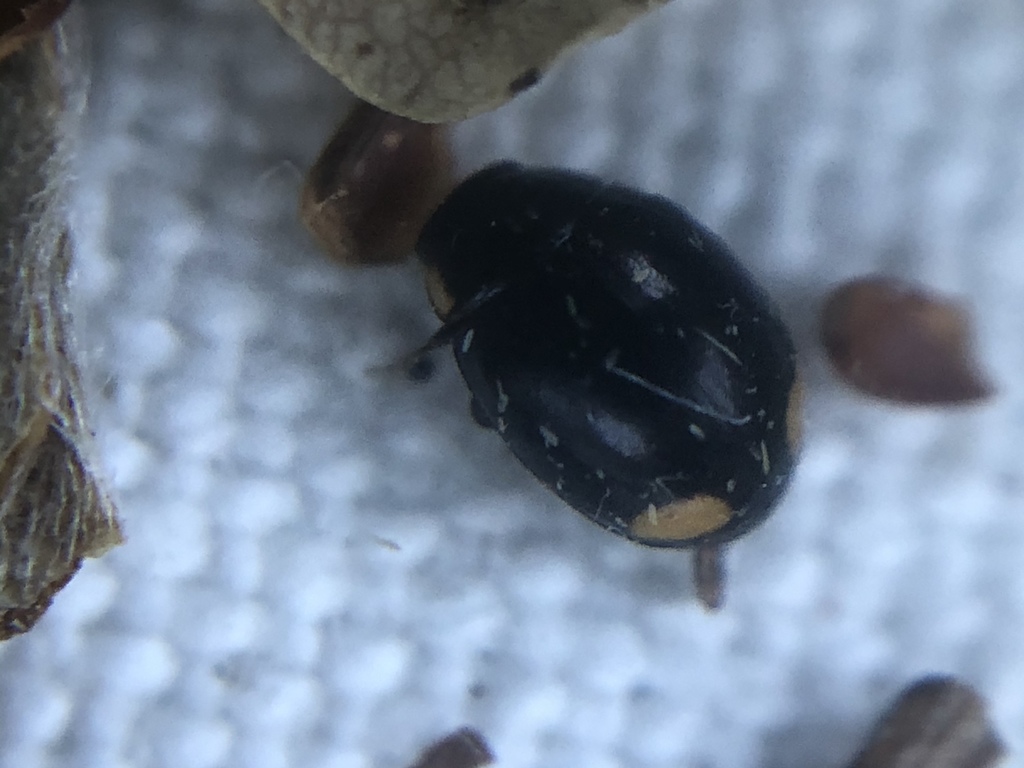
Adults are tiny, measuring about 2.3 to 3.1 mm long. The wing covers have a single spot near the tip that varies in size and shape. It occurs across western North America, from British Columbia down to southern California and also in Alberta, Arizona, and Colorado.
Source: Wikipedia
How to recognize it
The elytron bears one apical spot that can differ in size and shape.
Source: Wikipedia
Size
Adults reach a length of roughly 2.30 to 3.10 mm.
Source: Wikipedia
Where it comes from
It is found in North America, recorded from British Columbia to southern California. It is also present in Alberta, Arizona, and Colorado.
Source: Wikipedia
Where it is found in the US
Recorded in 9 of 51 states and DC. Most records: California, Idaho, Nevada, Oregon, Texas, Washington, Montana, Arizona.
Darker = more records. Counts are museum and citizen-science records, not population size.
Source: GBIF
Status: native in North America; native in Canada. Source: iNaturalist
Months it is reported in the US
Source: GBIF
Questions people ask
What distinctive marking does Hyperaspis postica have?
Its elytra have a single spot near the tip that varies in size and shape.
Source: Wikipedia
Where is Hyperaspis postica found?
It lives across western North America, from British Columbia to southern California, and also in Alberta, Arizona, and Colorado.
Source: Wikipedia
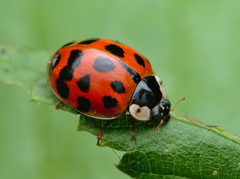
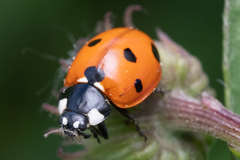
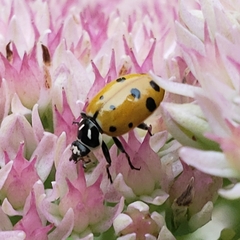
Same family (Coccinellidae)

Sources
- Wikipedia: https://en.wikipedia.org/wiki/Hyperaspis_postica
Look it up elsewhere: GBIF · iNaturalist · BugGuide · ITIS · Wikipedia
Text written 2026-10-28 from the sources above and checked sentence by sentence against them. Data fetched 2026-10-28.