 Bug FAQ
Poplar Ladybird Beetle
Oenopia conglobata · Order: Coleoptera · Family: Coccinellidae
Also called: Ladybird beetle, Poplar Ladybird
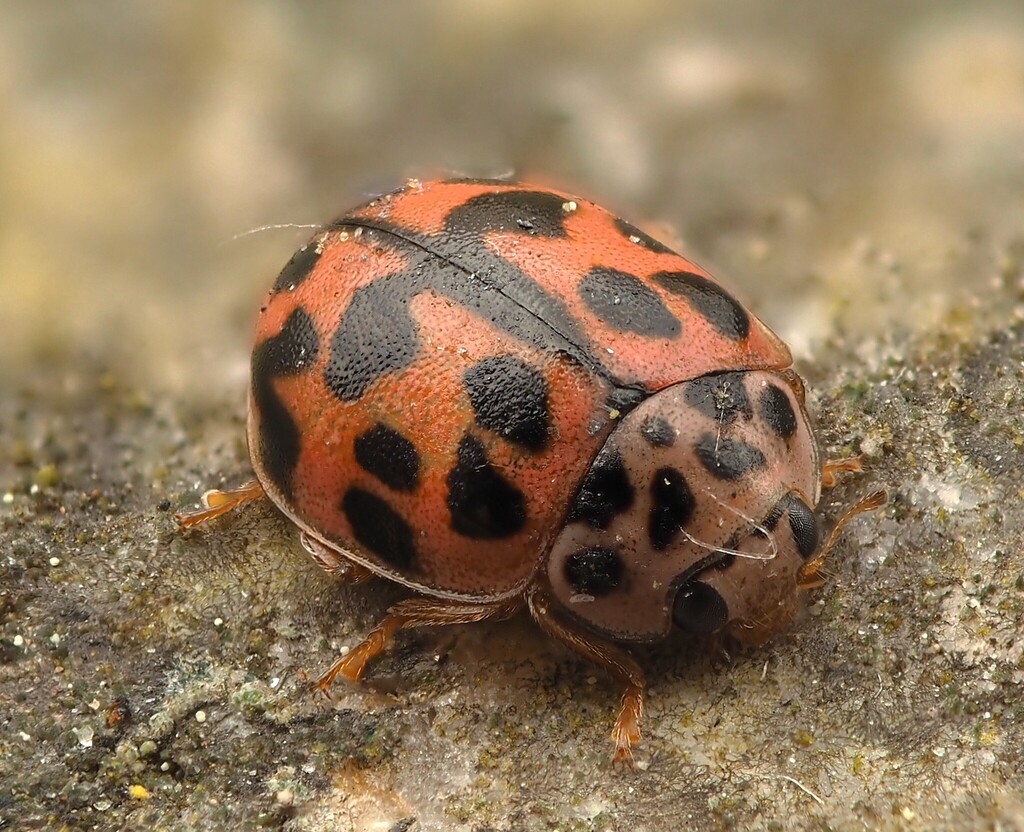
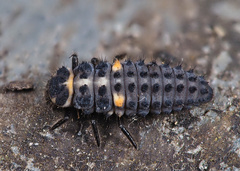
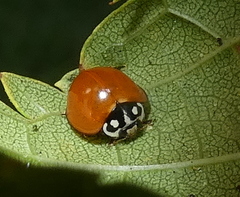
Adult poplar ladybird beetles are 3.5 to 5 mm long, oval and slightly curved. Their wing covers are light pink with a black edge streak and eight black spots, while the pronotum is light beige with seven black spots. They live in mixed low-altitude forests on trees such as poplar, pine, larch and bird cherry, and they overwinter under bark or on cemetery gravestones.
Source: Wikipedia
How to recognize it
Pronotum is light beige with seven symmetrically arranged black spots.
Source: Wikipedia
Size
Adults measure 3.5 to 5 mm in length.
Source: Wikipedia
Where it lives
Found in mixed forests at lower altitudes, especially on poplar, pine, larch and Prunus species like bird cherry. Overwinter on cemetery gravestones and under bark of poplars, elms, plane, oak and horse chestnut.
Source: Wikipedia
What it eats
Both adults and larvae feed on aphids.
Source: Wikipedia
Life cycle
Overwintering occurs on gravestones and under tree bark.
Source: Wikipedia
Where it comes from
Native to continental Europe, Asia and Africa.
Source: Wikipedia
More photos


Questions people ask
Where are poplar ladybird beetles found?
They live in mixed low-altitude forests on trees like poplar, pine, larch and bird cherry, and they overwinter under bark or on cemetery gravestones.
Source: Wikipedia
Same family (Coccinellidae)

Sources
- Wikipedia: https://en.wikipedia.org/wiki/Oenopia_conglobata
Look it up elsewhere: GBIF · iNaturalist · BugGuide · Wikipedia
Text written 2026-10-22 from the sources above and checked sentence by sentence against them. Data fetched 2026-10-22.