 Bug FAQ
Poplar bud borer moth
Meroptera cviatella · Order: Lepidoptera · Family: Pyralidae
Source: Wikipedia
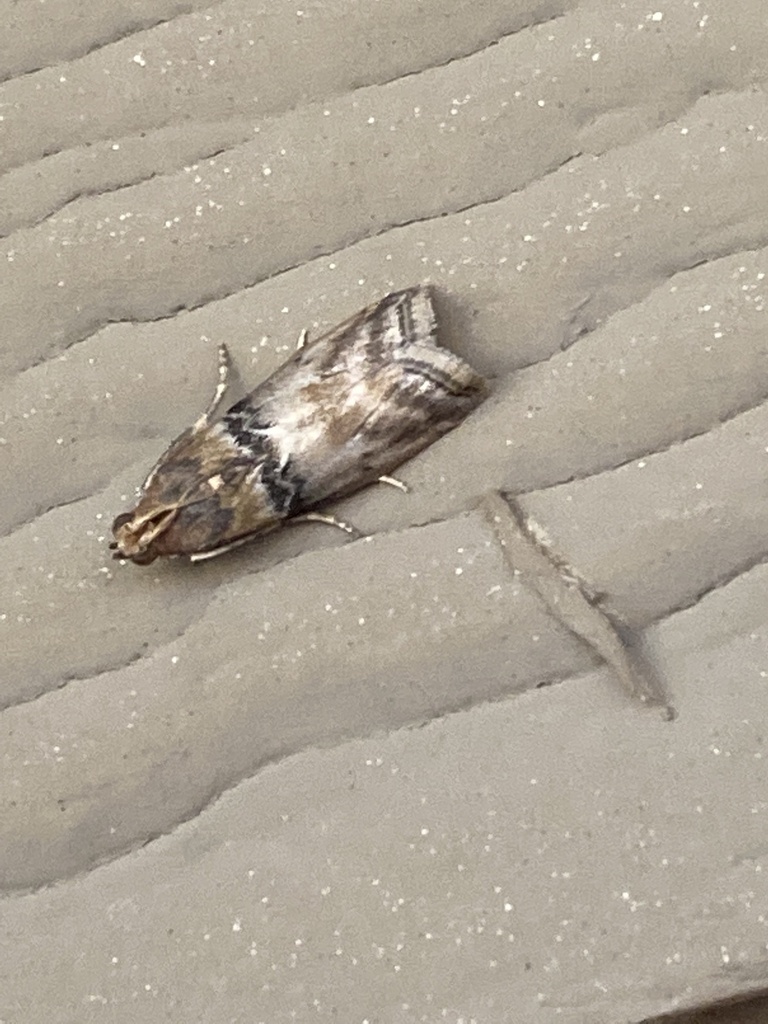
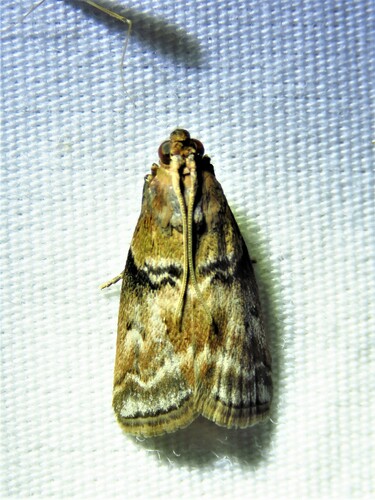
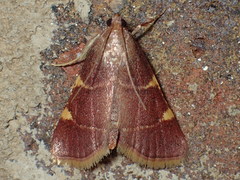
Adults have a wingspan of about 22 to 25 mm and show bright reddish-brown on the basal wing area with purplish-gray in the center. It is found in North America, including several U.S. states such as Illinois, Colorado, Iowa, Oklahoma and the Canadian province of Quebec. The caterpillars feed on the buds of poplar (Populus) species, which can harm those trees.
Source: Wikipedia
How to recognize it
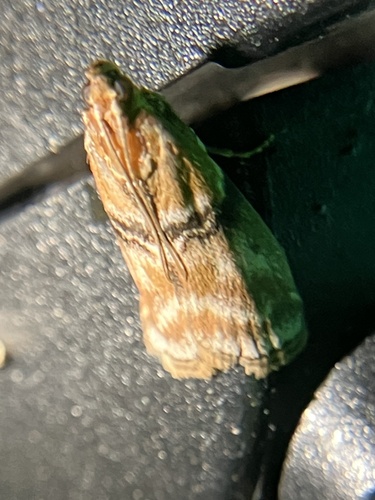
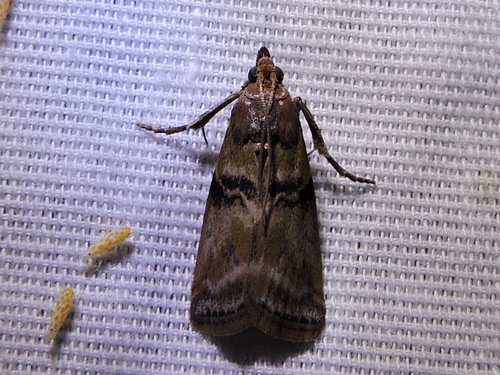
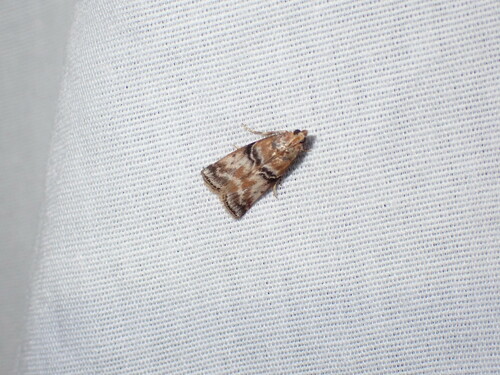
The wing base and edges are broadly bright reddish-brown, while the central area beyond the base is purplish-gray.
Source: Wikipedia
Size
The adult’s wingspan ranges from 22 to 25 mm.
Source: Wikipedia
What it eats
Larvae feed on the buds of Populus (poplar) trees.
Source: Wikipedia
Where it comes from
It occurs in North America, recorded from Illinois, Colorado, Iowa, Oklahoma and Quebec.
Source: Wikipedia
Where it is found in the US
Recorded in 24 of 51 states and DC. Most records: Texas, Oklahoma, Mississippi, Illinois, Indiana, Colorado, New York, Nebraska.
Darker = more records. Counts are museum and citizen-science records, not population size.
Source: GBIF
Status: native in North America; native in Canada; native in United States. Source: iNaturalist
Months it is reported in the US
Source: GBIF
More photos
Questions people ask
What trees do the larvae feed on?
The caterpillars eat the buds of poplar trees (Populus species).
Source: Wikipedia
Where is this moth found?
It is known from several U.S. states and Quebec in Canada.
Source: Wikipedia
Same family (Pyralidae)
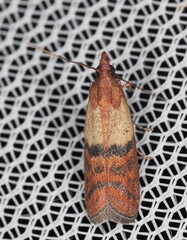 Indian-Meal MothPlodia interpunctellaCan damage your home
 Greater Wax MothGalleria mellonella
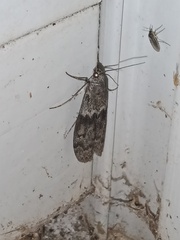 Mediterranean Flour MothEphestia kuehniellaCan damage your home
 Meal mothPyralis farinalisDamages trees, gardens or crops
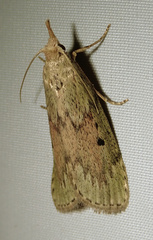 Bee MothAphomia sociellaNuisance, not dangerous
 Yellow-fringed Dolichomia MothHypsopygia olinalis
Sources
- Wikipedia: https://en.wikipedia.org/wiki/Meroptera_cviatella
Look it up elsewhere: GBIF · iNaturalist · BugGuide · Wikipedia
Text written 2026-10-27 from the sources above and checked sentence by sentence against them. Data fetched 2026-10-27.