 Bug FAQ
Pittosporum shield bug
Monteithiella humeralis · Order: Hemiptera · Family: Pentatomidae
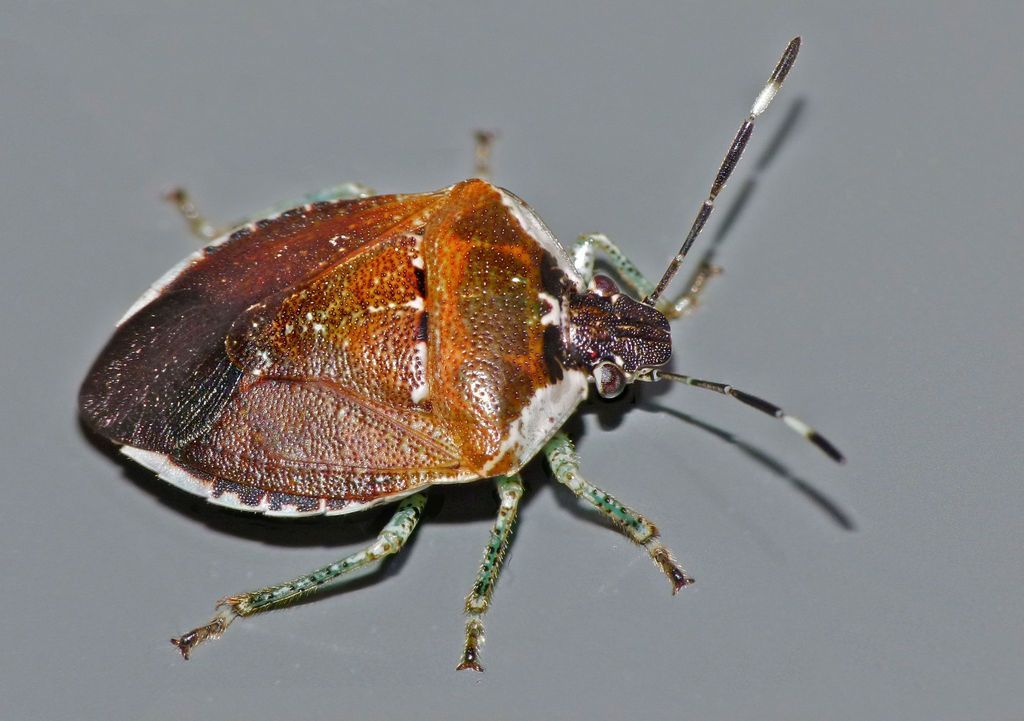
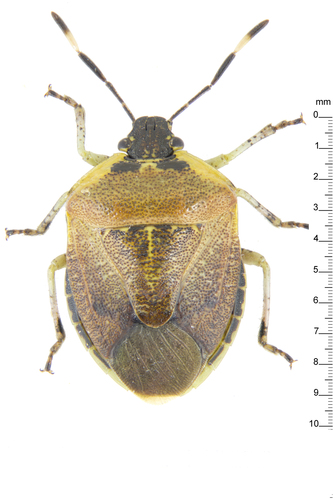
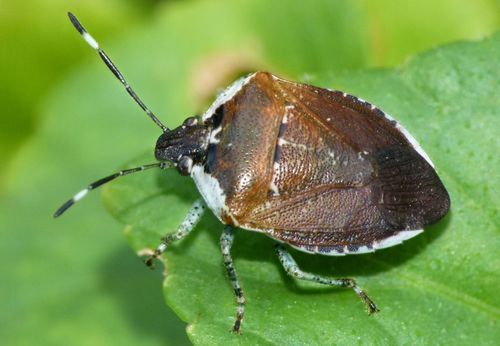
Adult pittosporum shield bugs are about 9 mm long, brown with pale green legs. They feed mainly on Pittosporum leaves and occasionally on Coprosma. In New Zealand they are common but not considered a pest.
Source: Wikipedia
How to recognize it
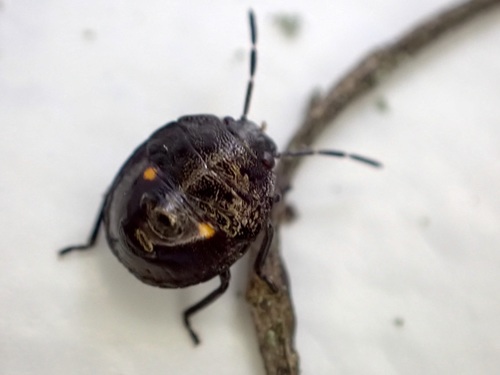
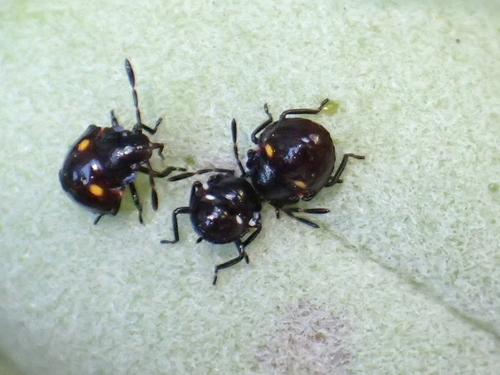
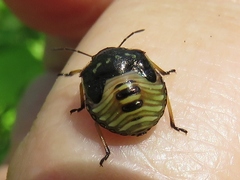
First-instar nymphs are tiny, black, round, with white spots on the abdomen; later nymphs have orange spots instead.
Source: Wikipedia
Size
Adults measure roughly 9 mm in length.
Source: Wikipedia
Is it a pest in the house?
They are widespread in New Zealand but are not regarded as a pest.
Source: Wikipedia
Where it lives
They are found on Pittosporum and, to a lesser extent, on Coprosma in both Australia and New Zealand.
Source: Wikipedia
What it eats
Their primary food source is the foliage of Pittosporum plants.
Source: Wikipedia
Life cycle
Nymphs pass through five instars and reach adulthood roughly 41 days after the eggs are laid.
Source: Wikipedia
When you see it
Adults are most common in November and March, while eggs and nymphs appear from November to April.
Source: Wikipedia
Where it comes from
The species is native to Australia and has been introduced to New Zealand.
Source: Wikipedia
More photos
Questions people ask
What do pittosporum shield bug nymphs look like?
Young nymphs are black and round with white spots, and later stages have orange spots on their abdomen.
Source: Wikipedia
When are adult pittosporum shield bugs most abundant?
Adults peak in numbers during November and March.
Source: Wikipedia
Do these bugs damage gardens or crops?
They feed on Pittosporum leaves but are not considered a pest in New Zealand.
Source: Wikipedia
Same family (Pentatomidae)
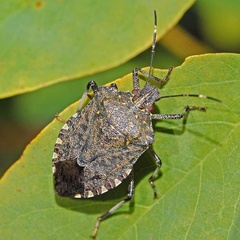 Brown Marmorated Stink BugHalyomorpha halysDamages trees, gardens or crops
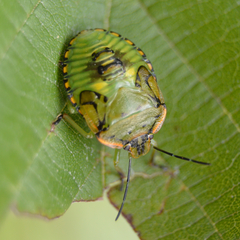 Green Stink BugChinavia hilarisDamages trees, gardens or crops
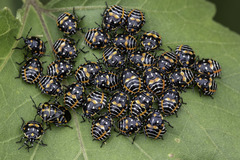 Harlequin BugMurgantia histrionicaDamages trees, gardens or crops
 Brown Stink BugEuschistus servusDamages trees, gardens or crops
 Green Shield BugPalomena prasina
 European Striped Shield BugGraphosoma italicum
Sources
- Wikipedia: https://en.wikipedia.org/wiki/Monteithiella_humeralis
Look it up elsewhere: GBIF · iNaturalist · BugGuide · Wikipedia
Text written 2026-10-23 from the sources above and checked sentence by sentence against them. Data fetched 2026-10-22.