 Bug FAQ
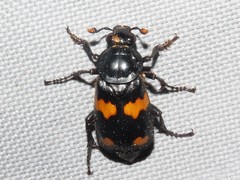
Pictured Rove Beetle
Thinopinus pictus · Order: Coleoptera · Family: Staphylinidae
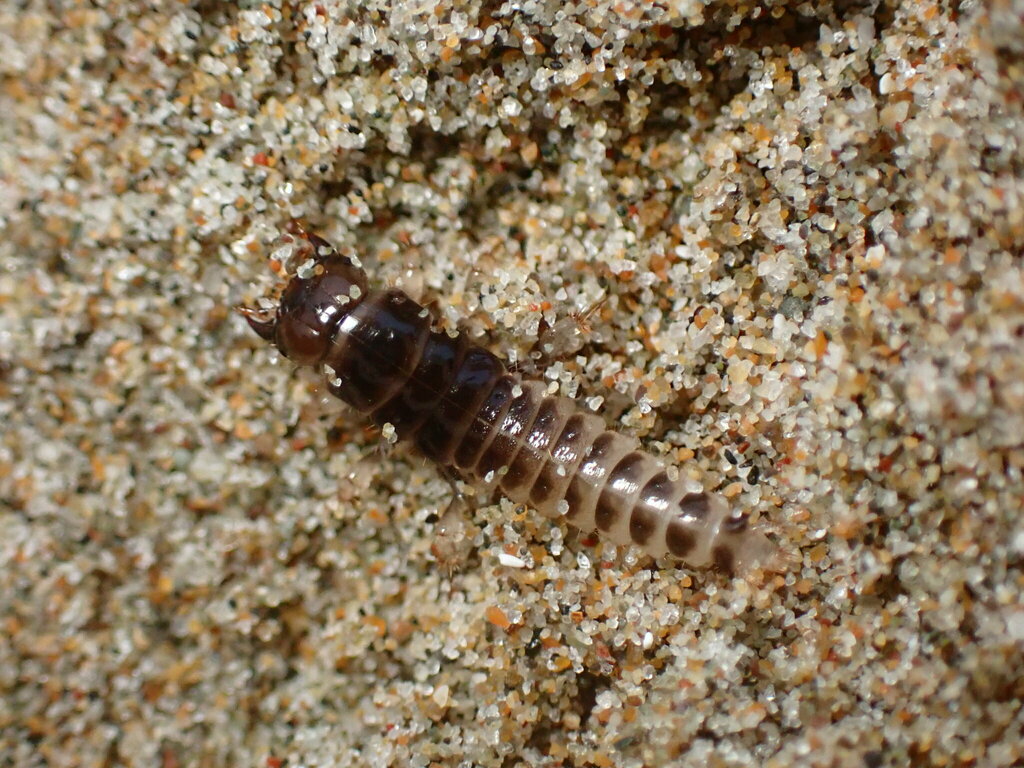
Males are about 17 mm long and females about 18 mm. They live on the wet, soft sand of the West Coast intertidal zone from southern Alaska to Baja California, hiding in temporary burrows by day and emerging at night to hunt. Their diet consists mainly of beach hoppers, but they also eat beach flies, isopods, and other beetles of their own species.
Source: Wikipedia
How to recognize it
The beetle has shortened wing covers, leaving most of its abdomen exposed. Its colour varies with geography, matching lighter sand in the southern part of its range.
Source: Wikipedia
Size
Males average 17 mm (0.67 in) and females average 18 mm (0.71 in).
Source: Wikipedia
Where it lives
It lives in the sandy intertidal zone, preferring the wettest, softest sand. It is nocturnal, leaving its burrow at night to feed.
Source: Wikipedia
What it eats
It feeds on beach hoppers (Orchestoidea). It also eats beach flies, isopods, and other Thinopinus pictus individuals.
Source: Wikipedia
Life cycle
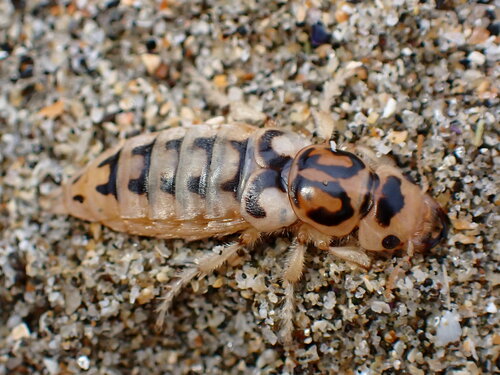
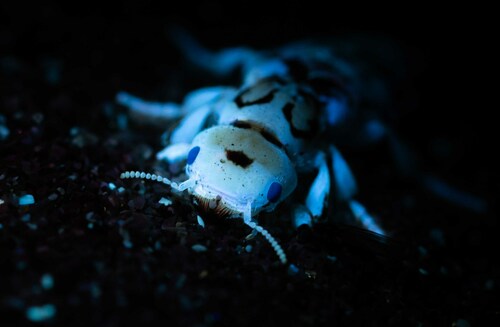
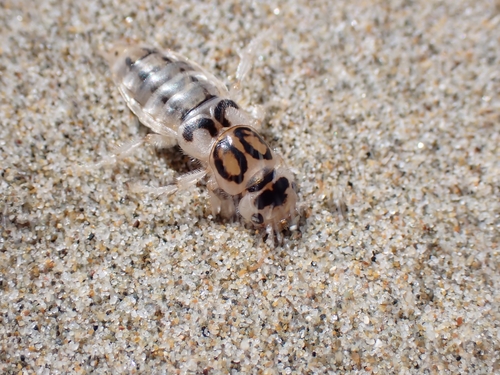
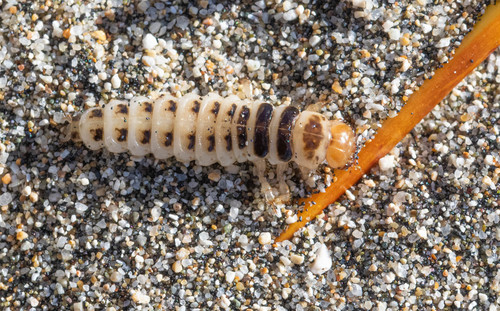
Breeding occurs from August to October. Eggs hatch in about 14 days under laboratory conditions. Larvae are whitish with black markings.
Source: Wikipedia
Lookalikes
Because of colour variation, it was once considered to be two subspecies.
Source: Wikipedia
Where it is found in the US
Recorded in 3 of 51 states and DC. Most records: California, Oregon, Washington.
Darker = more records. Counts are museum and citizen-science records, not population size.
Source: GBIF
Status: native in North America; native in Canada. Source: iNaturalist
Months it is reported in the US
Source: GBIF
More photos
Questions people ask
How can I tell this beetle apart from similar rove beetles?
It has shortened elytra that leave most of the abdomen exposed, and its colour matches the local sand, which can vary regionally.
Source: Wikipedia
When are these beetles active?
They are nocturnal, emerging at night from their sand burrows to feed.
Source: Wikipedia
What do they eat?
Their main prey are beach hoppers, but they also consume beach flies, isopods, and sometimes other members of their own species.
Source: Wikipedia
Where are they found?
They live on the wet, soft sand of the West Coast intertidal zone from southern Alaska to Baja California.
Source: Wikipedia
Same family (Staphylinidae)


Sources
- Wikipedia: https://en.wikipedia.org/wiki/Pictured_rove_beetle
Look it up elsewhere: GBIF · iNaturalist · BugGuide · ITIS · Wikipedia
Text written 2026-10-25 from the sources above and checked sentence by sentence against them. Data fetched 2026-10-25.