 Bug FAQ
Pennsylvania Grass Spider
Agelenopsis pennsylvanica · Order: Araneae · Family: Agelenidae
Source: Wikipedia
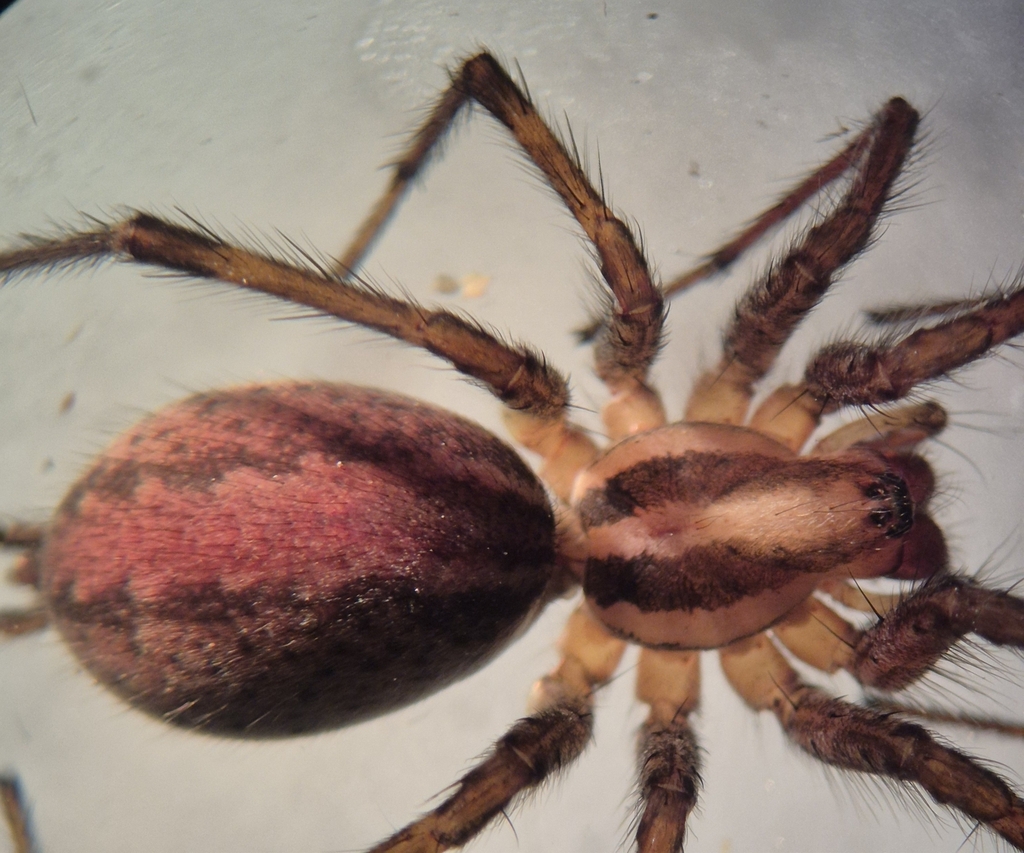
Females range from about 7 to 17 mm and males from about 7 to 12 mm in body length, showing great size variation. It lives in open grassy areas, especially where water is plentiful, and is found across many U.S. states. Adults catch insects on their funnel webs, feeding on bugs, beetles, bees, flies, and grasshoppers.
Source: Wikipedia
How to recognize it
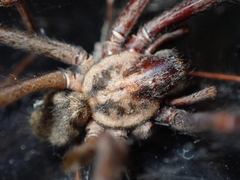
The carapace shows dark markings that may appear faded. The sternum is usually yellow-orange with a large dark V-shaped mark, turning all black in darker individuals.
Source: Wikipedia
Size
Female bodies measure between 9 and 14 mm, while males are 7 to 12 mm long. Overall body length varies widely, from about 6.7 to 17 mm, especially in females.
Source: Wikipedia
Does it bite or sting?
Bites cause itching, swelling, redness, and sometimes back pain. Symptoms can last from one day up to ten days.
Source: Wikipedia
Where it lives
It is typically found in open grassy habitats. Its distribution is linked to areas with high water availability.
Source: Wikipedia
What it eats
Adults feed on a variety of insects such as true bugs, beetles, bees, flies, and grasshoppers. They wait at the funnel entrance and quickly subdue prey that contacts their web.
Source: Wikipedia
Life cycle
Individuals show personality traits, with boldness and foraging aggression observable in juveniles.
Source: Wikipedia
Where it comes from
The species is widespread across the United States, occurring in many states including Pennsylvania.
Source: Wikipedia
Lookalikes
Its closest relative is Agelenopsis potteri.
Source: Wikipedia
Where it is found in the US
Recorded in 23 of 51 states and DC. Most records: Colorado, Ohio, Illinois, Nebraska, Indiana, Louisiana, Massachusetts, Missouri.
Darker = more records. Counts are museum and citizen-science records, not population size.
Source: GBIF
Status: native in North America; native in Canada; native in United States. Source: iNaturalist
Months it is reported in the US
Source: GBIF
More photos
Questions people ask
Do they bite?
Yes, their bite produces mild itching, swelling and redness, and can last up to ten days.
Source: Wikipedia
Where might I find a Pennsylvania grass spider?
They are common in open grassy areas, especially where water is abundant, across many U.S. states.
Source: Wikipedia
How big are they?
Females are usually 9 to 14 mm long and males 7 to 12 mm, but overall size can range from about 6.7 to 17 mm.
Source: Wikipedia
What do they eat?
Adults capture insects like bugs, beetles, bees, flies, and grasshoppers on their funnel webs.
Source: Wikipedia
Same family (Agelenidae)



Sources
- Wikipedia: https://en.wikipedia.org/wiki/Agelenopsis_pennsylvanica
Look it up elsewhere: GBIF · iNaturalist · BugGuide · ITIS · Wikipedia
Text written 2026-10-24 from the sources above and checked sentence by sentence against them. Data fetched 2026-10-24.