 Bug FAQ
Pelecystola nearctica
Pelecystola nearctica · Order: Lepidoptera · Family: Tineidae
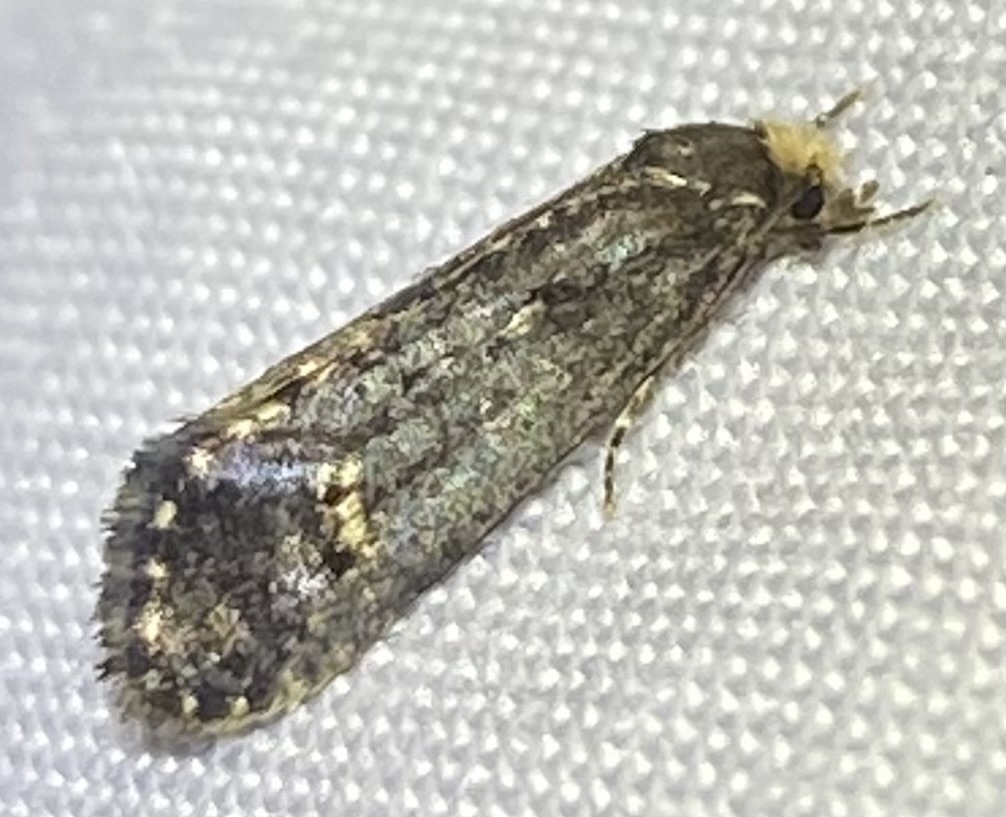
Pelecystola nearctica is a moth found in eastern North America, from Quebec down to northern Florida and west to Arkansas. Adult moths are active from April through September. Males have forewings 5.4 to 6.2 mm long, while females’ forewings measure 7 to 8.5 mm.
Source: Wikipedia
Size
Male forewings are 5.4 to 6.2 mm long. Female forewings are 7 to 8.5 mm long.
Source: Wikipedia
When you see it
Adults are on the wing from April to September.
Source: Wikipedia
Where it is found in the US
Recorded in 20 of 51 states and DC. Most records: Maryland, North Carolina, Mississippi, Pennsylvania, Ohio, Tennessee, Massachusetts, Arkansas.
Darker = more records. Counts are museum and citizen-science records, not population size.
Source: GBIF
Status: native in North America; native in Canada. Source: iNaturalist
Months it is reported in the US
Source: GBIF
More photos
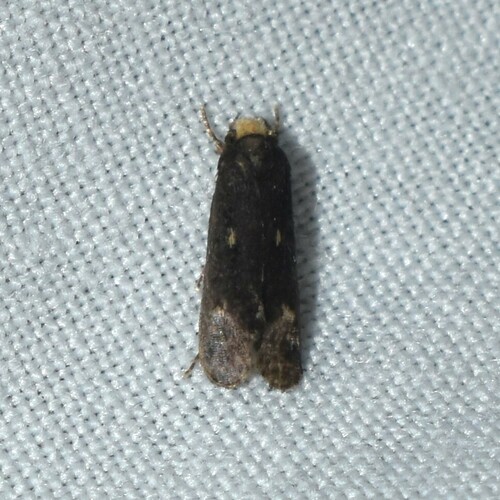
Questions people ask
When are Pelecystola nearctica adults active?
Adults can be seen flying between April and September.
Source: Wikipedia
How large are male and female Pelecystola nearctica?
Males have forewings about 5.4 to 6.2 mm long, while females’ forewings are about 7 to 8.5 mm.
Source: Wikipedia
Where is Pelecystola nearctica found?
It lives in eastern North America, from Quebec down to northern Florida and west to Arkansas.
Source: Wikipedia
Same family (Tineidae)
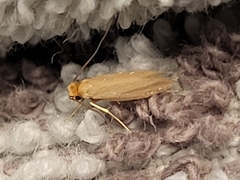 Webbing Clothes MothTineola bisselliellaCan damage your home
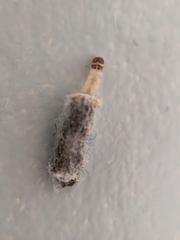 Case-bearing Clothes MothTinea pellionellaCan damage your home
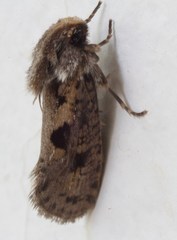 Clemens' Grass Tubeworm MothAcrolophus popeanella
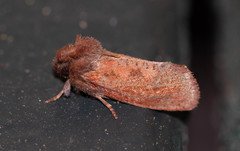 Eastern Grass Tubeworm MothAcrolophus plumifrontella
 Household CasebearerPhereoeca uterellaCan damage your home
 Arcane Grass Tubeworm MothAcrolophus arcanella
Sources
- Wikipedia: https://en.wikipedia.org/wiki/Pelecystola_nearctica
Look it up elsewhere: GBIF · iNaturalist · BugGuide · Wikipedia
Text written 2026-10-29 from the sources above and checked sentence by sentence against them. Data fetched 2026-10-29.