 Bug FAQ
Webbing Clothes Moth
Tineola bisselliella · Order: Lepidoptera · Family: Tineidae
Also called: Common Clothes Moth, clothing moth
Source: Wikipedia
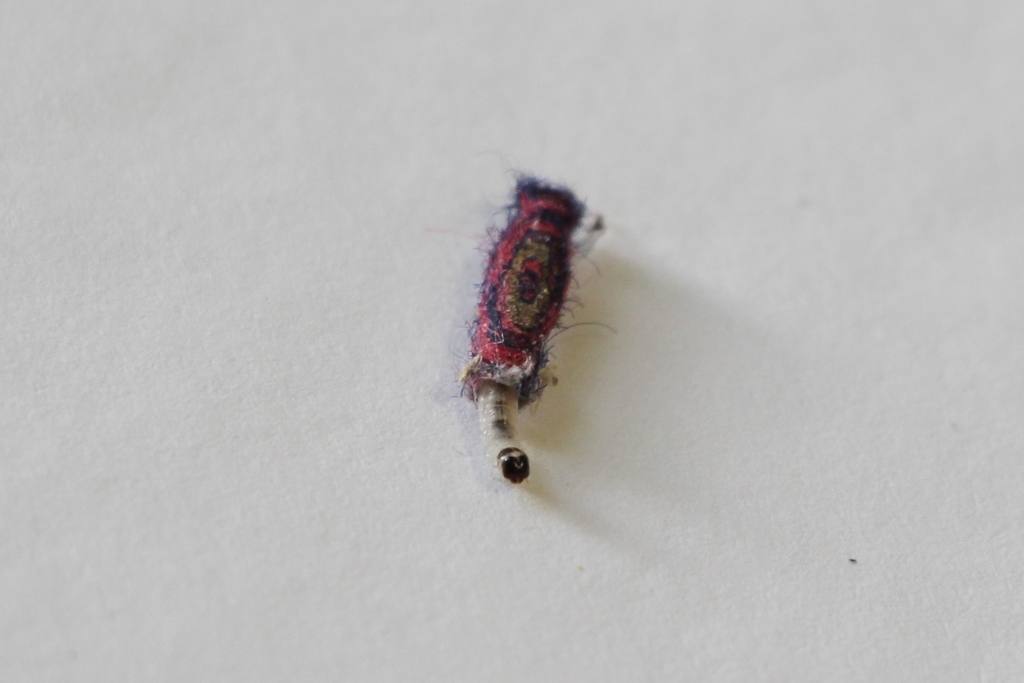
The larvae feed on wool, other natural fibres, and stored grains, causing damage to clothes and pantry items. They develop in low-light areas and can have two generations per year, with the whole life cycle taking 4 to 6 months.
Source: Wikipedia
Is it a pest in the house?
They are known as clothes moths because their larvae damage fabrics and stored food in homes.
Source: Wikipedia
Where it lives
Both adults and larvae prefer dark, low-light places.
Source: Wikipedia
What it eats
The caterpillars eat wool, other natural fibres, and stored foods like grains.
Source: Wikipedia
Life cycle
From egg to egg takes about four to six months, with two generations each year.
Source: Wikipedia
When you see it
In the wild they are seasonal, but indoor heating lets them develop year-round.
Source: Wikipedia
Where it is found in the US
Recorded in 31 of 51 states and DC. Most records: New York, California, Massachusetts, Minnesota, Idaho, Kansas, Georgia, District of Columbia.
Darker = more records. Counts are museum and citizen-science records, not population size.
Source: GBIF
Status: introduced in North America; introduced in United States. Source: iNaturalist
Months it is reported in the US
Source: GBIF
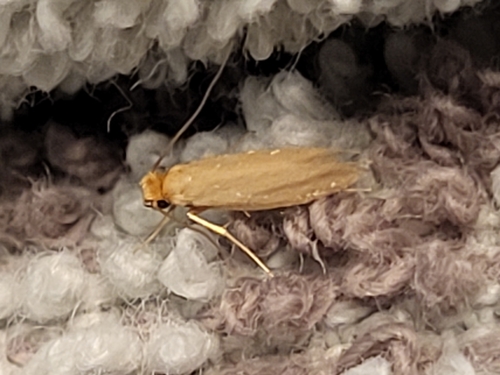
More photos
Questions people ask
What do webbing clothes moth larvae eat?
They feed on wool, other natural fibres, and stored grains such as those found in pantry foods.
Source: Wikipedia
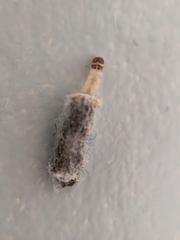
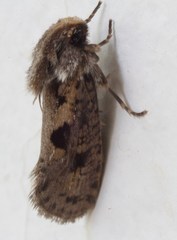
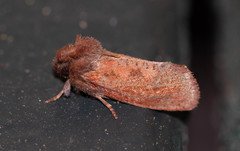
Same family (Tineidae)


Sources
- Wikipedia: https://en.wikipedia.org/wiki/Tineola_bisselliella
Look it up elsewhere: GBIF · iNaturalist · BugGuide · Wikipedia
Text written 2026-10-23 from the sources above and checked sentence by sentence against them. Data fetched 2026-10-22.