 Bug FAQ
Clemens' Grass Tubeworm Moth
Acrolophus popeanella · Order: Lepidoptera · Family: Tineidae
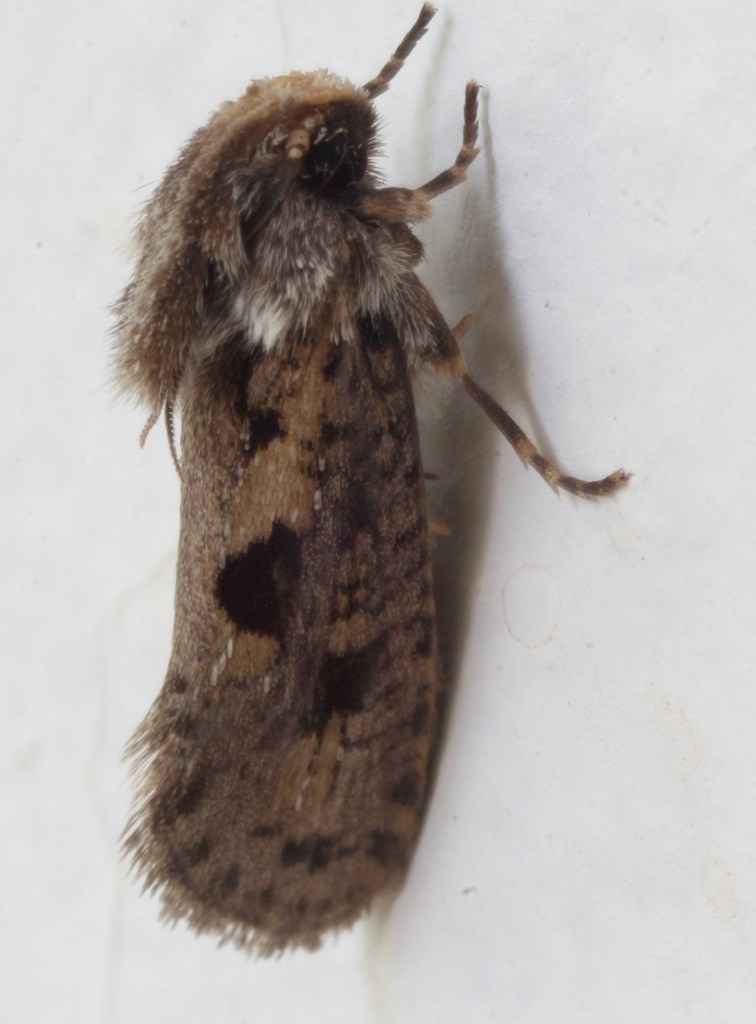
Adults have a wingspan of about 24-33 mm and a body length of 11-14 mm. They show dark brown wings with lighter blotches and a striped edge on the forewings, plus a tuft of hair-like scales that looks like a helmet.
Source: Wikipedia
How to recognize it
The moth’s wings are dark brown with lighter brown spots and a striped pattern near the lower edge of the forewings. A tuft of elongated, hair-like scales gives it a “helmeted” look.
Source: Wikipedia
Size
Wingspan ranges from 24 to 33 mm and body length is 11 to 14 mm.
Source: Wikipedia
Where it lives
They are commonly seen in grasslands, agricultural fields and urban areas.
Source: Wikipedia
What it eats
Larvae feed on the roots of red clover (Trifolium pratense).
Source: Wikipedia
Where it is found in the US
Recorded in 40 of 51 states and DC. Most records: Texas, Maryland, Virginia, Pennsylvania, North Carolina, Ohio, Alabama, Tennessee.
Darker = more records. Counts are museum and citizen-science records, not population size.
Source: GBIF
Status: native in North America; native in United States; native in Canada. Source: iNaturalist
Months it is reported in the US
Source: GBIF
More photos

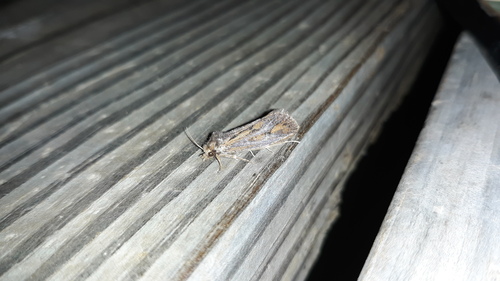

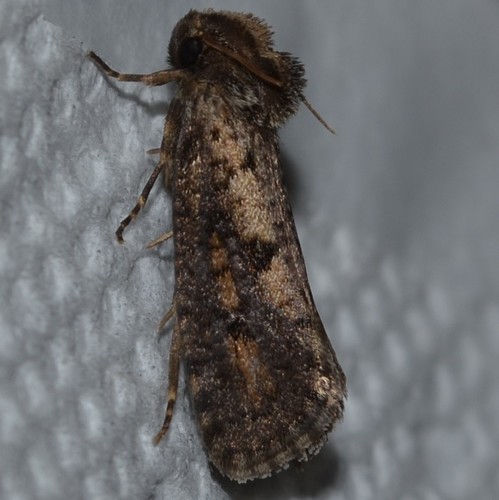
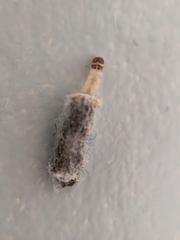
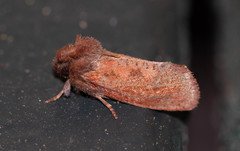
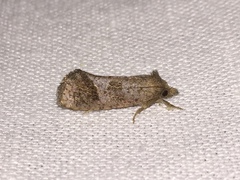
Same family (Tineidae)


Sources
- Wikipedia: https://en.wikipedia.org/wiki/Acrolophus_popeanella
Look it up elsewhere: GBIF · iNaturalist · BugGuide · Wikipedia
Text written 2026-10-22 from the sources above and checked sentence by sentence against them. Data fetched 2026-10-22.