 Bug FAQ
Case-bearing Clothes Moth
Tinea pellionella · Order: Lepidoptera · Family: Tineidae
Also called: Case-Bearing Cothes Moth, Case-making clothes moth, casemaking clothes moth
Source: Wikipedia
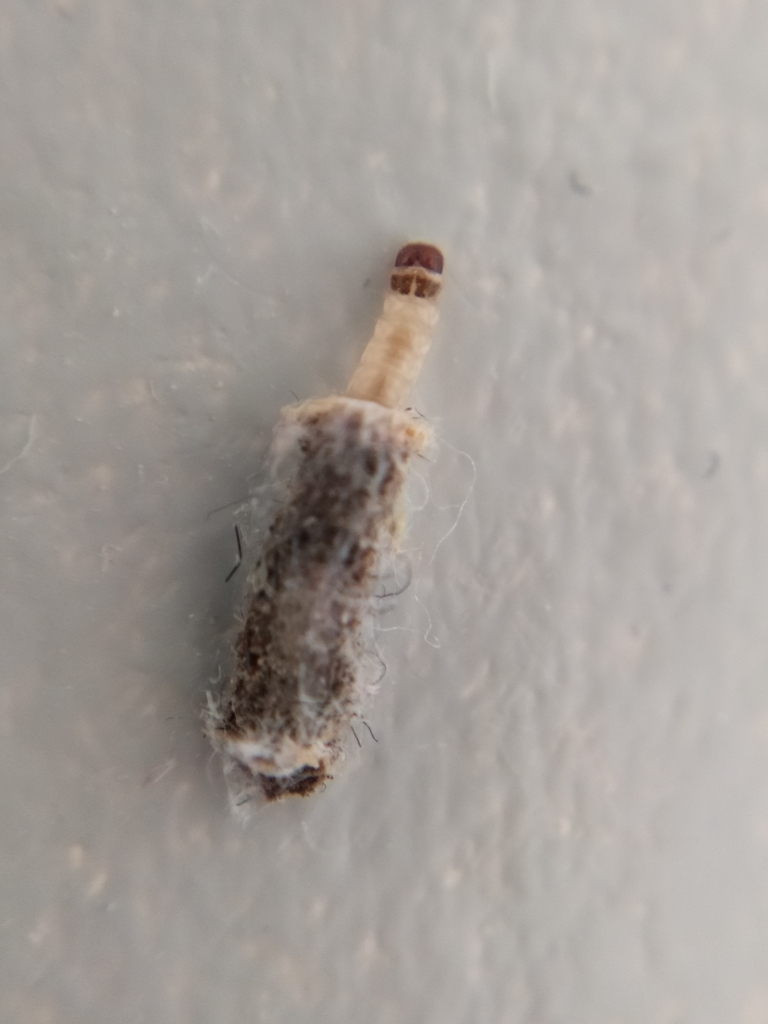
The case-bearing clothes moth is a small moth with a wingspan of about 9 to 16 mm and a silvery-grey to light brown body. Adults are seen in summer and early autumn, but indoor populations can appear year-round, and the larvae feed on keratin, detritus, bird nests, stored vegetables and wallpaper. It can become a pest by feeding on carpets, furs, upholstery and woolen fabrics.
Source: Wikipedia
How to recognize it
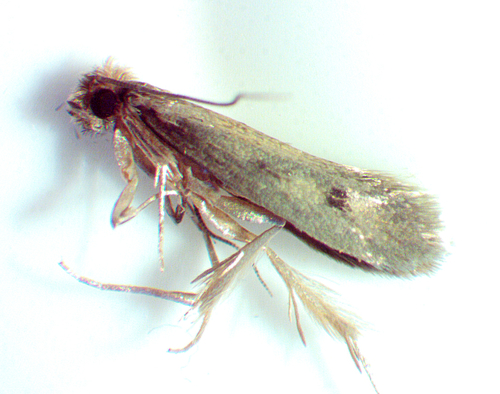
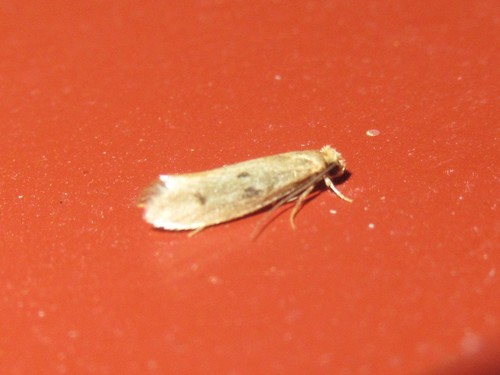
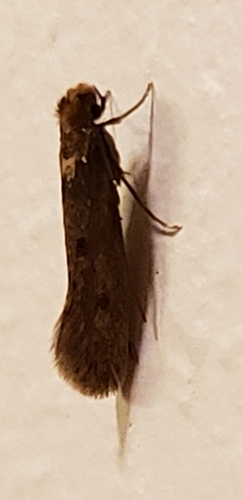
The moth is silvery-grey to shiny light brown with dark grey hairs on the top of its head. Its forewings are mottled brown with one large spot and several smaller, faint black spots.
Source: Wikipedia
Size
Adults have a wingspan ranging from 9 to 16 mm.
Source: Wikipedia
What it eats
Larvae mainly eat fibrous keratin such as hairs and feathers. They also consume detritus, cobwebs, bird nests, stored vegetable produce and wallpaper.
Source: Wikipedia
When you see it
Adults are typically encountered in summer and early autumn, though indoor populations may be seen at other times.
Source: Wikipedia
Where it comes from
It has a nearly worldwide, cosmopolitan distribution.
Source: Wikipedia
Where it is found in the US
Recorded in 26 of 51 states and DC. Most records: California, Washington, Mississippi, Florida, Maine, South Carolina, Georgia, Oregon.
Darker = more records. Counts are museum and citizen-science records, not population size.
Source: GBIF
Status: introduced in United States. Source: iNaturalist
Months it is reported in the US
Source: GBIF
More photos

Questions people ask
How can I identify the case-bearing clothes moth?
Look for a small moth 9 to 16 mm wide, silvery-grey to light brown with dark head hairs and forewings that have one large brown spot plus a few faint black spots.
Source: Wikipedia
When are these moths most likely to appear?
Adults are most common in summer and early autumn, but indoor populations can be seen throughout the year.
Source: Wikipedia
What damage can they cause in the home?
The larvae feed on carpets, furs, upholstery and woolen fabrics, causing damage to these items.
Source: Wikipedia
How should I control a case-bearing clothes moth infestation?
Use the same physical, chemical and biological control measures that work for the common clothes moth.
Source: Wikipedia
Same family (Tineidae)


Sources
- Wikipedia: https://en.wikipedia.org/wiki/Tinea_pellionella
Look it up elsewhere: GBIF · iNaturalist · BugGuide · Wikipedia
Text written 2026-10-23 from the sources above and checked sentence by sentence against them. Data fetched 2026-10-22.