 Bug FAQ
Household Casebearer
Phereoeca uterella · Order: Lepidoptera · Family: Tineidae
Also called: Plaster Bagworm
Source: Wikipedia
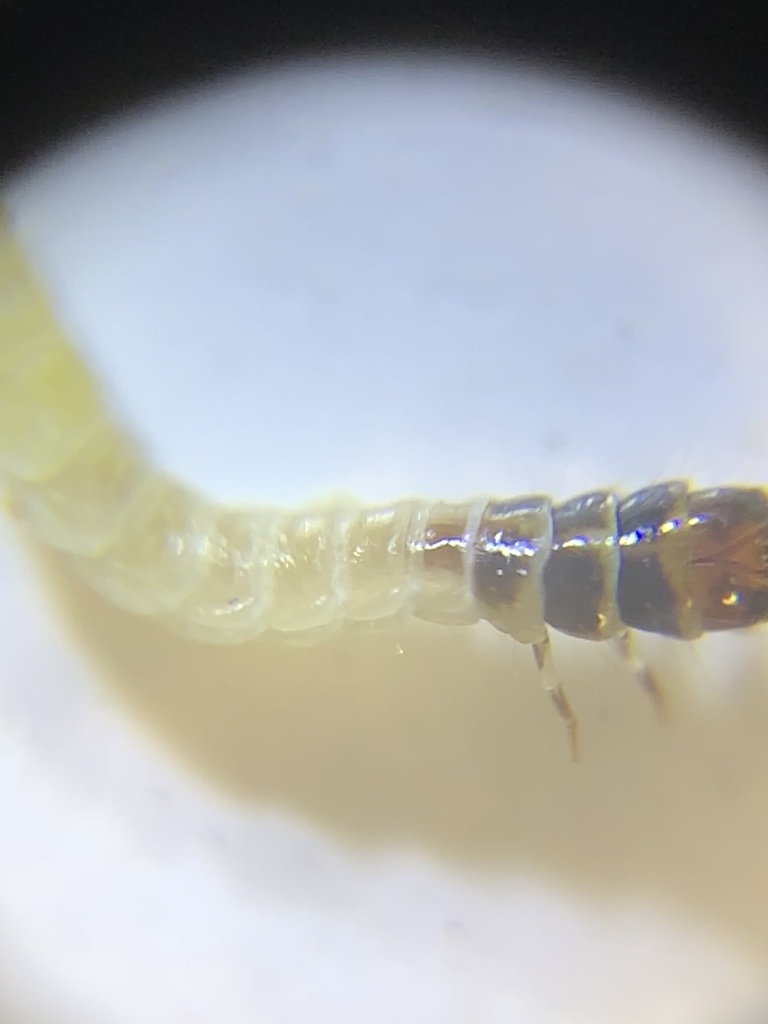
Adult females have a wingspan up to 13 mm, while males are smaller at up to 9 mm. The larvae feed on silk, spider webs, human hair, dander and especially wool, but not cotton. They are common indoor pests in tropical regions, including the southern United States.
Source: Wikipedia
Size
Adult females can reach a wingspan of about 13 mm. Males are smaller, with wingspans up to roughly 9 mm.
Source: Wikipedia
Is it a pest in the house?
Wool is a favoured food, making the species a household pest. It is commonly encountered inside homes.
Source: Wikipedia
Where it lives
It lives in tropical climates and is frequently found inside houses.
Source: Wikipedia
What it eats
The main food source is silk, especially spider webs and silk from other arthropods, including discarded cases. Larvae also consume human hair, dander and wool, but they do not eat cotton.
Source: Wikipedia
Life cycle
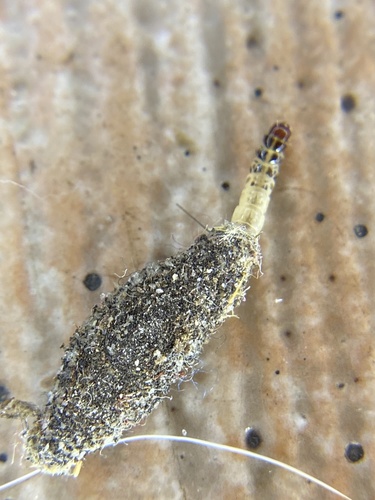
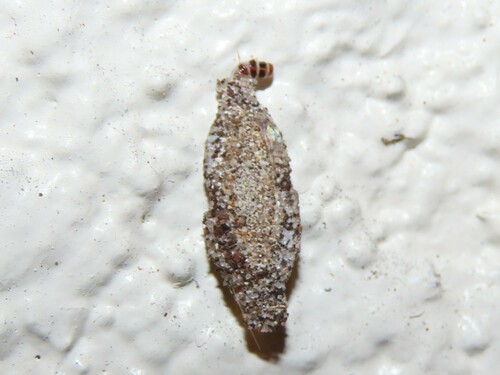
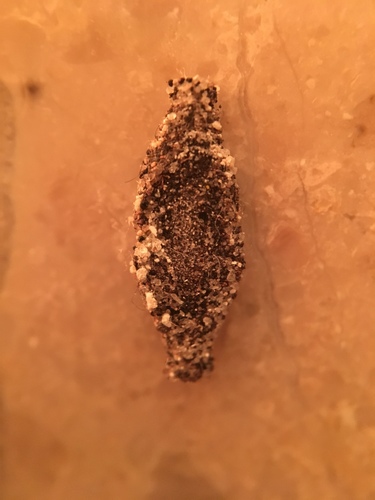
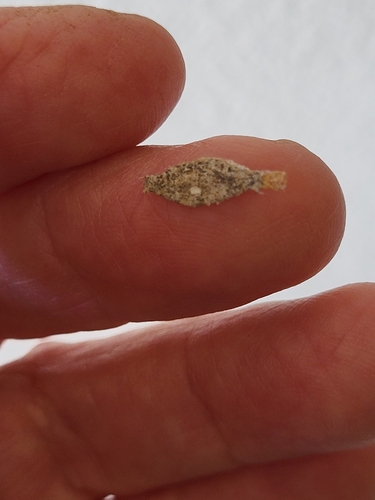
Pupation takes place inside the protective case the larva builds.
Source: Wikipedia
Where it is found in the US
Recorded in 9 of 51 states and DC. Most records: Florida, Texas, California, Louisiana, Alabama, Georgia, Mississippi, South Carolina.
Darker = more records. Counts are museum and citizen-science records, not population size.
Source: GBIF
Months it is reported in the US
Source: GBIF
More photos
Questions people ask
What do these moths look like?
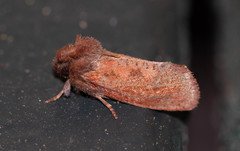
Their forewings are gray with dark spots and the hindwings are plain gray with long fringe hairs.
Source: Wikipedia
How big are they?
Females can reach about 13 mm in wingspan, while males are smaller at up to 9 mm.
Source: Wikipedia
Where are they found?
They occur in tropical regions and are common inside houses, including the southern United States.
Source: Wikipedia
Do they damage clothing?
Yes, they feed on wool and can become a pest in homes because of this habit.
Source: Wikipedia
Same family (Tineidae)


Sources
- Wikipedia: https://en.wikipedia.org/wiki/Phereoeca_uterella
Look it up elsewhere: GBIF · iNaturalist · BugGuide · Wikipedia
Text written 2026-10-26 from the sources above and checked sentence by sentence against them. Data fetched 2026-10-26.