 Bug FAQ
Pea Aphid
Acyrthosiphon pisum · Order: Hemiptera · Family: Aphididae
Source: Wikipedia
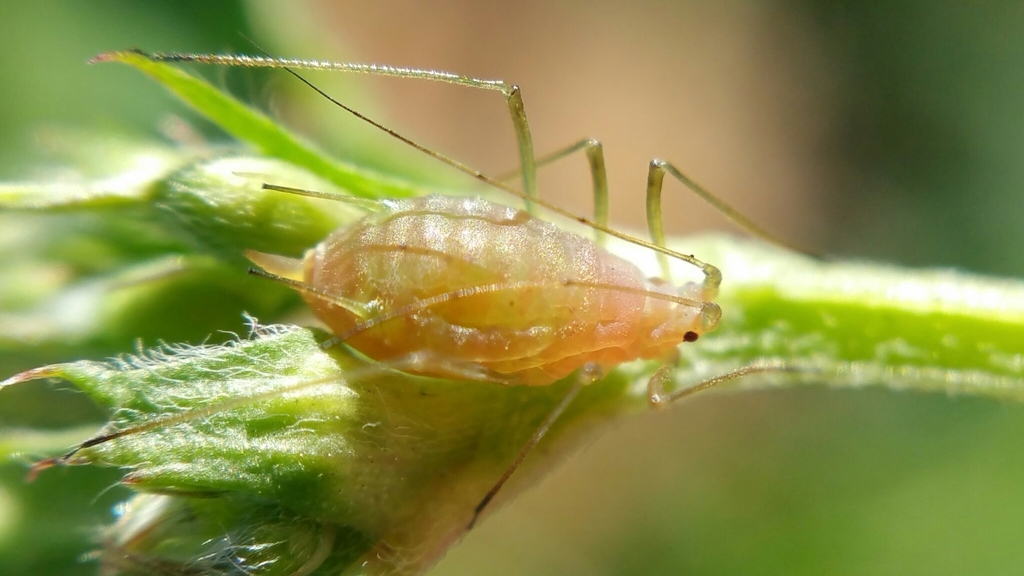
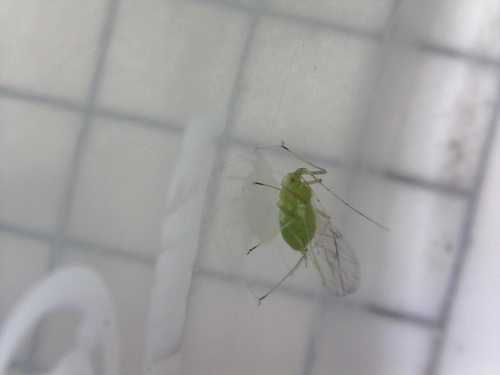
Pea aphids are relatively large for aphids, reaching about 4 mm as adults and coming in green or red-pink forms. They live on the undersides of leaves, buds and pods of legume plants, feeding on the sap and can cause problems for crops such as peas, clover, alfalfa and broad beans. Populations peak in early summer, drop later due to predators, and in autumn the shortening days trigger a sexual generation that lays overwintering eggs.
Source: Wikipedia
How to recognize it
Adults may be green or red-pink, with the green form being the most common in nature.
Source: Wikipedia
Size
An adult can grow up to about 4 mm long.
Source: Wikipedia
Is it a pest in the house?
They do not form dense colonies that stay where they were born. Ants are not known to tend or farm them for honeydew.
Source: Wikipedia
How to get rid of it
Control methods include chemical insecticides, encouraging natural predators and parasitoids, and planting resistant cultivars. Unlike many aphids, pea aphids have no documented resistance to insecticides.
Source: Wikipedia
What it eats
Their diet includes many legumes such as peas, clover, alfalfa and broad beans.
Source: Wikipedia
Life cycle
In autumn, fertilized females lay eggs that overwinter and hatch in spring. The hatchlings are all females that molt four times before becoming sexually mature.
Source: Wikipedia
When you see it
Numbers are highest in early summer and then fall as predators and parasitoids attack. Shortening days in autumn cause the production of a single generation of males and egg-laying females.
Source: Wikipedia
Where it comes from
The species originated in the Palearctic region but is now found worldwide wherever the climate is temperate.
Source: Wikipedia
Lookalikes
In North America they are often confused with the blue alfalfa aphid, which shares a very similar host range.
Source: Wikipedia
Where it is found in the US
Recorded in 31 of 51 states and DC. Most records: California, Washington, Illinois, Utah, Missouri, New York, Michigan, Oregon.
Darker = more records. Counts are museum and citizen-science records, not population size.
Source: GBIF
Status: native in North America; native in Canada. Source: iNaturalist
Months it is reported in the US
Source: GBIF
More photos
Questions people ask
How can I control pea aphids?
Use insecticides, promote natural enemies, or choose resistant legume varieties; resistance to chemicals has not been reported.
Source: Wikipedia
What do pea aphids look like?
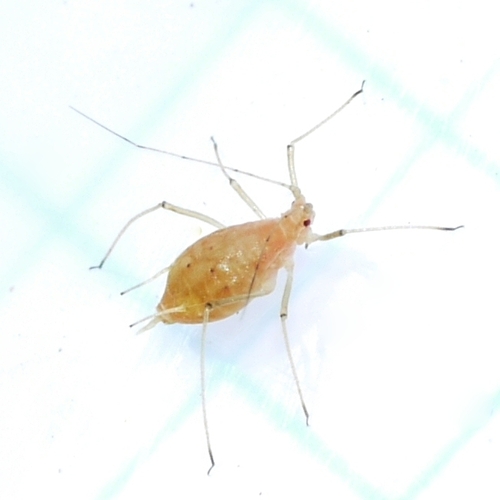
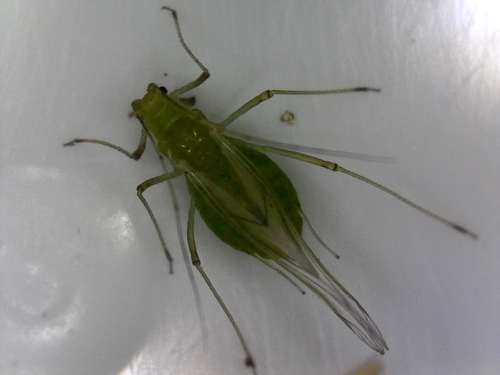
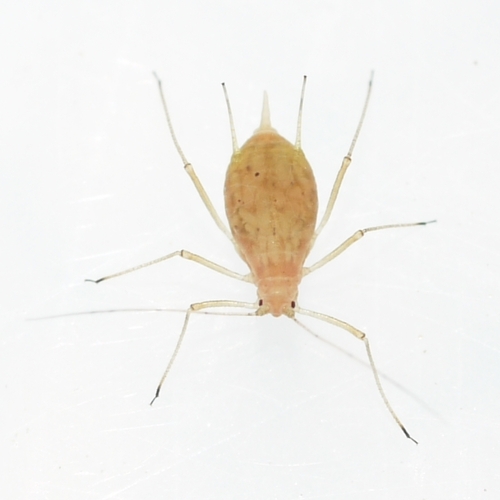
Adults are up to 4 mm long and may be green or red-pink, with green being the more common color.
Source: Wikipedia
When are pea aphids most abundant?
Their populations peak in early summer and decline later as predators and parasitoids increase; in autumn they switch to a sexual generation.
Source: Wikipedia
What plants do pea aphids affect?
They feed on many legumes, including peas, clover, alfalfa and broad beans, and can become crop pests.
Source: Wikipedia
Same family (Aphididae)
 Melon AphidAphis gossypiiDamages trees, gardens or crops
 Oleander AphidAphis neriiDamages trees, gardens or crops
 Witch-hazel Cone Gall AphidHormaphis hamamelidis
 Beech Blight AphidGrylloprociphilus imbricatorDamages trees, gardens or crops
 Rice Root AphidTetraneura nigriabdominalis
 Bean AphidAphis fabaeDamages trees, gardens or crops
Sources
- Wikipedia: https://en.wikipedia.org/wiki/Acyrthosiphon_pisum
Look it up elsewhere: GBIF · iNaturalist · BugGuide · ITIS · Wikipedia
Text written 2026-10-24 from the sources above and checked sentence by sentence against them. Data fetched 2026-10-24.