 Bug FAQ
Parenthesis Lady Beetle
Hippodamia parenthesis · Order: Coleoptera · Family: Coccinellidae
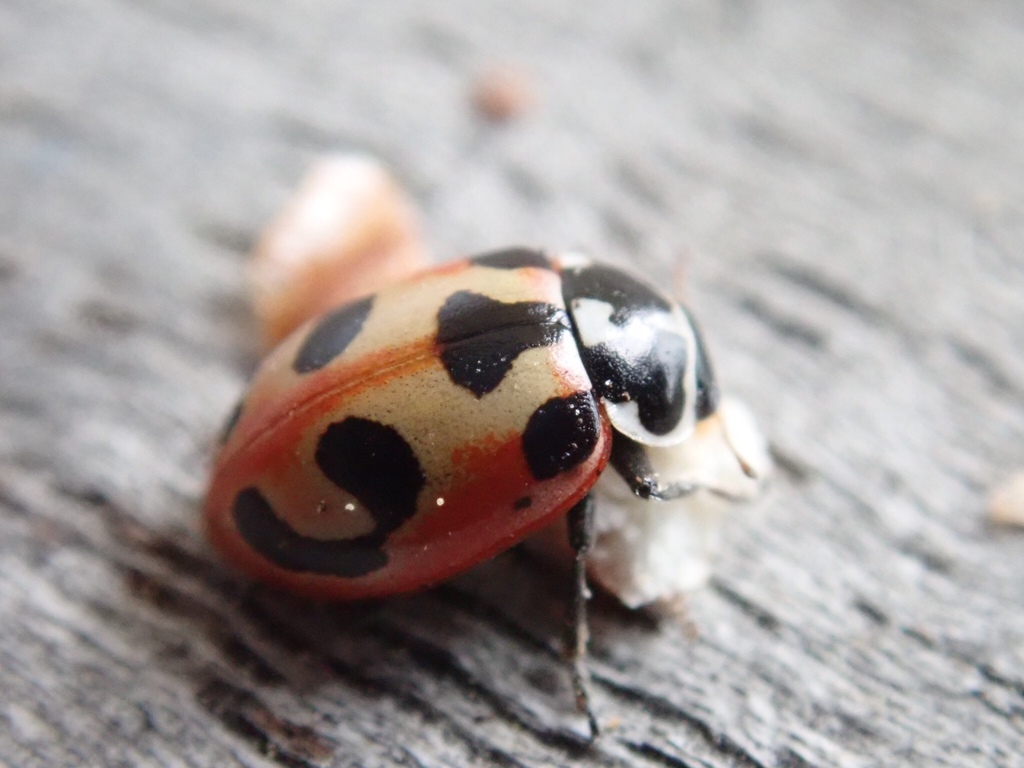
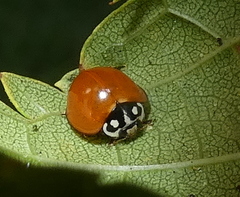
Adult Parenthesis Lady Beetles are tiny, measuring about 3.8 to 5.6 mm long. Their wing covers have spots, with the spots near the tip often blending together. They live across North America, from Nova Scotia down to South Carolina and west to Alaska and California.
Source: Wikipedia
How to recognize it
The elytra show spotted patterns, and the spots at the end are frequently suffused.
Source: Wikipedia
Size
Adults are about 3.75 to 5.60 mm in length.
Source: Wikipedia
Where it lives
Found throughout North America, from the Atlantic coast to the Pacific and up into Alaska.
Source: Wikipedia
Life cycle
Its life cycle occurs within the same North American range.
Source: Wikipedia
When you see it
Adults are present during the seasons typical for North American lady beetles.
Source: Wikipedia
Where it comes from
Native to North America, recorded from Nova Scotia to South Carolina and west to Alaska and California.
Source: Wikipedia
Where it is found in the US
Recorded in 42 of 51 states and DC. Most records: Colorado, Vermont, Ohio, Michigan, Illinois, California, New York, Pennsylvania.
Darker = more records. Counts are museum and citizen-science records, not population size.
Source: GBIF
Status: native in North America; native in United States; native in Canada. Source: iNaturalist
Months it is reported in the US
Source: GBIF
More photos

Same family (Coccinellidae)

Sources
- Wikipedia: https://en.wikipedia.org/wiki/Hippodamia_parenthesis
Look it up elsewhere: GBIF · iNaturalist · BugGuide · ITIS · Wikipedia
Text written 2026-10-23 from the sources above and checked sentence by sentence against them. Data fetched 2026-10-22.