 Bug FAQ
Palo Verde Root Borer
Derobrachus hovorei · Order: Coleoptera · Family: Cerambycidae
Source: Wikipedia
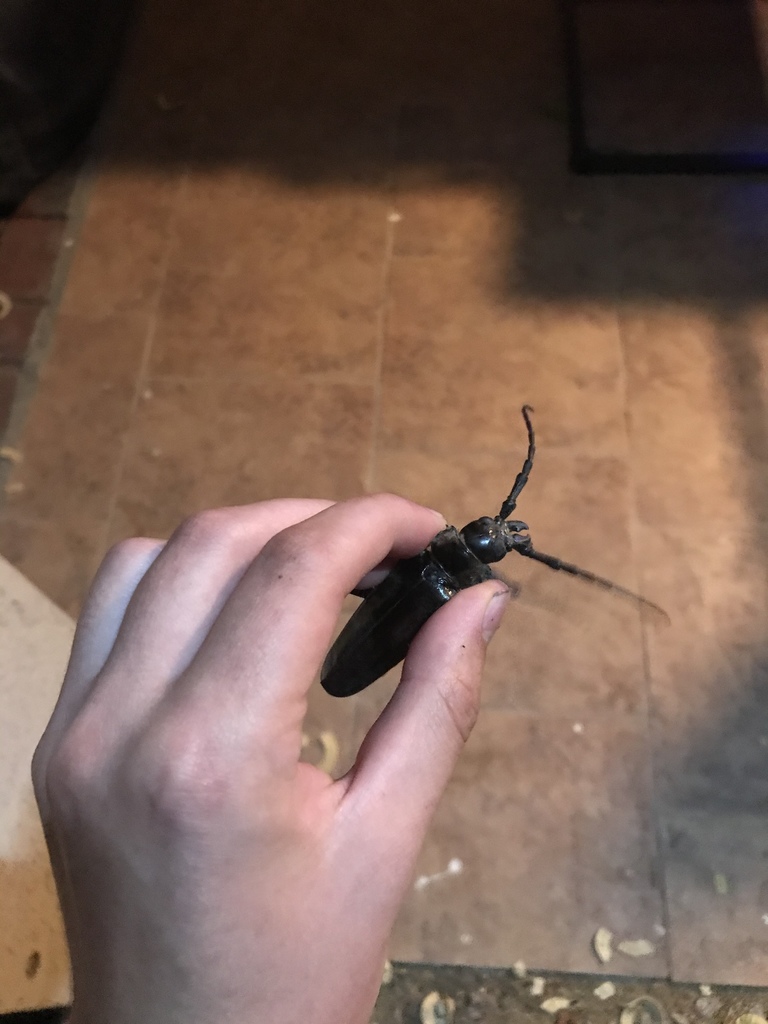
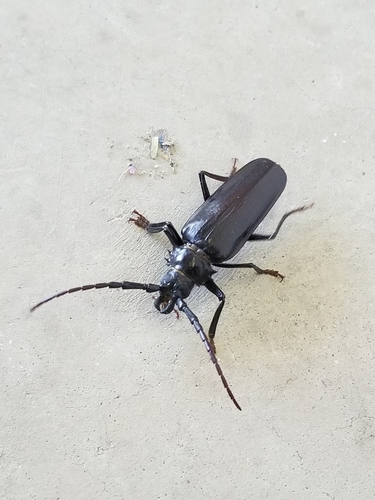
The Palo Verde Root Borer is one of the largest North American beetles, reaching about 3½ inches long. Its larvae feed on tree roots, causing branches to die back and damaging shade trees and other urban plantings.
Source: Wikipedia
How to recognize it
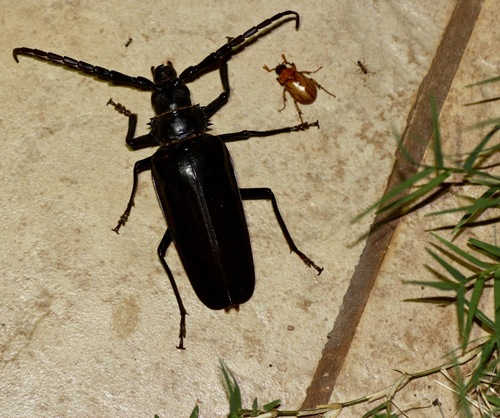
Adults are black or brown, have long antennae, and bear spines on the thorax.
Source: Wikipedia
Size
They can grow up to three and a half inches in length.
Source: Wikipedia
Is it a pest in the house?
Larvae feeding on tree roots can cause branches to die back, harming urban trees. In parks, campuses, and cemeteries they may feed on a variety of tree species.
Source: Wikipedia
Does it bite or sting?
They can bite in self-defense, though the bite is not serious.
Source: Wikipedia
Where it lives
This longhorn beetle lives in the southwestern United States and northern Mexico, often near palo verde trees.
Source: Wikipedia
What it eats
Larvae eat the roots of many trees, including Siberian elm, mulberry, cottonwoods, and citrus in warm desert areas.
Source: Wikipedia
Life cycle
Eggs hatch into grubs that stay underground for up to three years. Adult beetles emerge in summer to mate.
Source: Wikipedia
When you see it
Mature beetles appear in the summer.
Source: Wikipedia
Lookalikes
For over a century it was mistaken for Derobrachus geminatus until renamed in 2007.
Source: Wikipedia
Where it is found in the US
Recorded in 5 of 51 states and DC. Most records: Arizona, California, Texas, New Mexico, Nevada.
Darker = more records. Counts are museum and citizen-science records, not population size.
Source: GBIF
Months it is reported in the US
Source: GBIF
More photos
Questions people ask
What trees do they damage?
The larvae feed on the roots of trees such as elms, mulberries, cottonwoods, and citrus, causing branch die-back.
Source: Wikipedia
How can I tell this beetle apart from similar species?
It was previously confused with Derobrachus geminatus; the two were distinguished and renamed in 2007.
Source: Wikipedia
Same family (Cerambycidae)
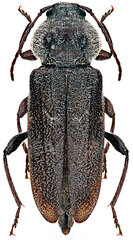 House LonghornHylotrupes bajulusCan damage your home
 Asian Longhorned BeetleAnoplophora glabripennisDamages trees, gardens or crops
 Red Milkweed BeetleTetraopes tetrophthalmus
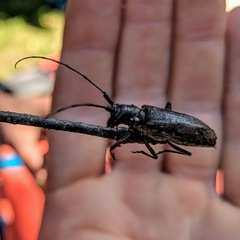 White-spotted SawyerMonochamus scutellatusCan damage your home
 Red Pine Longhorn BeetleStictoleptura rubra
 Spotted Longhorn BeetleRutpela maculata
Sources
- Wikipedia: https://en.wikipedia.org/wiki/Derobrachus_hovorei
Look it up elsewhere: GBIF · iNaturalist · BugGuide · Wikipedia
Text written 2026-10-24 from the sources above and checked sentence by sentence against them. Data fetched 2026-10-24.