 Bug FAQ
Palm Bud Moth
Atheloca subrufella · Order: Lepidoptera · Family: Pyralidae
Source: Wikipedia
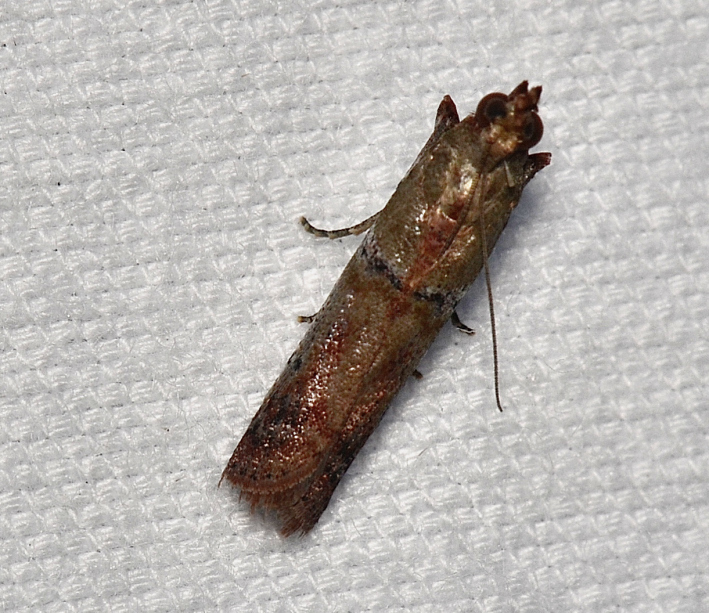
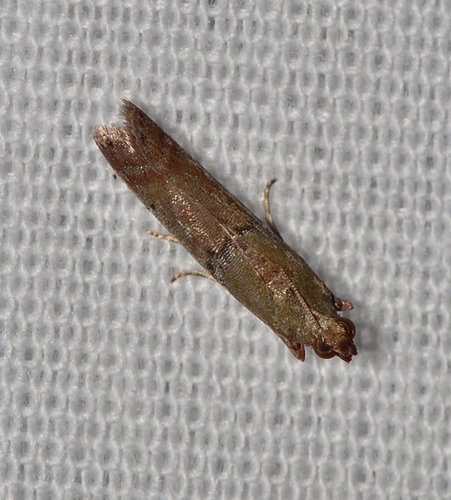
Adults are small brownish moths with a wingspan of about 14 to 18 mm. Larvae feed on palms such as coconut, Attalea, Syagrus, Sabal and Serenoa, and they are a major pest of coconuts, boring into young fruits and causing them to drop early.
Source: Wikipedia
How to recognize it
Adults have a brownish coloration.
Source: Wikipedia
Size
The wingspan ranges from 14 to 18 mm.
Source: Wikipedia
Is it a pest in the house?
The larvae are a major coconut pest, feeding on flower carpels or penetrating developing coconuts, creating galleries in the mesocarp and causing premature fruit shedding.
Source: Wikipedia
What it eats
Larvae feed on several palm species in the family Arecaceae, including coconut, Attalea, Syagrus, Sabal and Serenoa.
Source: Wikipedia
Life cycle
Females release sex pheromones to attract males, and older females emit them earlier to improve mating chances.
Source: Wikipedia
Where it is found in the US
Recorded in 6 of 51 states and DC. Most records: Florida, Texas, Alabama, Georgia, Mississippi, California.
Darker = more records. Counts are museum and citizen-science records, not population size.
Source: GBIF
Months it is reported in the US
Source: GBIF
More photos
Questions people ask
What plants do the larvae feed on?
The larvae feed on various palm species such as coconut, Attalea, Syagrus, Sabal and Serenoa.
Source: Wikipedia
How does the palm bud moth damage coconuts?
Young larvae eat the flower carpels or bore into developing coconuts, creating galleries in the mesocarp and causing the fruits to drop early.
Source: Wikipedia
Same family (Pyralidae)
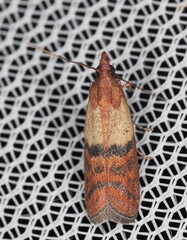 Indian-Meal MothPlodia interpunctellaCan damage your home
 Greater Wax MothGalleria mellonella
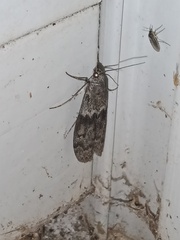 Mediterranean Flour MothEphestia kuehniellaCan damage your home
 Meal mothPyralis farinalisDamages trees, gardens or crops
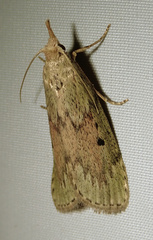 Bee MothAphomia sociellaNuisance, not dangerous
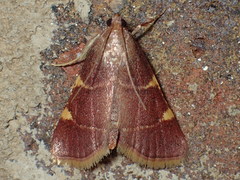 Yellow-fringed Dolichomia MothHypsopygia olinalis
Sources
- Wikipedia: https://en.wikipedia.org/wiki/Atheloca_subrufella
Look it up elsewhere: GBIF · iNaturalist · BugGuide · Wikipedia
Text written 2026-10-28 from the sources above and checked sentence by sentence against them. Data fetched 2026-10-28.