 Bug FAQ
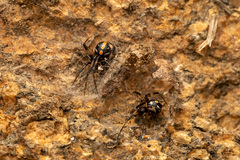
Painted Cobweb Weaver
Theridion pictum · Order: Araneae · Family: Theridiidae
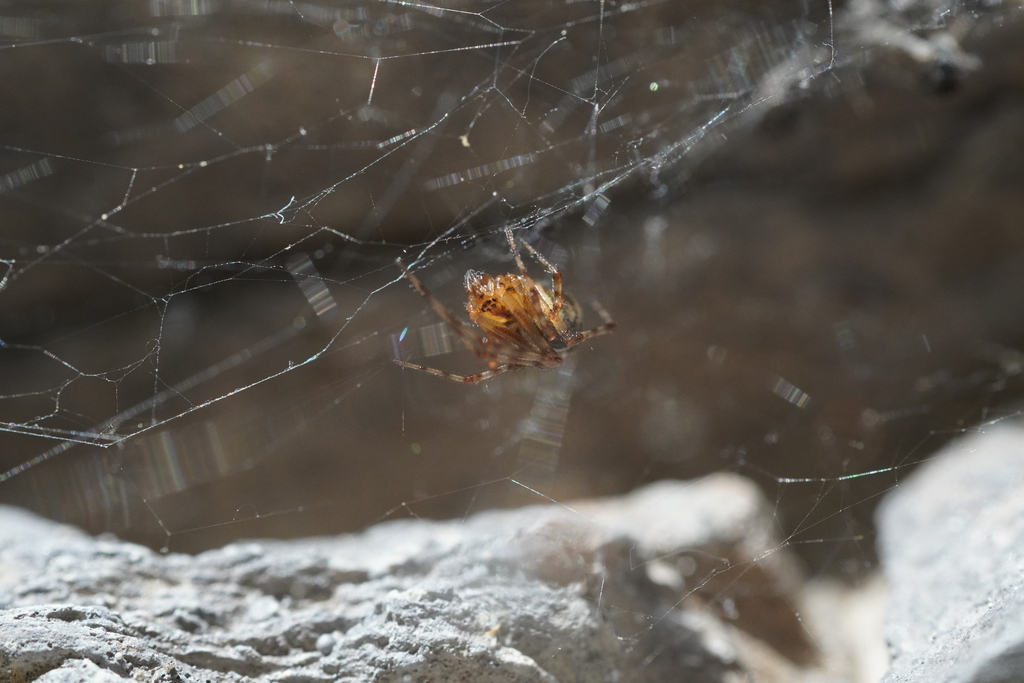
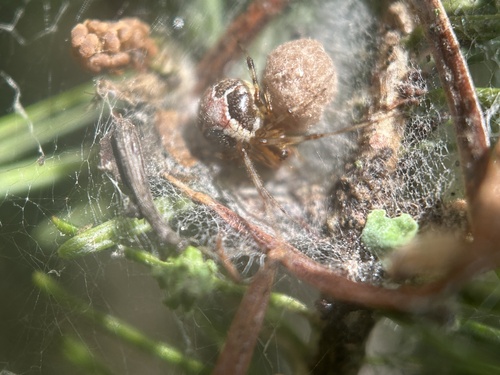
The painted cobweb weaver builds its webs on bushes, tall grasses, flowers, and also on posts and fences. It lives in damp low-lying areas, often among moss and plant litter in wetlands. It is native to the United States and Canada and also occurs across Europe, Turkey, and much of the Holarctic region. Adults mature in early to mid-summer, and females can be found through November.
Source: Wikipedia
Life cycle
Males and females become mature in early to mid-summer, and females may persist into November.
Source: Wikipedia
When you see it
Males and females become mature in early to mid-summer, and females may persist into November.
Source: Wikipedia
Where it comes from
Its Holarctic distribution also includes North Africa, the Caucasus, Russia from Europe to the Far East, Kazakhstan, Turkmenistan, China, and Japan.
Source: Wikipedia
Where it is found in the US
Recorded in 10 of 51 states and DC. Most records: Alaska, Minnesota, Maine, Wisconsin, Wyoming, Michigan, Ohio, Colorado.
Darker = more records. Counts are museum and citizen-science records, not population size.
Source: GBIF
Status: native in North America; native in Canada. Source: iNaturalist
Months it is reported in the US
Source: GBIF
More photos
Questions people ask
When are painted cobweb weavers most active?
Adults mature in early to mid-summer, and females can be seen through November.
Source: Wikipedia
Where can I find their webs?
They spin webs on bushes, tall grasses, flowers, and on posts or fences.
Source: Wikipedia
What habitats do they prefer?
They favor low, damp areas, often among moss and plant litter in wetlands.
Source: Wikipedia
Same family (Theridiidae)


Sources
- Wikipedia: https://en.wikipedia.org/wiki/Theridion_pictum
Look it up elsewhere: GBIF · iNaturalist · BugGuide · ITIS · Wikipedia
Text written 2026-10-29 from the sources above and checked sentence by sentence against them. Data fetched 2026-10-29.