 Bug FAQ
Oval Saint Andrew's Cross Spider
Argiope aemula · Order: Araneae · Family: Araneidae
Source: Wikipedia

Female Oval St. Andrew's Cross spiders are large (23 to 30 mm) while males stay tiny (5 to 8 mm), showing strong size dimorphism. They build webs 1 to 2 m above ground near sunny woodland and human settlements, often decorating them with cruciate or discoid patterns depending on size. Their venom can bite humans, causing some swelling, but no medical treatment is needed.
Source: Wikipedia
How to recognize it
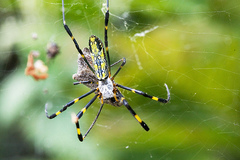
The cephalothorax is brownish with white hairs, the posterior median eyes have black rings, and the sternum is heart-shaped. The abdomen is oval, truncated at the front, yellowish with black stripes, and the underside is brown with yellow parallel lines.
Source: Wikipedia
Size
Females reach 25 to 30 mm, while males stop growing at about 5 to 8 mm.
Source: Wikipedia
Is it a pest in the house?
They are commonly found near human settlements.
Source: Wikipedia
Does it bite or sting?
Their venom can bite humans, causing mild swelling but no serious medical concern.
Source: Wikipedia
Where it lives
They are found near human settlements and prefer sunny woodland with flowers and shrubs for protection. Their webs are typically placed 1 to 2 m above the ground.
Source: Wikipedia
What it eats
They catch insects such as wasps, ants, flies, grasshoppers and crickets. Web decorations are thought to help capture prey.
Source: Wikipedia
Life cycle
Males are only about 10 % the size of females and are often eaten by the female after or during mating. If a male survives the first mating, he usually dies during the second attempt. When a male reaches the female’s web, he begins courtship.
Source: Wikipedia
When you see it
Spiders under 23 mm build discoid web decorations; larger ones build cruciate decorations.
Source: Wikipedia
Where it comes from
It is a conspicuous Argiope species that lives in tropical and subtropical grasslands.
Source: Wikipedia
Lookalikes
Other Argiope species are also called “St. Andrew's cross spiders,” which can cause confusion. They belong to the Araneidae family and share the genus with the yellow garden spider (A. aurantia) and the silver Argiope (A. argentata).
Source: Wikipedia
More photos


Questions people ask
Do they bite?
Yes, their bite can cause mild swelling but does not require medical treatment.
Source: Wikipedia
How can I identify an Oval St. Andrew's Cross spider?
Look for a brownish cephalothorax with white hairs, a heart-shaped sternum, and an oval yellow abdomen with black stripes.
Source: Wikipedia
Where are they likely to build their webs?
They spin webs 1 to 2 m above ground in sunny woodland or near human settlements, often with decorative patterns.
Source: Wikipedia
What do they eat?
They catch insects such as wasps, ants, flies, grasshoppers and crickets.
Source: Wikipedia
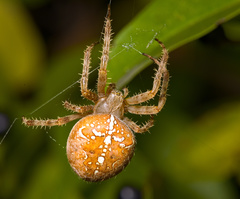
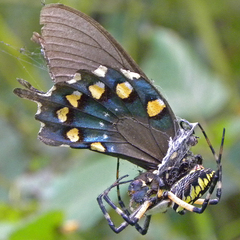
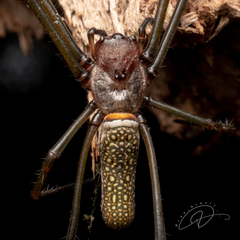
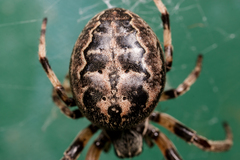
Same family (Araneidae)



Sources
- Wikipedia: https://en.wikipedia.org/wiki/Argiope_aemula
Look it up elsewhere: GBIF · iNaturalist · BugGuide · ITIS · Wikipedia
Text written 2026-10-23 from the sources above and checked sentence by sentence against them. Data fetched 2026-10-22.