 Bug FAQ
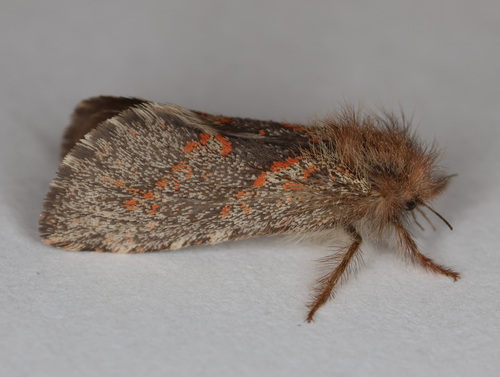
Orange-Lined Ghost Moth
Phymatopus hectoides · Order: Lepidoptera · Family: Hepialidae
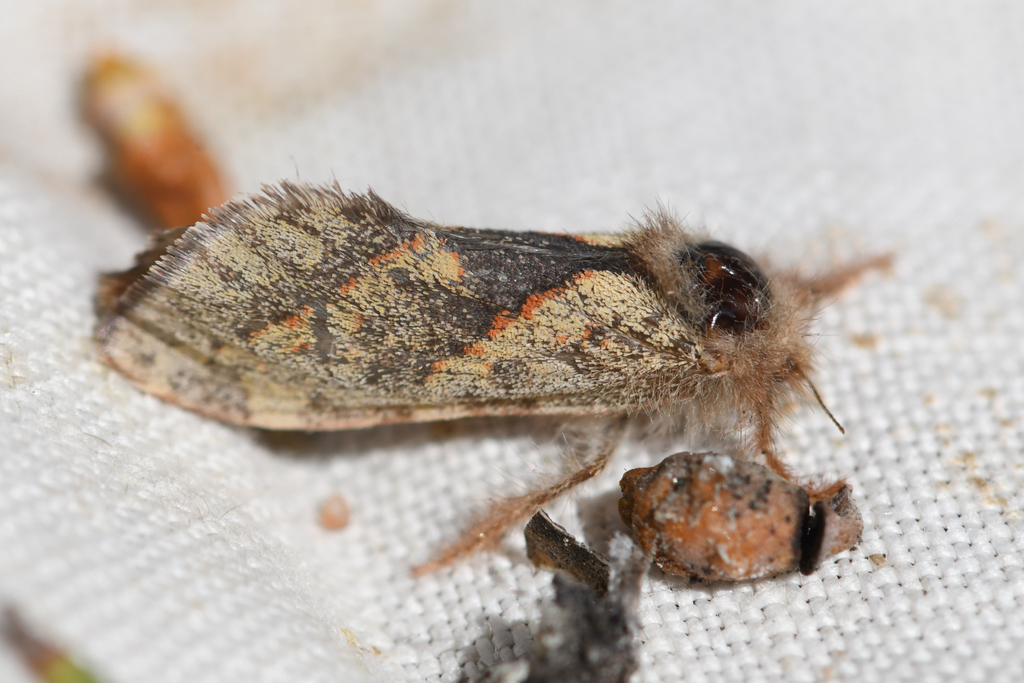
The orange-lined ghost moth belongs to the Hepialidae family and was first described in 1868. Adults have a wingspan of about 27 mm and are seen flying from May through July. Its larvae feed on a variety of plants including Baccharis, Lupinus, and ferns.
Source: Wikipedia
How to recognize it
Phymatopus hectoides is a moth in the family Hepialidae.
Source: Wikipedia
Size
The wingspan is roughly 27 mm.
Source: Wikipedia
What it eats
Larvae eat Baccharis, Horkelia, Lupinus, Helenium, Eriophyllum, Scrophularia and various ferns.
Source: Wikipedia
Life cycle
The species was first described by Jean Baptiste Boisduval in 1868.
Source: Wikipedia
When you see it
Adults are on the wing from May to July.
Source: Wikipedia
Where it is found in the US
Recorded in 6 of 51 states and DC. Most records: California, Oregon, Utah, Nevada, Colorado, Arizona.
Darker = more records. Counts are museum and citizen-science records, not population size.
Source: GBIF
Status: native in North America; native in United States. Source: iNaturalist
Months it is reported in the US
Source: GBIF
More photos
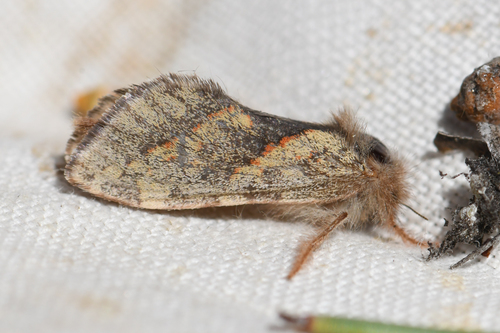
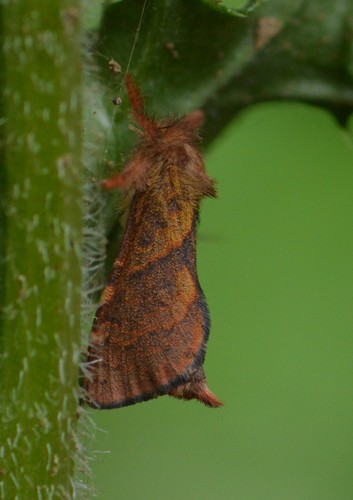
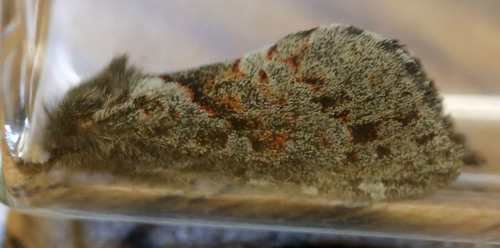
Questions people ask
When can I see adult orange-lined ghost moths?
Adults are active from May through July.
Source: Wikipedia
What do the larvae of this moth eat?
They feed on plants such as Baccharis, Lupinus, and ferns.
Source: Wikipedia
Same family (Hepialidae)
 Orange SwiftTriodia sylvina
 Common Swift MothKorscheltellus lupulinaDamages trees, gardens or crops
 Pūriri mothAenetus virescens
 Four-spotted Ghost MothSthenopis purpurascens
 Bog PorinaWiseana umbraculataDamages trees, gardens or crops
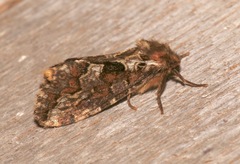 Conifer Swift MothKorscheltellus gracilisDamages trees, gardens or crops
Sources
- Wikipedia: https://en.wikipedia.org/wiki/Phymatopus_hectoides
Look it up elsewhere: GBIF · iNaturalist · BugGuide · Wikipedia
Text written 2026-10-28 from the sources above and checked sentence by sentence against them. Data fetched 2026-10-28.