 Bug FAQ
Odd Beetle
Thylodrias contractus · Order: Coleoptera · Family: Dermestidae
Also called: Tissue Paper Beetle
Source: Wikipedia
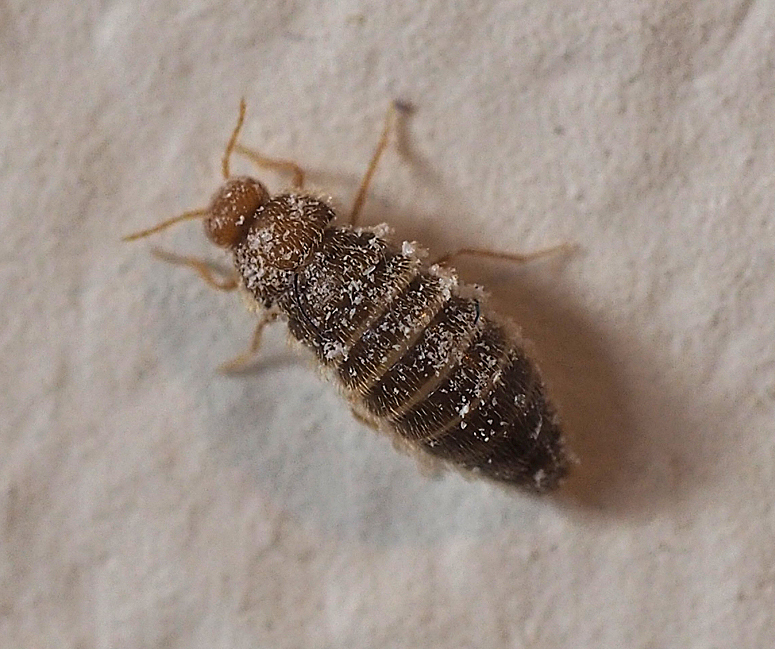
Male odd beetles have yellow-brown wing covers and a covering of silky white hairs, while females look like larvae without wing covers. They feed on wool, silk, fur, feathers, skin and even cooked liver, and can become a household pest by chewing fabrics and stored animal matter.
Source: Wikipedia
How to recognize it
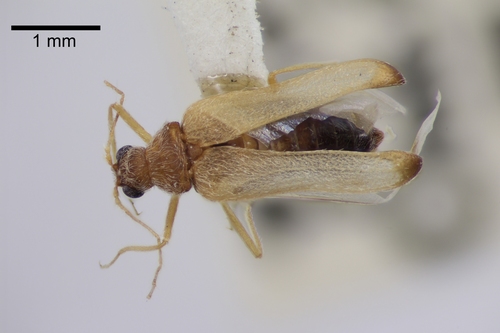
Males are recognized by yellow-brown elytra and a silky white hair covering. Females lack elytra and hind wings and resemble larvae, though they have legs and antennae.
Source: Wikipedia
Size
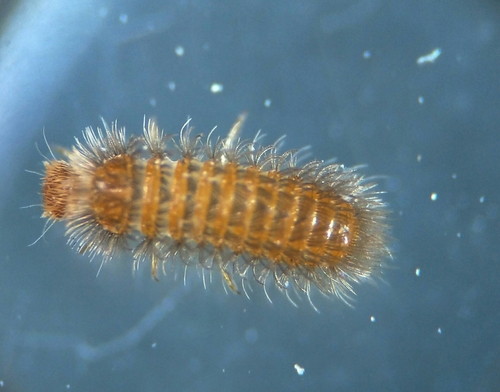
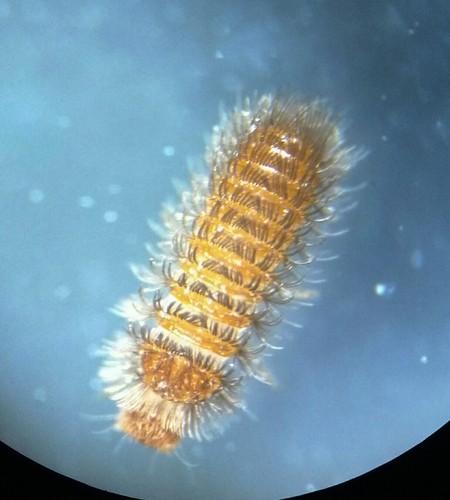
Each body segment ends with a row of short bristles.
Source: Wikipedia
Is it a pest in the house?
It is considered a pest because it can chew through tissue paper to reach wrapped objects, though it does not actually eat the paper.
Source: Wikipedia
How to get rid of it
Under stress it can undergo retrogressive molting, getting smaller with each molt.
Source: Wikipedia
Where it lives
The odd beetle can become a pest in homes.
Source: Wikipedia
What it eats
In captivity it will also eat cooked beef liver.
Source: Wikipedia
Life cycle
It undergoes complete metamorphosis with distinct growth and reproductive stages separated by a pupal phase. Even the larviform female metamorphoses from a true larva to a mature adult.
Source: Wikipedia
Where it comes from
It is native to Asia and now widespread in North America.
Source: Wikipedia
Lookalikes
Its antennae are filamentous, not club-shaped, which sets it apart from other Dermestidae.
Source: Wikipedia
Where it is found in the US
Recorded in 22 of 51 states and DC. Most records: Illinois, Michigan, District of Columbia, New York, Massachusetts, Washington, Texas, Connecticut.
Darker = more records. Counts are museum and citizen-science records, not population size.
Source: GBIF
Status: introduced in United States; introduced in Canada. Source: iNaturalist
Months it is reported in the US
Source: GBIF
More photos
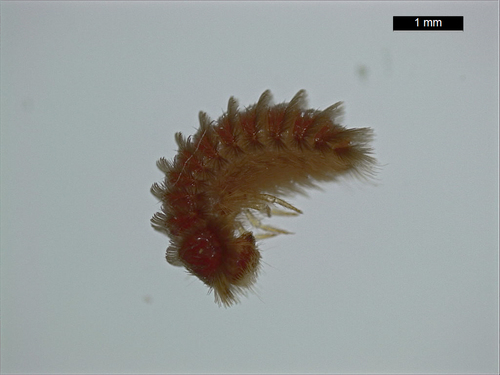
Questions people ask
How can I tell a male odd beetle from a female?
Males have yellow-brown wing covers and silky white hairs, while females look like larvae without wing covers.
Source: Wikipedia
What damage can odd beetles cause in my home?
They chew wool, silk, fur, feathers and other stored animal products, and may bite through tissue paper to reach wrapped items.
Source: Wikipedia
How does the odd beetle develop?
It goes through complete metamorphosis with a pupal stage, and even the larviform female transforms from a true larva to an adult.
Source: Wikipedia
What behavior shows the odd beetle is stressed?
It may roll into a ball or undergo retrogressive molting, becoming smaller with each molt.
Source: Wikipedia
Same family (Dermestidae)
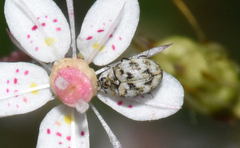 Varied Carpet BeetleAnthrenus verbasciCan damage your home
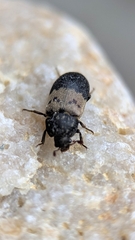 Larder BeetleDermestes lardariusCan damage your home
 Buffalo carpet beetleAnthrenus scrophulariaeCan damage your home
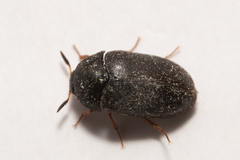 Black Carpet BeetleAttagenus unicolorCan damage your home
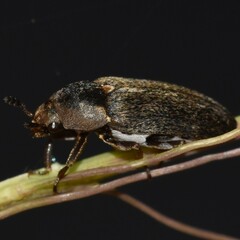 Hide BeetleDermestes maculatusCan damage your home
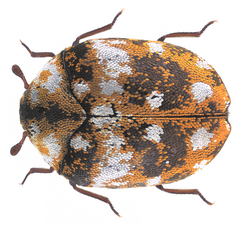 Furniture Carpet BeetleAnthrenus flavipesCan damage your home
Sources
- Wikipedia: https://en.wikipedia.org/wiki/Thylodrias
Look it up elsewhere: GBIF · iNaturalist · BugGuide · ITIS · Wikipedia
Text written 2026-10-27 from the sources above and checked sentence by sentence against them. Data fetched 2026-10-27.