 Bug FAQ
Oak Spider
Aculepeira ceropegia · Order: Araneae · Family: Araneidae
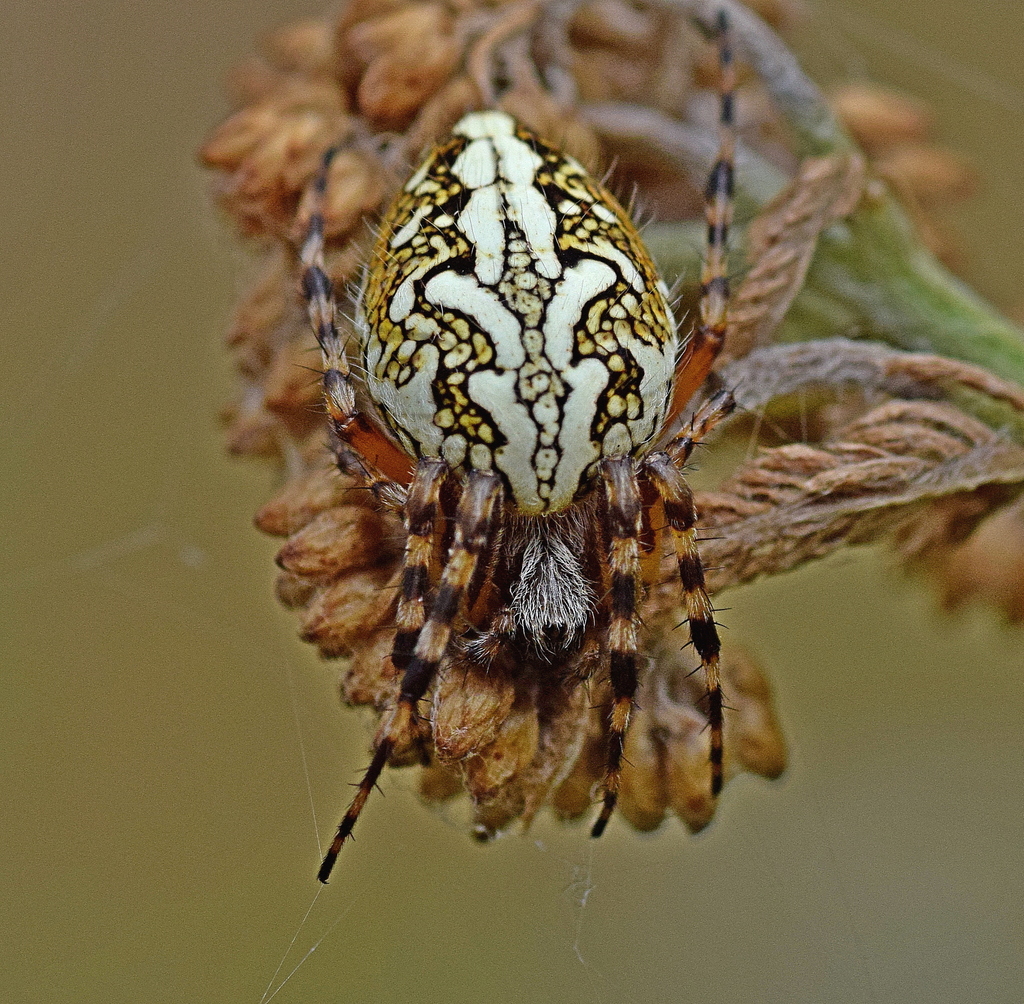
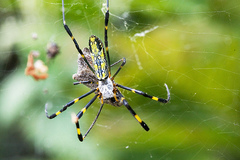
The oak spider is a common Palearctic orb-weaver found across most of Europe, especially in sunny, windy low bushes, wet meadows and gardens, even up to 3600 m altitude. Males are about 6 to 8 mm long, females 15 to 17 mm, and they are easy to spot by the oak-leaf pattern on the abdomen and gray-brown head hairs with dark-ringed legs. Adults appear from May to September, mature early in summer, and they catch prey by injecting venom that paralyzes and begins external digestion.
Source: Wikipedia
How to recognize it
They have a distinctive oak-leaf shape on the abdomen, a head covered in gray-brown hairs, light-brown chelicerae and legs with dark rings.
Source: Wikipedia
Size
Males measure 6 to 8 mm, while females are larger at 15 to 17 mm.
Source: Wikipedia
Where it lives
They can also be found in mountainous areas up to 3600 m elevation.
Source: Wikipedia
What it eats
They use their chelicerae to inject venom that paralyzes prey and starts external digestion with gastric juices.
Source: Wikipedia
Life cycle
Adults are present from May through September. They reach sexual maturity early in the summer.
Source: Wikipedia
When you see it
Adult spiders can be seen from May to September.
Source: Wikipedia
Where it comes from
The species has a Palearctic distribution and occurs in most of Europe.
Source: Wikipedia
Status: native in Canada. Source: iNaturalist
More photos

Same family (Araneidae)


Sources
- Wikipedia: https://en.wikipedia.org/wiki/Aculepeira_ceropegia
Look it up elsewhere: GBIF · iNaturalist · BugGuide · ITIS · Wikipedia
Text written 2026-10-22 from the sources above and checked sentence by sentence against them. Data fetched 2026-10-22.