 Bug FAQ
Norwegian Wasp
Dolichovespula norwegica · Order: Hymenoptera · Family: Vespidae
Also called: Norwegian Aerial Yellowjacket, Norwegian Yellowjacket
Source: Wikipedia
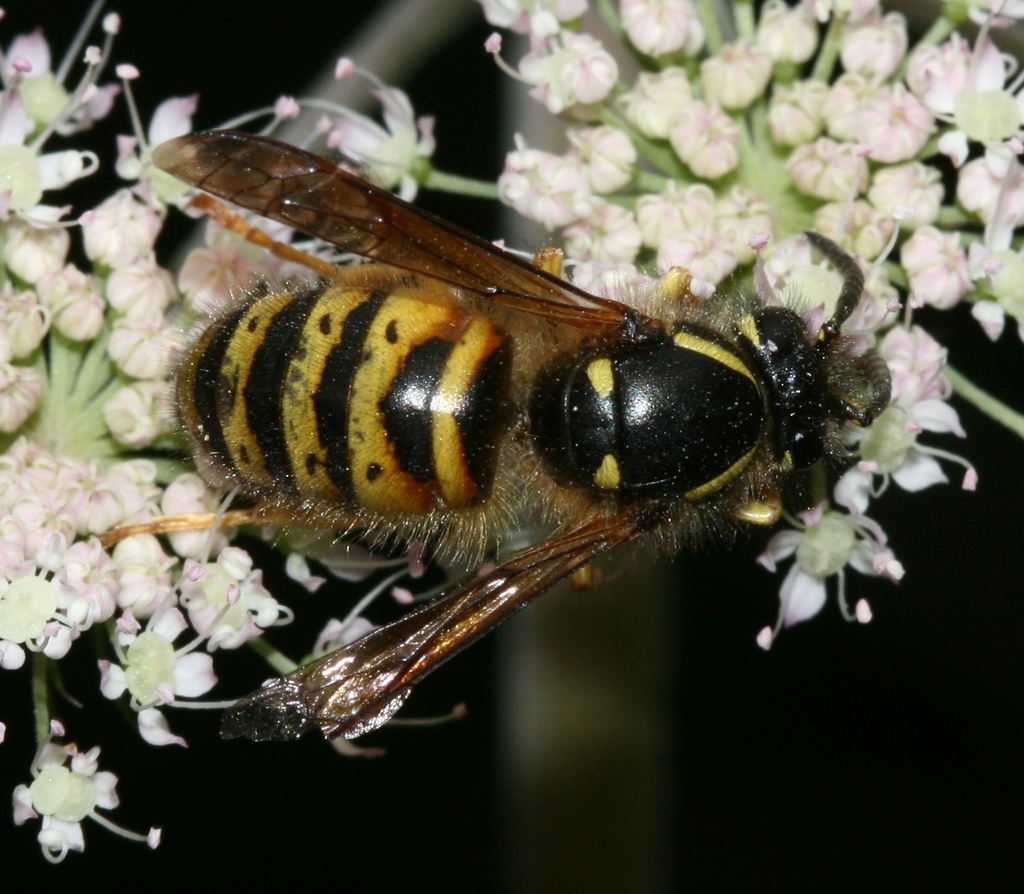
Norwegian wasps are 11 to 18 mm long; queens reach about 17 mm while workers are around 13 mm. They build nests on tree branches or bushes in closed habitats such as moors. Adults feed on nectar from plants like Angelica sylvestris, while larvae are fed chewed insects and spiders.
Source: Wikipedia
How to recognize it
They have striking black and yellow markings on the body. A long malar space on the face is separated by a vertical black bar.
Source: Wikipedia
Size
Individuals measure 11 to 18 mm in length. Queens are about 17 mm, workers about 13 mm.
Source: Wikipedia
Is it a pest in the house?
When nests are built on hedges, low eaves or close to humans, removal may be required.
Source: Wikipedia
Can it bite, sting or make you sick?
They are less aggressive than Vespula wasps but will use their stingers to defend the nest. They usually build nests away from human activity and rarely visit buildings, picnics or fruit.
Source: Wikipedia
How to get rid of it
If nests are located on hedges, low eaves or near people, they should be removed.
Source: Wikipedia
Where it lives
Nests are usually attached to tree branches or bushes, often in sheltered spots like moors.
Source: Wikipedia
What it eats
Larvae are fed a paste made from flies, other insects and spiders brought by adults.
Source: Wikipedia
Life cycle
Queens and males leave their colonies in late summer, mate, and the fertilised queens overwinter. In spring (mid-April to early May) queens emerge, feed and start new nests.
Source: Wikipedia
When you see it
Queens and males depart colonies in late summer and overwinter, then reappear in spring.
Source: Wikipedia
Where it comes from
They are common throughout Scandinavia and also occur in Scotland, Britain and Ireland.
Source: Wikipedia
Where it is found in the US
Recorded in 5 of 51 states and DC. Most records: Alaska, Colorado, West Virginia, Minnesota, Utah.
Darker = more records. Counts are museum and citizen-science records, not population size.
Source: GBIF
Months it is reported in the US
Source: GBIF
Questions people ask
Do they sting?
They will sting if their nest is threatened, though they are less aggressive than other wasps.
Source: Wikipedia
How can I get rid of a nest near my house?
If a nest is on a hedge, low eave or close to humans, it should be removed.
Source: Wikipedia
When are they active?
Queens and males leave colonies in late summer, overwinter, and queens emerge in spring to start new nests.
Source: Wikipedia
What do they look like?
They have bold black and yellow body patterns and a distinctive vertical black bar on the face separating a long malar space.
Source: Wikipedia
Same family (Vespidae)


Sources
- Wikipedia: https://en.wikipedia.org/wiki/Dolichovespula_norwegica
Look it up elsewhere: GBIF · iNaturalist · BugGuide · Wikipedia
Text written 2026-10-25 from the sources above and checked sentence by sentence against them. Data fetched 2026-10-25.