 Bug FAQ
Northern Warrior Wasp
Synoeca septentrionalis · Order: Hymenoptera · Family: Vespidae
Also called: Armadillo Wasp
Source: Wikipedia
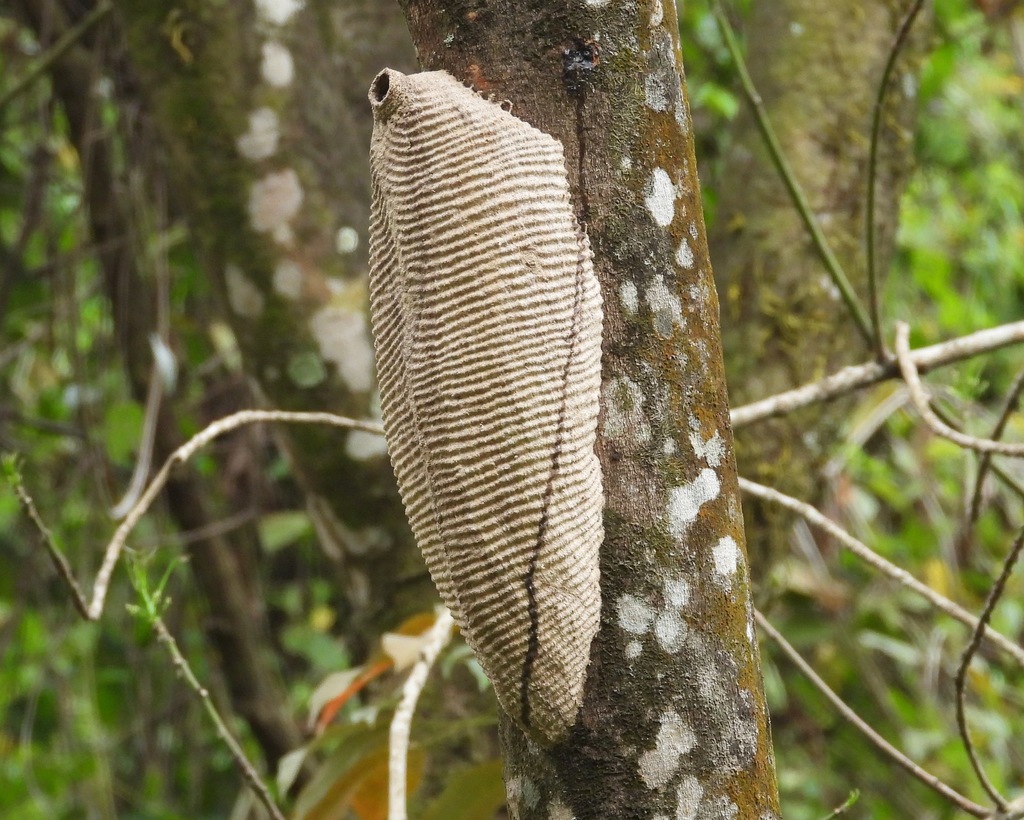
Northern Warrior Wasps are medium-sized, about 20 mm long, and show a dark metallic sheen that can range from blackish-blue to reddish tones. Colonies are founded by swarms, and after the nest is completed the first larvae hatch within a week and mature into adults about a month later. The species delivers a very painful sting, rated 4 out of 4 on the Schmidt index, comparable to a bullet ant.
Source: Wikipedia
How to recognize it
They have a dark, metallic appearance that can be blackish-blue or sometimes reddish.
Source: Wikipedia
Size
Adults measure roughly 20 mm (0.79 in) in length.
Source: Wikipedia
Does it bite or sting?
The sting is extremely painful, ranking 4 out of 4 on the Schmidt sting pain index, similar to a bullet ant.
Source: Wikipedia
Where it lives
Nests are attached flat against tree trunks or limbs, typically 1.7 to 6 m above the ground.
Source: Wikipedia
Life cycle
New colonies are started by swarms of wasps. First larvae appear about a week after the nest is finished and become adults roughly 30 days later.
Source: Wikipedia
Status: native in North America. Source: iNaturalist
Questions people ask
How painful is the Northern Warrior Wasp sting?
It is rated the highest on the Schmidt sting pain index, a 4-out-of-4 pain level, comparable to a bullet ant.
Source: Wikipedia
Where does this wasp build its nest?
It builds flat nests on tree trunks or limbs, usually between 1.7 and 6 meters above ground.
Source: Wikipedia
Same family (Vespidae)


Sources
- Wikipedia: https://en.wikipedia.org/wiki/Synoeca_septentrionalis
Look it up elsewhere: GBIF · iNaturalist · BugGuide · Wikipedia
Text written 2026-10-23 from the sources above and checked sentence by sentence against them. Data fetched 2026-10-22.