 Bug FAQ
Northern fruit bug
Carpocoris fuscispinus · Order: Hemiptera · Family: Pentatomidae

The northern fruit bug is a small shield bug about 11 to 14 mm long, with a variable yellow-brown body and tiny black spots. It lives in deciduous and mixed forests across Europe, adults appear from June to October and overwinter as adults. Larvae feed on many plants, especially those in the carrot and daisy families.
Source: Wikipedia
How to recognize it
The bug’s body color ranges from greyish yellow to reddish brown and it has tiny black dots. Its pronotum has a sharp angle that is more noticeable in summer.
Source: Wikipedia
Size
Adults measure about 11 to 14 mm in length.
Source: Wikipedia
Where it lives
It is found mainly in deciduous and mixed forest areas.
Source: Wikipedia
What it eats
Larvae are polyphagous but prefer plants of the Apiaceae and Asteraceae families. Adults are active from June through October.
Source: Wikipedia
Life cycle
Adults overwinter and reappear in the warmer months.
Source: Wikipedia
When you see it
Adults are commonly seen from June to October.
Source: Wikipedia
Where it comes from
The species is widespread throughout Europe.
Source: Wikipedia
More photos
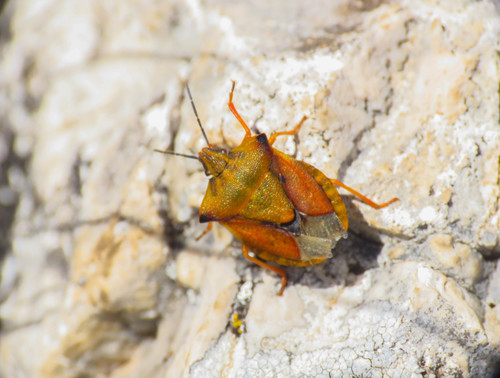
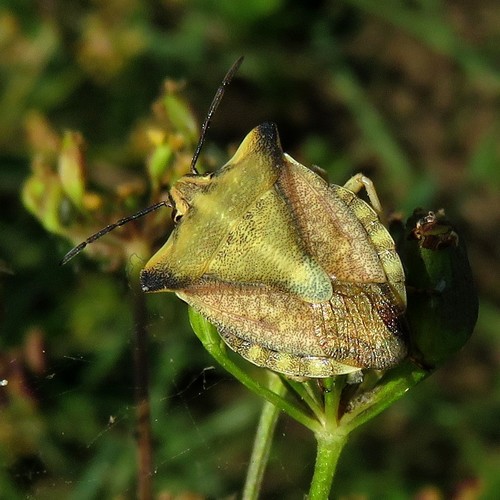
Same family (Pentatomidae)
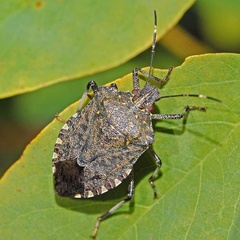 Brown Marmorated Stink BugHalyomorpha halysDamages trees, gardens or crops
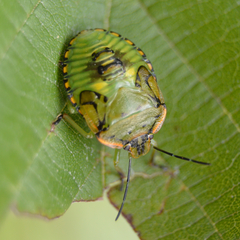 Green Stink BugChinavia hilarisDamages trees, gardens or crops
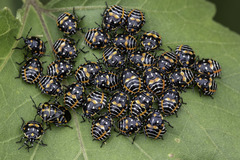 Harlequin BugMurgantia histrionicaDamages trees, gardens or crops
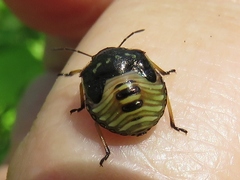 Brown Stink BugEuschistus servusDamages trees, gardens or crops
 Green Shield BugPalomena prasina
 European Striped Shield BugGraphosoma italicum
Sources
- Wikipedia: https://en.wikipedia.org/wiki/Carpocoris_fuscispinus
Look it up elsewhere: GBIF · iNaturalist · BugGuide · Wikipedia
Text written 2026-10-22 from the sources above and checked sentence by sentence against them. Data fetched 2026-10-22.