 Bug FAQ
Nine-spotted Lady Beetle
Coccinella novemnotata · Order: Coleoptera · Family: Coccinellidae
Also called: Nine-spotted Ladybird, Nine-spotted Ladybug
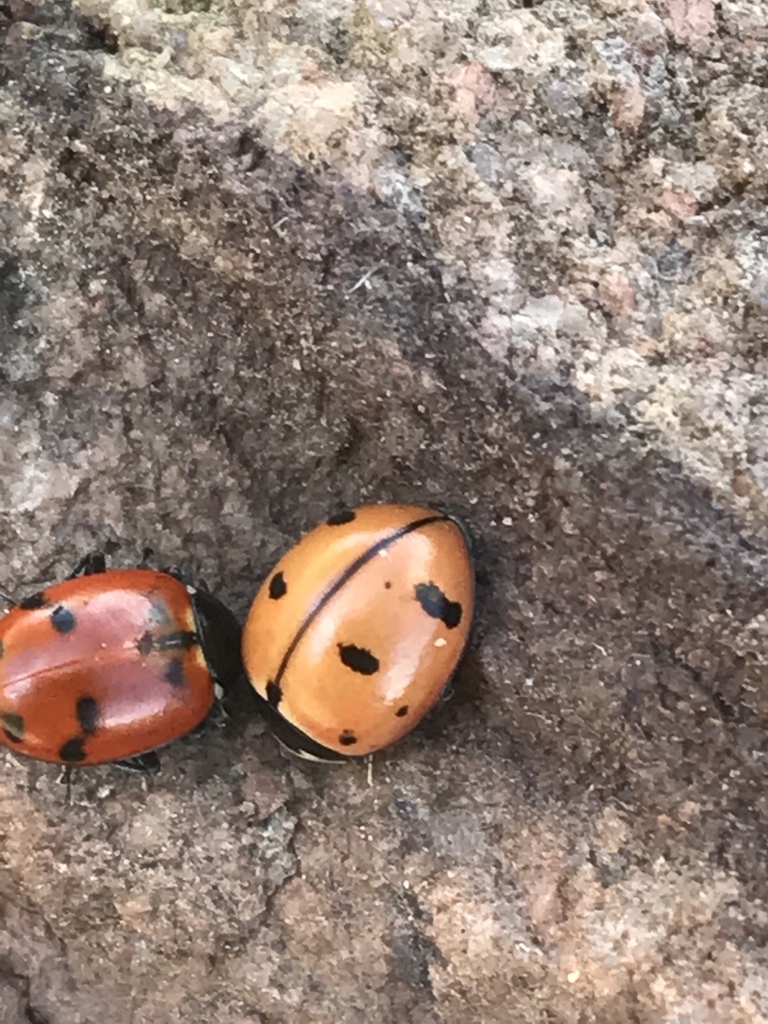
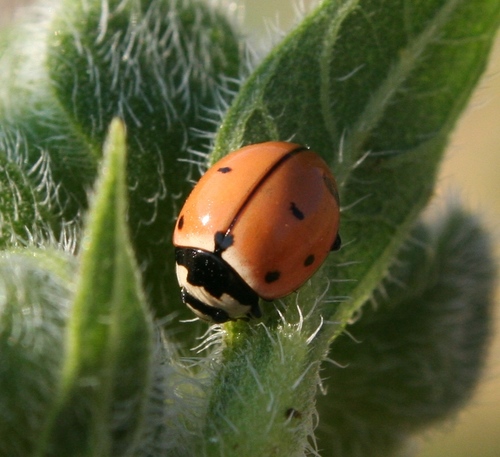
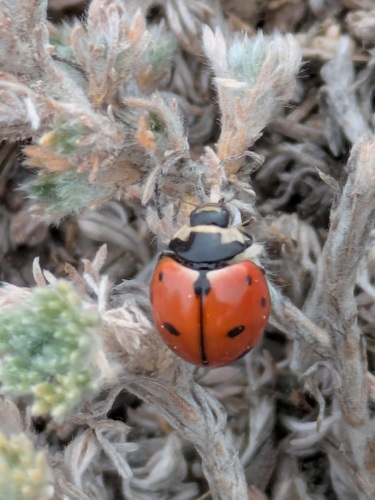
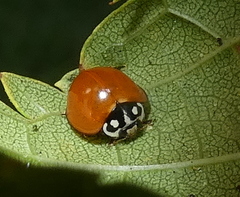
The nine-spotted lady beetle is a small beetle about 5 to 7 mm long. It has four black spots on each wing cover, a split central spot, a black line between the wing covers, and a black pronotum with two white marks near the head. It lives across the United States and southern Canada, moving to wherever aphids and other prey are abundant, including farms, gardens and parks.
Source: Wikipedia
Size
Adults measure between 4.7 and 7.0 mm (0.19 to 0.28 in) in length.
Source: Wikipedia
Where it lives
They are nomadic and occupy many habitats, following aphid density, mates and seasonal herbaceous growth. In agricultural areas they are found in cotton, alfalfa, corn and soybean fields and also in suburban parks and gardens.
Source: Wikipedia
What it eats
Larvae shed their skin during the pupal stage rather than forming a cocoon. Adults feed on eggs, pupae and molting individuals of other insects, which are vulnerable in those stages.
Source: Wikipedia
Life cycle
The species has two generations per year and undergoes complete metamorphosis. Its life stages are egg, four larval instars, prepupa, pupa and adult.
Source: Wikipedia
When you see it
Adults enter diapause during summer and winter, emerging again in autumn and early spring. Reproduction occurs in early spring with egg-laying in early autumn.
Source: Wikipedia
Where it comes from
Historically the species is native to North America, specifically the United States and southern Canada. In the 1970s to 80s it was one of the most common lady beetles in the northeastern and central US and southern Canada.
Source: Wikipedia
Lookalikes
Non-native lady beetles like Harmonia axyridis and Coccinella septempunctata now dominate many US states, making up to 90 % of coccinellid populations. Studies show higher egg predation on C. novemnotata by C. septempunctata and by its own conspecifics.
Source: Wikipedia
Where it is found in the US
Recorded in 42 of 51 states and DC. Most records: Michigan, Colorado, Illinois, California, Kentucky, Indiana, Ohio, Utah.
Darker = more records. Counts are museum and citizen-science records, not population size.
Source: GBIF
Status: native in North America; native in United States; native in Canada. Source: iNaturalist
Months it is reported in the US
Source: GBIF
More photos

Questions people ask
How can I identify the nine-spotted lady beetle?
Look for four black spots on each wing cover, a split central spot, a black line between the covers, and a black pronotum with two white marks near the head; the beetle is about 5 to 7 mm long.
Source: Wikipedia
Where is the nine-spotted lady beetle found?
It is native to the United States and southern Canada and was once common throughout the northeastern and central US and southern Canada.
Source: Wikipedia
What does the nine-spotted lady beetle eat?
Adults eat the eggs, pupae and molting stages of other insects; larvae shed their skin rather than forming a cocoon during pupation.
Source: Wikipedia
When are nine-spotted lady beetles active?
Adults diapause in summer and winter, emerging in autumn and early spring; they reproduce in early spring and lay eggs in early autumn.
Source: Wikipedia
Same family (Coccinellidae)

Sources
- Wikipedia: https://en.wikipedia.org/wiki/Coccinella_novemnotata
Look it up elsewhere: GBIF · iNaturalist · BugGuide · ITIS · Wikipedia
Text written 2026-10-23 from the sources above and checked sentence by sentence against them. Data fetched 2026-10-23.