 Bug FAQ
Black Burying Beetle (Nicrophorus nigrita)
Nicrophorus nigrita · Order: Coleoptera · Family: Staphylinidae
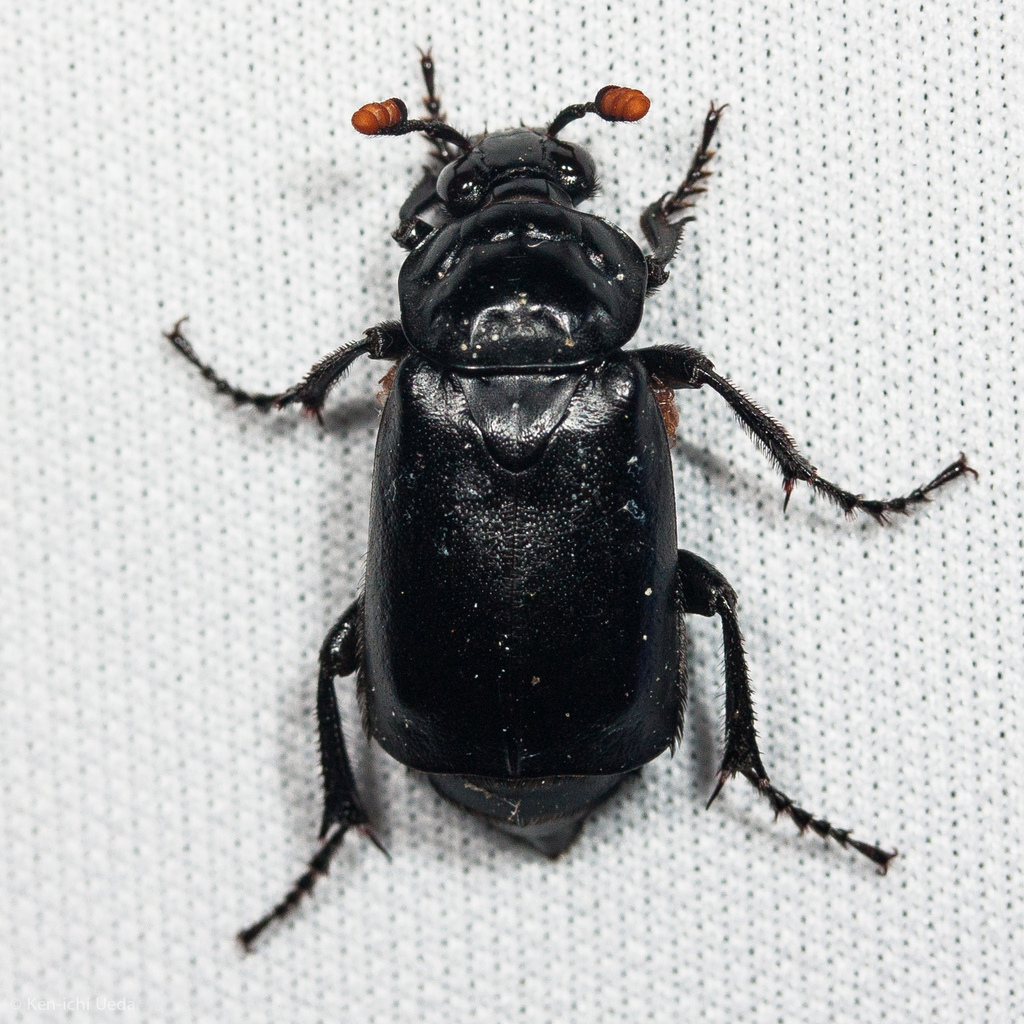
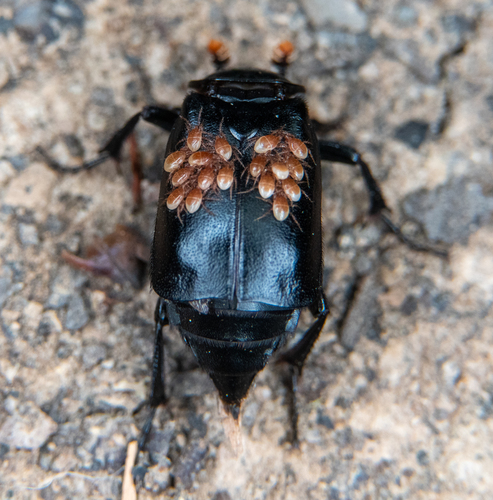
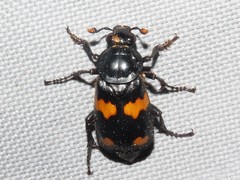
Adults are 12 to 28 mm long and are mostly black with red-orange clubs on the antennae.
Source: Wikipedia
How to recognize it
It is mostly black and its antennae end in red-orange clubs.
Source: Wikipedia
Size
Adults measure between 12 and 28 mm long.
Source: Wikipedia
What it eats
It feeds on the carrion of small vertebrates such as mice.
Source: Wikipedia
Life cycle
After mating, a pair buries a fresh carcass, the female lays eggs in the buried chamber, and both parents stay to protect and feed the larvae.
Source: Wikipedia
Where it comes from
It is native to the west coast of North America, ranging from British Columbia to Baja California and inland through Nevada.
Source: Wikipedia
Lookalikes
Unlike other North American burying beetles, it lacks markings on its wing covers.
Source: Wikipedia
Where it is found in the US
Recorded in 9 of 51 states and DC. Most records: California, Oregon, Washington, Colorado, Idaho, Missouri, New Mexico, Arizona.
Darker = more records. Counts are museum and citizen-science records, not population size.
Source: GBIF
Status: native in North America; native in Canada; native in United States. Source: iNaturalist
Months it is reported in the US
Source: GBIF
More photos
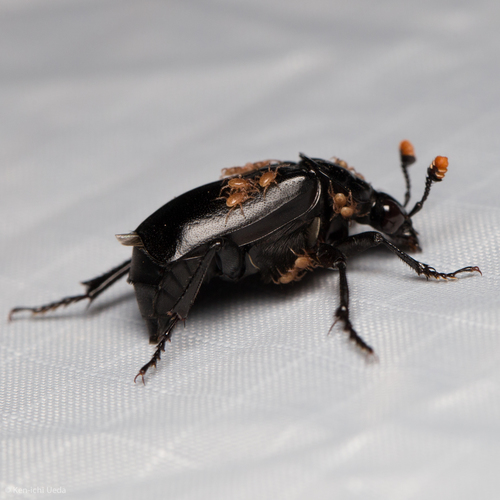
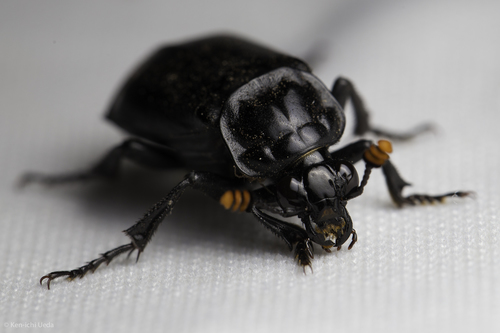
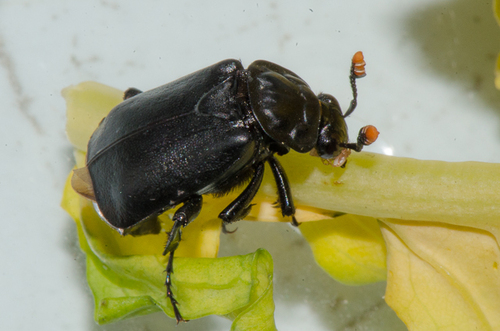
Questions people ask
What do Black Burying Beetles look like?
They are mostly black with red-orange clubs on the ends of their antennae.
Source: Wikipedia
What do Black Burying Beetles eat?
They feed on carrion of small vertebrates such as mice.
Source: Wikipedia
Same family (Staphylinidae)


Sources
- Wikipedia: https://en.wikipedia.org/wiki/Nicrophorus_nigrita
Look it up elsewhere: GBIF · iNaturalist · BugGuide · ITIS · Wikipedia
Text written 2026-10-24 from the sources above and checked sentence by sentence against them. Data fetched 2026-10-24.