 Bug FAQ
Musk beetle
Aromia moschata · Order: Coleoptera · Family: Cerambycidae
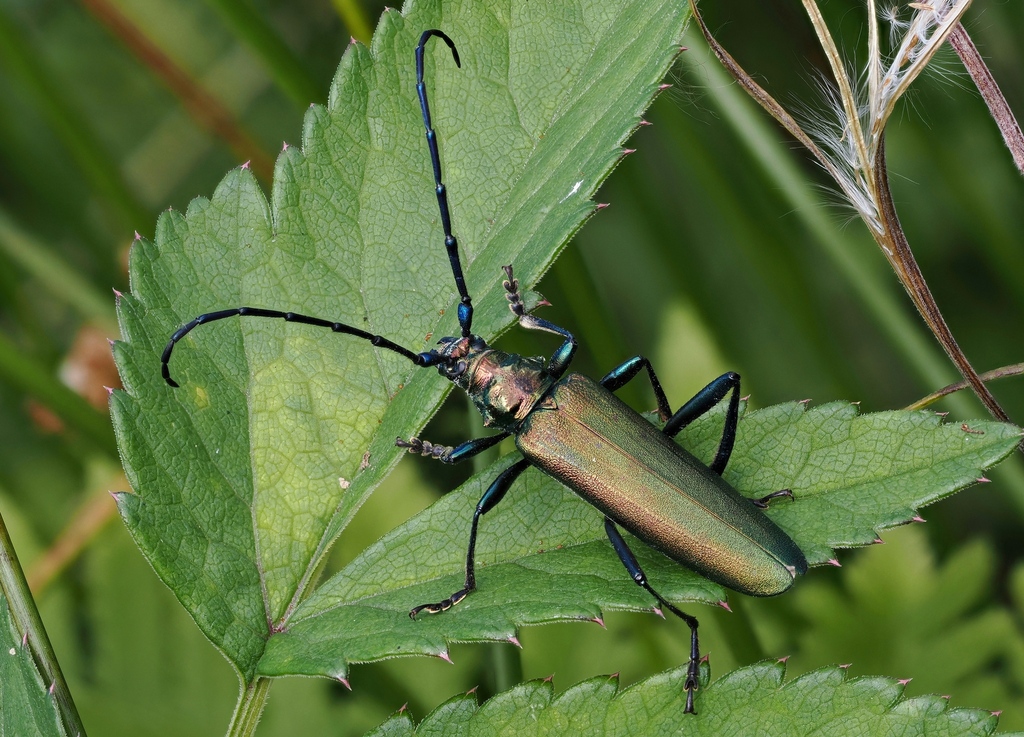
The musk beetle has long antennae and a metallic shell that changes colour with the viewing angle. Adults are usually seen on willow leaves, where the larvae also develop. It occurs locally in Great Britain, for example on the Gwent Levels, and is a Eurasian species widespread in Europe.
Source: Wikipedia
How to recognize it
Long antennae and a coppery-green metallic sheen that shifts with angle identify this beetle.
Source: Wikipedia
Where it lives
In Britain it is found in places like the Caldicot and Wentloog Levels (Gwent Levels SSSI). Adults perch on leaves, especially those of willow trees.
Source: Wikipedia
What it eats
Adults feed on willow leaves, which also host the larvae.
Source: Wikipedia
Life cycle
A musky scent is released from thoracic glands near the hind-leg joint.
Source: Wikipedia
Where it comes from
Aromia moschata is a Eurasian species, common across Europe except most of Spain and southern Italy.
Source: Wikipedia
Same family (Cerambycidae)
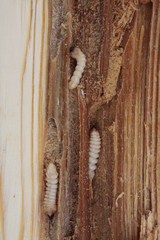 House LonghornHylotrupes bajulusCan damage your home
 Asian Longhorned BeetleAnoplophora glabripennisDamages trees, gardens or crops
 Red Milkweed BeetleTetraopes tetrophthalmus
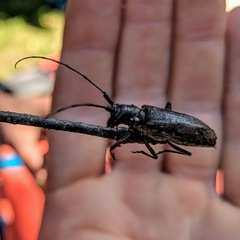 White-spotted SawyerMonochamus scutellatusCan damage your home
 Red Pine Longhorn BeetleStictoleptura rubra
 Spotted Longhorn BeetleRutpela maculataDamages trees, gardens or crops
Sources
- Wikipedia: https://en.wikipedia.org/wiki/Musk_beetle
Look it up elsewhere: GBIF · iNaturalist · BugGuide · Wikipedia
Text written 2026-10-22 from the sources above and checked sentence by sentence against them. Data fetched 2026-10-22.