 Bug FAQ
Mottled Stink Bug
Rhaphigaster nebulosa · Order: Hemiptera · Family: Pentatomidae
Also called: Mottled Shield Bug
Source: Wikipedia
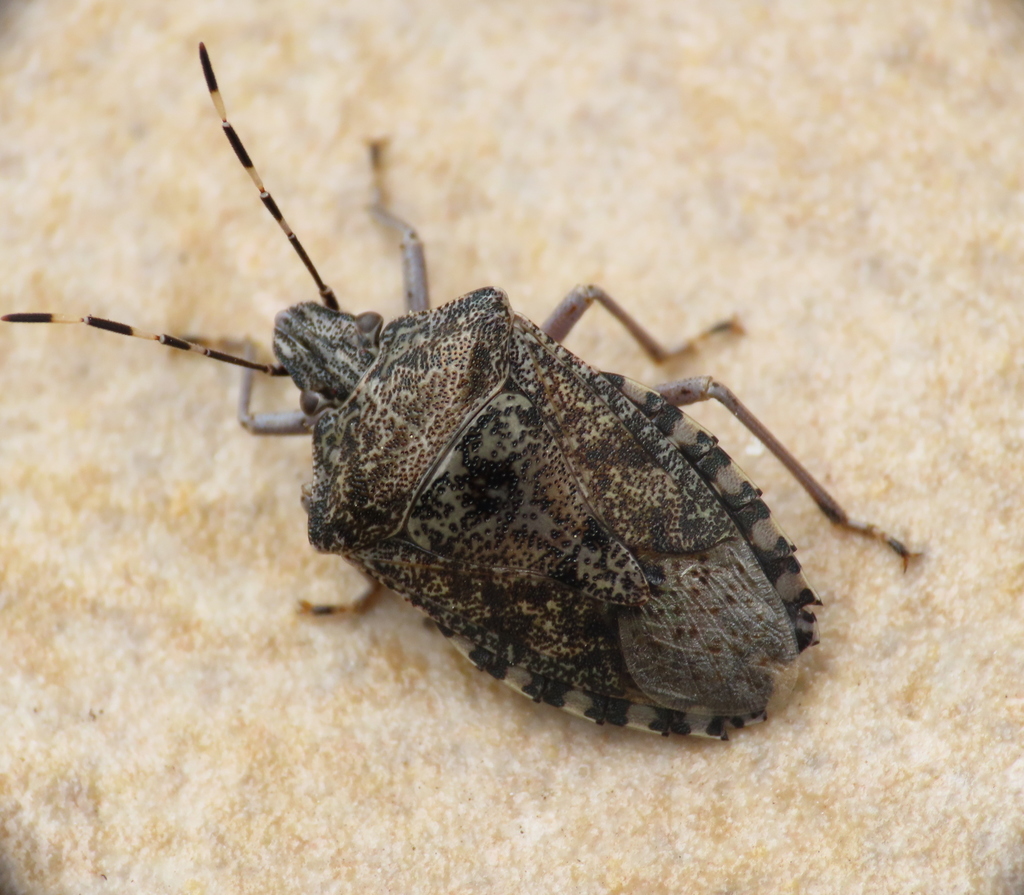
The mottled stink bug is a large, hair-less shield bug about 14 to 16 mm long and is dirty yellow-grey to brown with dark speckles on its wing membranes. It lives in warm deciduous woods, parks and gardens, but it often wanders into houses to find winter shelters. It feeds on the sap of many broad-leaved trees and shrubs and can also eat dead insects.
Source: Wikipedia
How to recognize it
The bug is hairless, dirty yellow-grey to brown, with irregular pits on its back and dark speckles on the forewing membranes.
Source: Wikipedia
Size
Adults reach 14 to 16 mm (about 0.55 to 0.63 in) in length.
Source: Wikipedia
Is it a pest in the house?
It looks for cracks and splits to overwinter and may settle on ivy-covered walls inside homes.
Source: Wikipedia
Does it bite or sting?
When threatened it releases a strong, off-white smelling fluid that can be harmful if swallowed.
Source: Wikipedia
How to get rid of it
Its eggs can be parasitised by the samurai wasp Trissolcus japonicus.
Source: Wikipedia
Where it lives
It prefers warm deciduous forests, parks and gardens. In search of winter quarters it often ends up inside houses.
Source: Wikipedia
What it eats
It feeds on sap from many broad-leaved trees such as birch, hazel, beech, oak, plane, hawthorn, apple, plum, poplar, willow and elm. It will also eat freshly dead insects like leaf-beetle larvae.
Source: Wikipedia
Life cycle
In late spring the female lays about 40 eggs in rows or discs on plant parts. The species produces one generation each year.
Source: Wikipedia
When you see it
Adults can be seen throughout the year and are active during the day in warm conditions.
Source: Wikipedia
Where it comes from
The species is native to Europe and is found across the Palearctic, especially in southern Central Europe.
Source: Wikipedia
Lookalikes
It resembles Dolycoris baccarum but lacks hairs, and other Rhaphigaster species can be confused with it.
Source: Wikipedia
Questions people ask
Do mottled stink bugs bite or sting?
If threatened they release a strong-smelling, off-white fluid that can be harmful if swallowed. In fall they often wander into houses looking for cracks to spend the winter in.
Source: Wikipedia
Can they damage my garden plants?
Yes, they feed on the sap of many trees and shrubs, which can weaken the plants.
Source: Wikipedia
Why do they end up inside my house?
They look for cracks and splits to spend the winter and may enter homes while searching for shelter.
Source: Wikipedia
Same family (Pentatomidae)
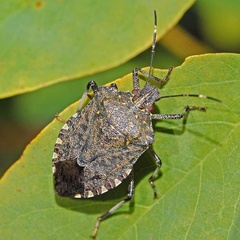 Brown Marmorated Stink BugHalyomorpha halysDamages trees, gardens or crops
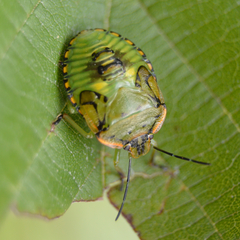 Green Stink BugChinavia hilarisDamages trees, gardens or crops
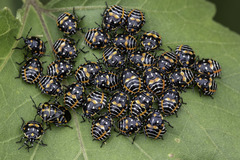 Harlequin BugMurgantia histrionicaDamages trees, gardens or crops
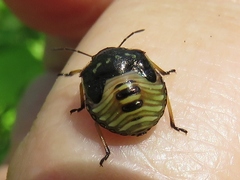 Brown Stink BugEuschistus servusDamages trees, gardens or crops
 Green Shield BugPalomena prasina
 European Striped Shield BugGraphosoma italicum
Sources
- Wikipedia: https://en.wikipedia.org/wiki/Rhaphigaster_nebulosa
Look it up elsewhere: GBIF · iNaturalist · BugGuide · Wikipedia
Text written 2026-10-22 from the sources above and checked sentence by sentence against them. Data fetched 2026-10-22.