 Bug FAQ
Mormidea lugens
Mormidea lugens · Order: Hemiptera · Family: Pentatomidae
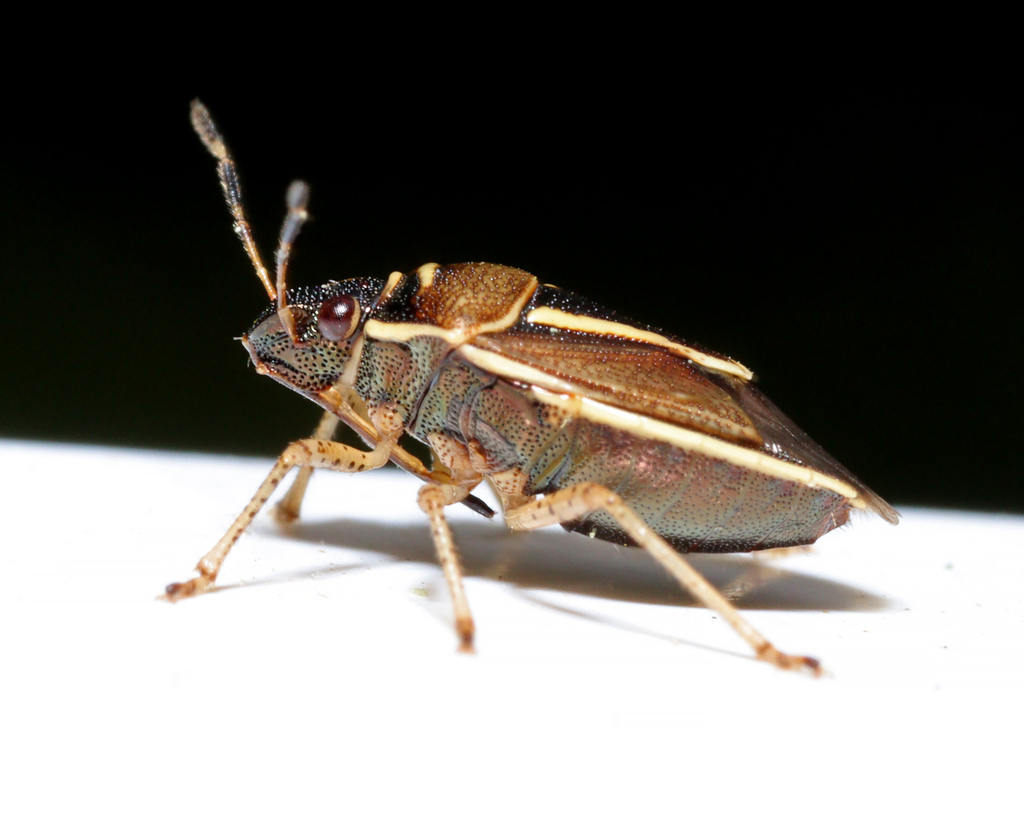
Mormidea lugens is a bronze stink bug about 5 to 7 mm long with a pale border on the scutellum. In Illinois adults appear from late April to early November and develop from egg to adult in roughly 40 to 50 days at 24 °C.
Source: Wikipedia
Size
They measure about 5.0 to 7.2 mm (0.20 to 0.28 in) in length.
Source: Wikipedia
What it eats
Feeds on timothy, several sedge species, deer-tongue grass and Bosc’s panic-grass.
Source: Wikipedia
Life cycle
Adults emerge in late April and are present until early November in Illinois, likely having two generations per year. At about 24 °C, development from egg to adult takes 39 to 50 days, varying with host plant.
Source: Wikipedia
When you see it
Adults are observed from late April through early November in Illinois.
Source: Wikipedia
Where it is found in the US
Recorded in 39 of 51 states and DC. Most records: Texas, Massachusetts, Virginia, North Carolina, Pennsylvania, Illinois, Florida, Kentucky.
Darker = more records. Counts are museum and citizen-science records, not population size.
Source: GBIF
Status: native in North America; native in Canada. Source: iNaturalist
Months it is reported in the US
Source: GBIF
More photos
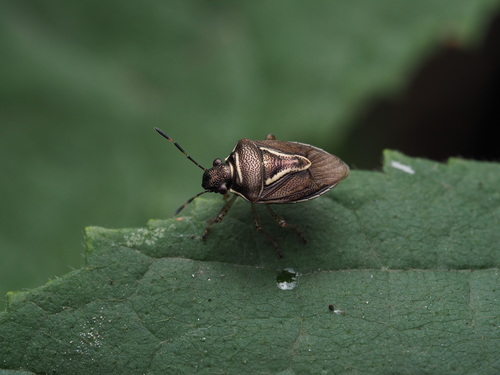
Same family (Pentatomidae)
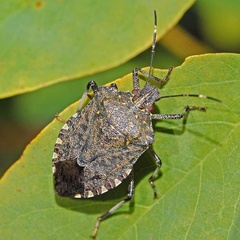 Brown Marmorated Stink BugHalyomorpha halysDamages trees, gardens or crops
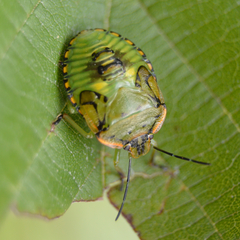 Green Stink BugChinavia hilarisDamages trees, gardens or crops
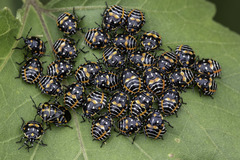 Harlequin BugMurgantia histrionicaDamages trees, gardens or crops
 Brown Stink BugEuschistus servusDamages trees, gardens or crops
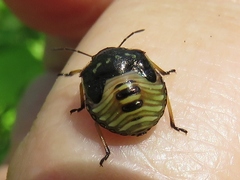
 Green Shield BugPalomena prasina
 European Striped Shield BugGraphosoma italicum
Sources
- Wikipedia: https://en.wikipedia.org/wiki/Mormidea_lugens
Look it up elsewhere: GBIF · iNaturalist · BugGuide · ITIS · Wikipedia
Text written 2026-10-22 from the sources above and checked sentence by sentence against them. Data fetched 2026-10-22.