 Bug FAQ
Morimus asper
Morimus asper · Order: Coleoptera · Family: Cerambycidae
Source: Wikipedia
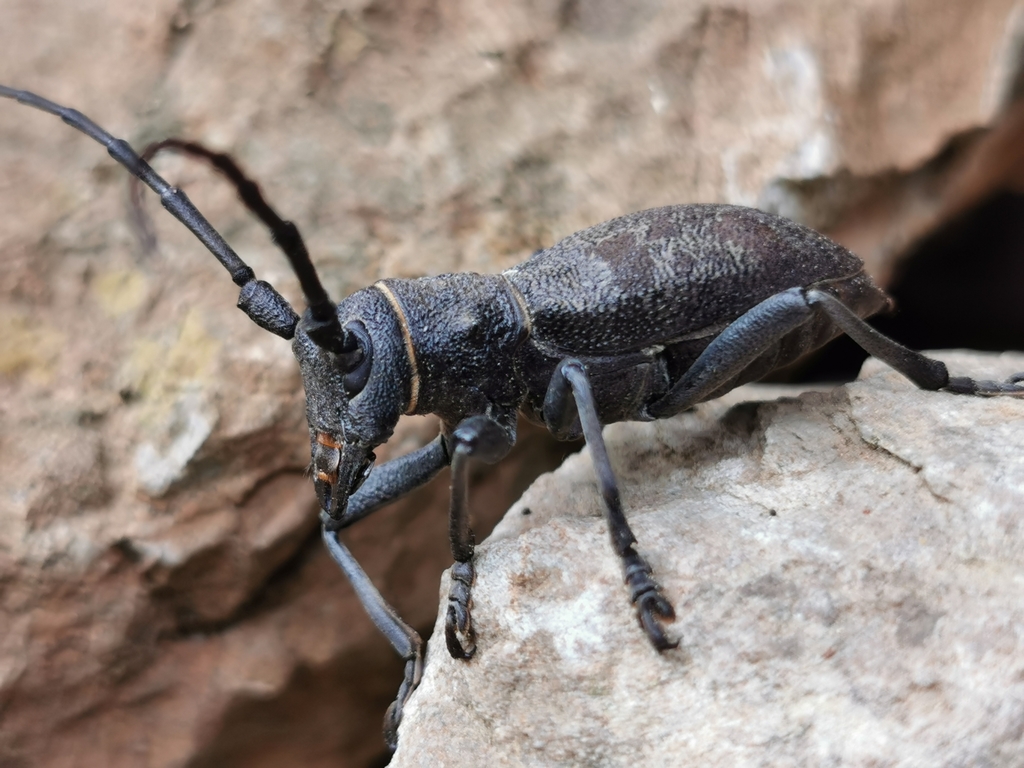
Adults are 15 to 40 mm long and are active from March to October, feeding on bark, leaves and stems while hiding during the day. It is widespread across much of Europe and parts of western Asia, including many Mediterranean countries and Turkmenistan.
Source: Wikipedia
How to recognize it
The beetle has a black, elongated oval body covered with short gray-brown hair and a grainy texture on the elytra. The subspecies Morimus asper funereus shows gray-blue elytra with dark spots.
Source: Wikipedia
Size
Adults range from 15 to 40 mm in length.
Source: Wikipedia
Where it lives
Adults are found from March through October, feeding on bark, leaves and stems and usually hiding during daylight hours.
Source: Wikipedia
What it eats
Adults feed on bark, leaves and stems of various plants. Larvae are polyphagous, consuming wood of both deciduous and coniferous trees.
Source: Wikipedia
Life cycle
Mating and egg-laying mainly occur in the evening and at night when the beetles are active. Males often fight, causing severe damage to each other.
Source: Wikipedia
When you see it
Adults can be observed from early spring through autumn (March to October).
Source: Wikipedia
Where it comes from
The species occurs throughout southwestern, southern and southeastern Europe and into western Asia, including countries such as France, Italy, Greece, Turkey, Russia and Turkmenistan.
Source: Wikipedia
More photos


Questions people ask
Can they damage my garden or trees?
Yes, both adults and larvae feed on bark, leaves and wood, which can harm trees and shrubs.
Source: Wikipedia
When are they most active?
They are active mainly in the evening and at night, and adults are present from March to October.
Source: Wikipedia
Same family (Cerambycidae)
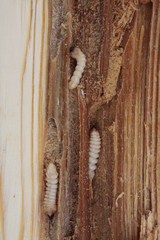 House LonghornHylotrupes bajulusCan damage your home
 Asian Longhorned BeetleAnoplophora glabripennisDamages trees, gardens or crops
 Red Milkweed BeetleTetraopes tetrophthalmus
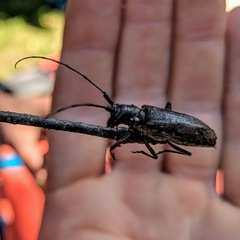 White-spotted SawyerMonochamus scutellatusCan damage your home
 Red Pine Longhorn BeetleStictoleptura rubra
 Spotted Longhorn BeetleRutpela maculataDamages trees, gardens or crops
Sources
- Wikipedia: https://en.wikipedia.org/wiki/Morimus_asper
Look it up elsewhere: GBIF · iNaturalist · BugGuide · Wikipedia
Text written 2026-10-22 from the sources above and checked sentence by sentence against them. Data fetched 2026-10-22.