 Bug FAQ
Minute two-spotted ladybird
Diomus notescens · Order: Coleoptera · Family: Coccinellidae
Also called: Minute two-spotted ladybird beetle
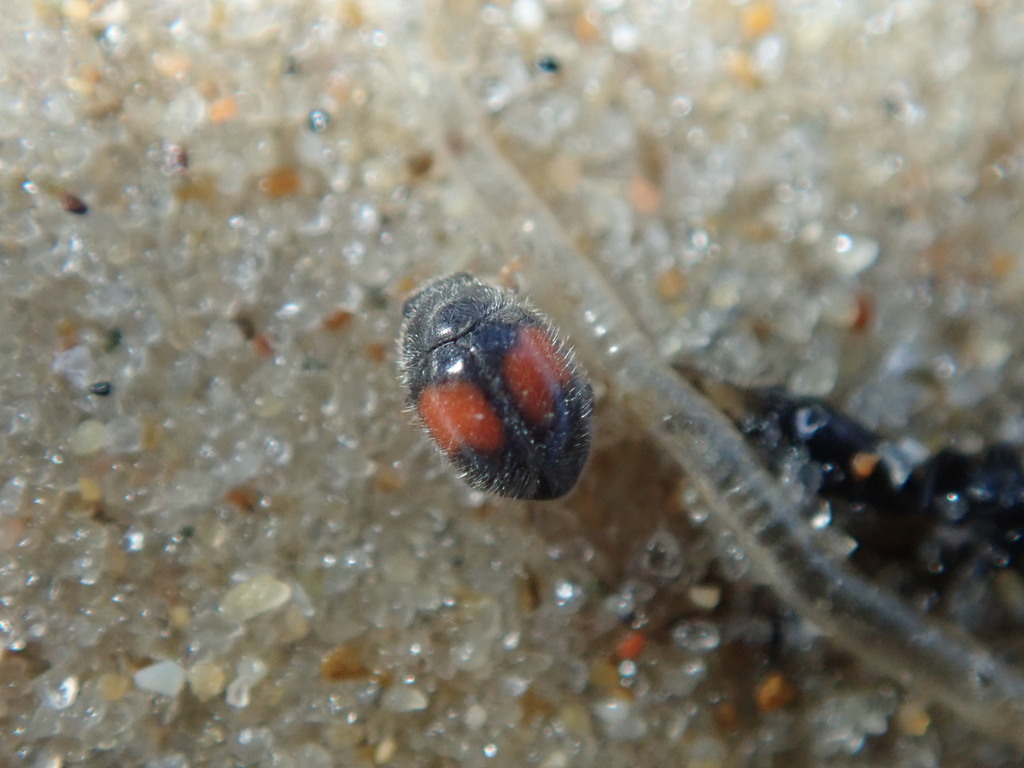
The minute two-spotted ladybird is only about 2.5 mm long. It is dark greenish-black with two large reddish-brown spots on its wing covers and has very short hairs. It is native to eastern and southern Australia.
Source: Wikipedia
How to recognize it
The beetle is dark greenish-black with two prominent reddish-brown patches on the elytra. Its body is covered with very short fine hairs.
Source: Wikipedia
Size
Adults measure about 2.5 mm in length.
Source: Wikipedia
Where it is found in the US
Recorded in 1 of 51 states and DC. Most records: Hawaii.
Darker = more records. Counts are museum and citizen-science records, not population size.
Source: GBIF
Months it is reported in the US
Source: GBIF
Questions people ask
How can I identify a minute two-spotted ladybird?
Look for a tiny beetle about 2.5 mm long, dark greenish-black with two reddish-brown spots on its wing covers and a surface of very short hairs.
Source: Wikipedia
Where is this ladybird found?
It is native to the eastern and southern regions of Australia.
Source: Wikipedia
Same family (Coccinellidae)

Sources
- Wikipedia: https://en.wikipedia.org/wiki/Diomus_notescens
Look it up elsewhere: GBIF · iNaturalist · BugGuide · ITIS · Wikipedia
Text written 2026-10-23 from the sources above and checked sentence by sentence against them. Data fetched 2026-10-23.