 Bug FAQ
Migrant Spreadwing
Lestes barbarus · Order: Odonata · Family: Lestidae
Also called: Shy Emerald Damselfly, Southern Emerald Damselfly
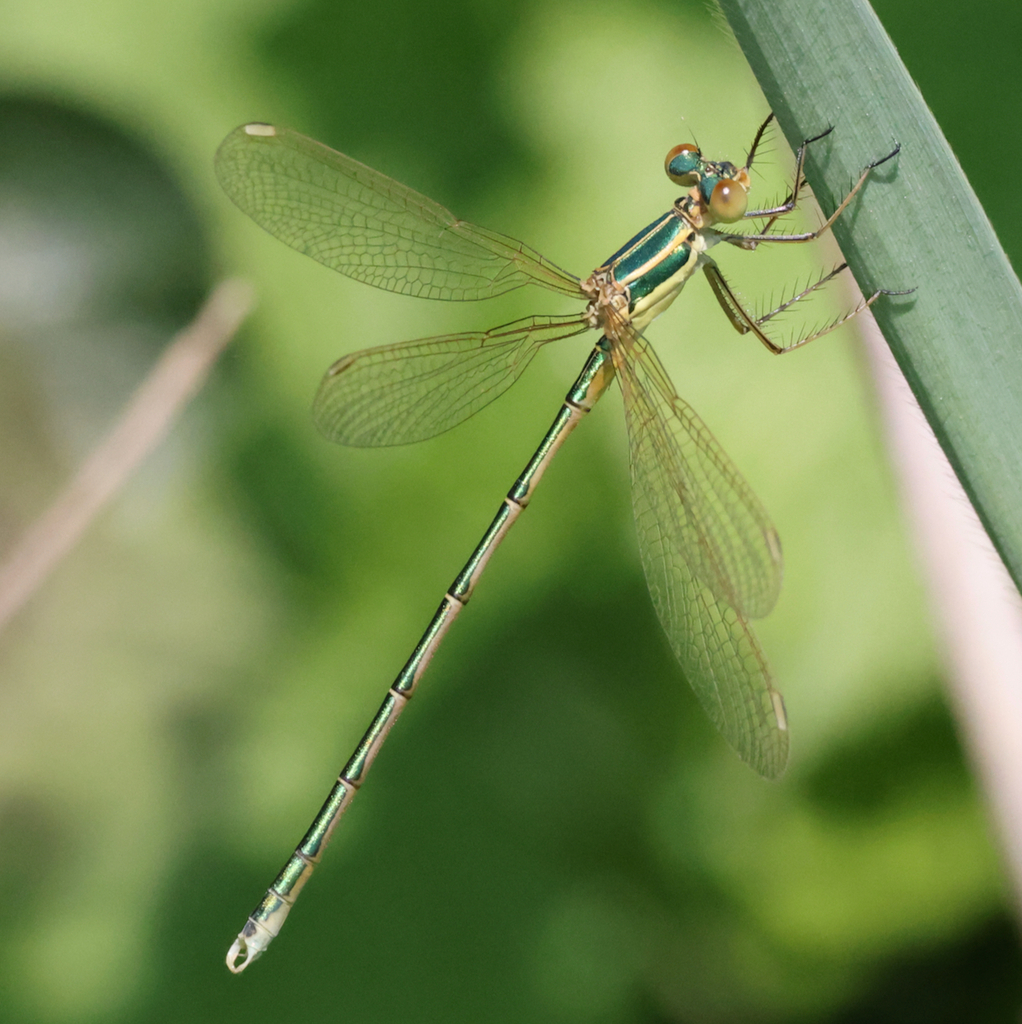
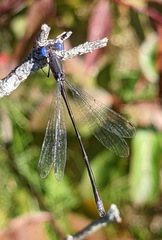
It can be told apart from other European Lestes by its two-coloured wing spots and distinctive male and female tail parts. It lives around still or slightly salty water, breeds in coastal dunes of the Netherlands, and its flight season runs from March to October in the south and June to August in the north.
Source: Wikipedia
How to recognize it
Has bicoloured pterostigmata, which is a key identifying feature. Male tail appendage and female ovipositor are unique compared with L. sponsa and L. dryas.
Source: Wikipedia
Where it lives
Found near still water, including stagnant and slightly brackish sites. Breeds in coastal dune habitats in the Netherlands and is increasing there.
Source: Wikipedia
What it eats
Larvae develop in about two months and emerge as adults in late spring. After mating, the pair stays in tandem while the female deposits eggs on plants near water.
Source: Wikipedia
Life cycle
Eggs overwinter in diapause and hatch in spring. Larvae grow for roughly two months before becoming adults in late spring.
Source: Wikipedia
When you see it
Flies from March to October in southern parts of its range; in northern areas it is mainly seen June to August. Has been breeding on the Channel Islands since 1995, at the northern edge of its range.
Source: Wikipedia
Where it comes from
Native to a band across southern Europe from Spain to Greece and extending east to India and Mongolia, with isolated groups in North Africa.
Source: Wikipedia
Lookalikes
The bicoloured pterostigmata set it apart from other European Lestes species. Male abdominal appendage and female ovipositor differ from those of L. sponsa and L. dryas.
Source: Wikipedia
Same family (Lestidae)

Sources
- Wikipedia: https://en.wikipedia.org/wiki/Lestes_barbarus
Look it up elsewhere: GBIF · iNaturalist · BugGuide · Wikipedia
Text written 2026-10-22 from the sources above and checked sentence by sentence against them. Data fetched 2026-10-22.