 Bug FAQ
Common Spreadwing
Lestes sponsa · Order: Odonata · Family: Lestidae
Also called: Common Emerald Damselfly, Emerald Damselfly, Green Lestes
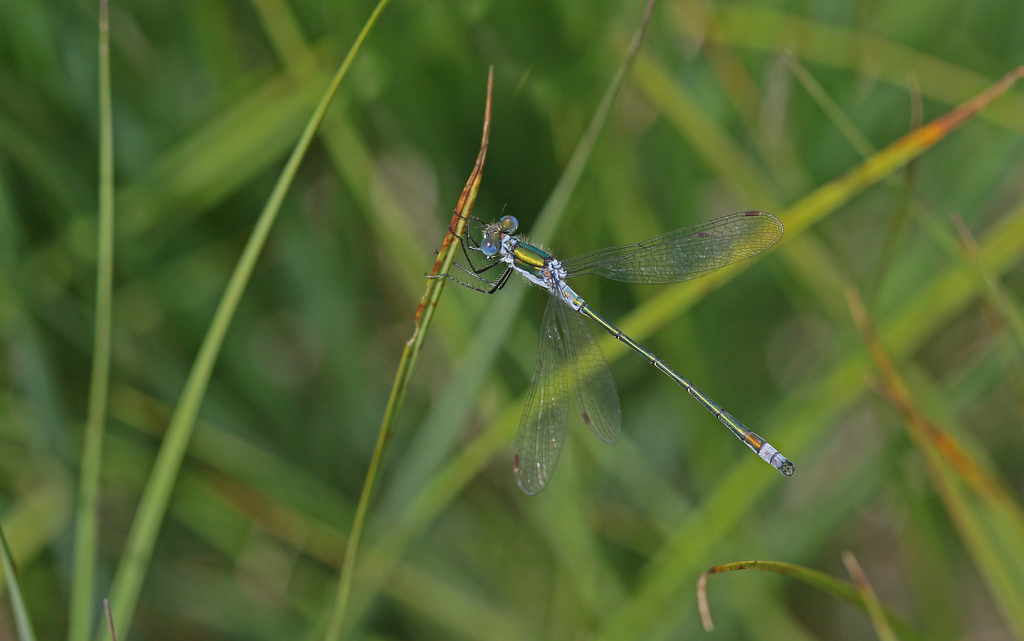
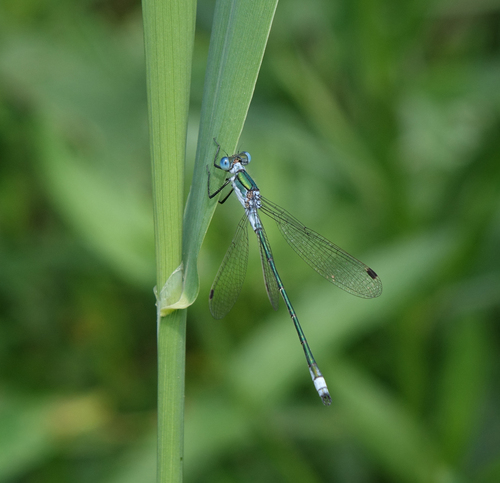
The common spreadwing is a metallic green damselfly with brown wing spots; mature males show powder-blue on the thorax and parts of the abdomen. It lives near still or very slow-moving water such as pools, ponds and moorlands that have aquatic plants, and adults are most common from July to September. Its range covers a wide band across the Palaearctic, from Spain through central Europe and Asia to the Pacific.
Source: Wikipedia
How to recognize it
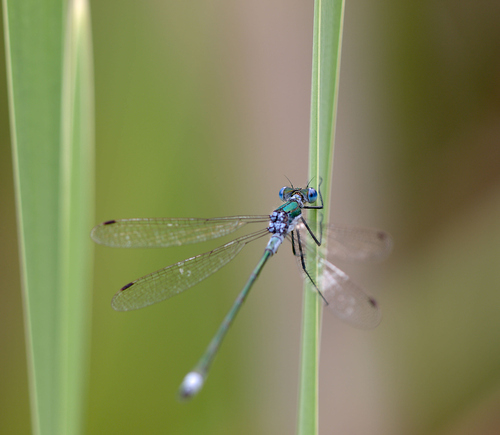
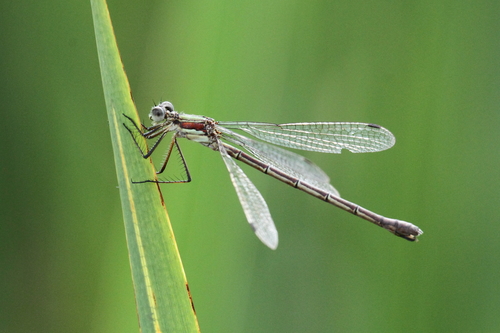
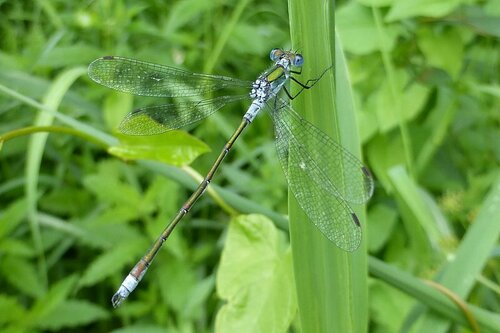
Both sexes are metallic green with brown spots on the wings. Mature males develop powder-blue coloration on the prothorax and on abdominal segments 1-2 and 9-10.
Source: Wikipedia
Size
The abdomen measures 26 to 33 mm and the wings are 19 to 23 mm long.
Source: Wikipedia
Where it lives
It is found near pools with aquatic plants and prefers still or very slow-flowing water such as ponds and moorlands.
Source: Wikipedia
What it eats
Larvae are active hunters that grow quickly, while newly emerged adults need a week or more before they can reproduce.
Source: Wikipedia
Life cycle
The species is obligatorily univoltine, producing one generation per year.
Source: Wikipedia
When you see it
Adults appear in July, are most common in July and August, and remain on the wing until September.
Source: Wikipedia
Lookalikes
All Lestes species look very similar, making field identification difficult; in northern Europe five species occur, and across Europe six species exist.
Source: Wikipedia
Where it is found in the US
Recorded in 1 of 51 states and DC. Most records: New York.
Darker = more records. Counts are museum and citizen-science records, not population size.
Source: GBIF
More photos
Questions people ask
When can I expect to see common spreadwings?
Adults emerge in July and are active through September, with peak numbers in July and August.
Source: Wikipedia
What habitats should I check for common spreadwings?
Look near still or very slow-moving water such as pools, ponds, and moorlands that have aquatic plants.
Source: Wikipedia
How can I tell a male common spreadwing from a female?
Mature males show powder-blue on the prothorax and on abdominal segments 1-2 and 9-10, while both sexes share a metallic green body with brown wing spots.
Source: Wikipedia
Same family (Lestidae)

Sources
- Wikipedia: https://en.wikipedia.org/wiki/Lestes_sponsa
Look it up elsewhere: GBIF · iNaturalist · BugGuide · Wikipedia
Text written 2026-10-22 from the sources above and checked sentence by sentence against them. Data fetched 2026-10-22.