 Bug FAQ
Great Spreadwing
Archilestes grandis · Order: Odonata · Family: Lestidae
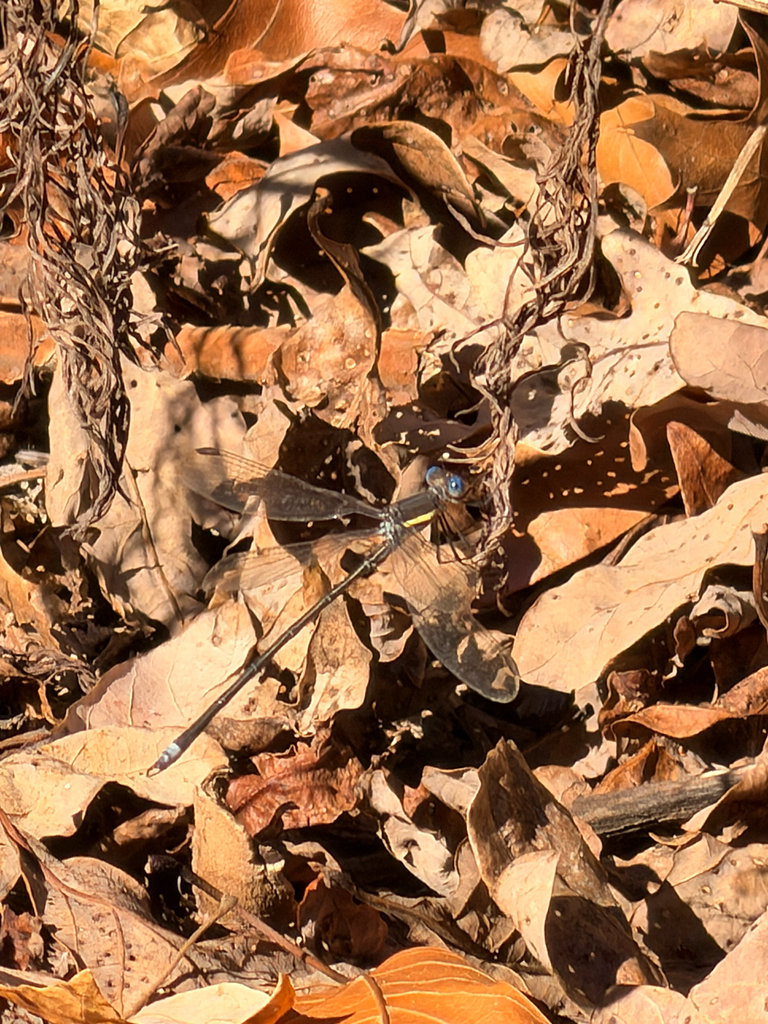
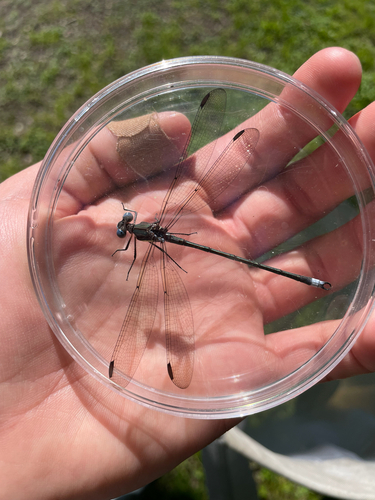
The great spreadwing is a large damselfly about 2-2.4 in long with a 3 in wingspan; males are dull green-bronze with a yellow diagonal stripe, blue eyes, and a dark abdomen ending in a blue-gray tip, while females are browner with paler blue eyes and the same stripe. After mating the female cuts a slit in emergent plants to lay eggs, and adults emerge at night like other odonates.
Source: Wikipedia
How to recognize it
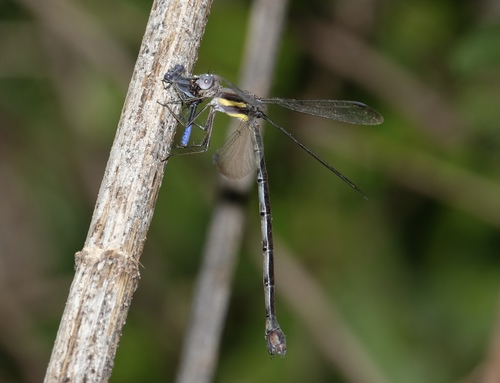
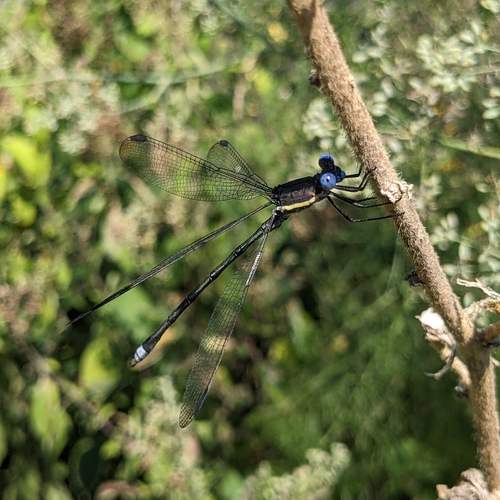
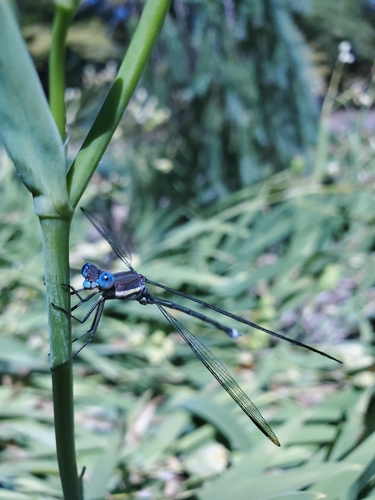
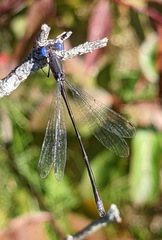
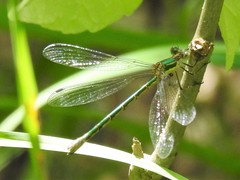
Males have a dull green-bronze thorax with a broad diagonal yellow stripe on the sides, blue eyes and face, and a dark abdomen with a blue-gray tip. Females look similar but are browner, have paler blue eyes, and also show the yellow stripe.
Source: Wikipedia
Size
Adults are 2-2.4 in long and have a wingspan of about 3 in.
Source: Wikipedia
Where it lives
They prefer slow, small streams with alder or willow, as well as wetlands, ponds, temporary pools, and heavily vegetated water gardens with unpolluted water.
Source: Wikipedia
Life cycle
Adults emerge under cover of darkness like other odonates.
Source: Wikipedia
When you see it
They are most active from April through December, with exact timing varying with temperature.
Source: Wikipedia
Where it comes from
The species occurs in western and southern North America and is more common in the western United States than the east.
Source: Wikipedia
Where it is found in the US
Recorded in 40 of 51 states and DC. Most records: Texas, Arizona, Ohio, Colorado, New Mexico, Oklahoma, California, Utah.
Darker = more records. Counts are museum and citizen-science records, not population size.
Source: GBIF
Status: native in North America; native in United States; native in Canada. Source: iNaturalist
Months it is reported in the US
Source: GBIF
More photos
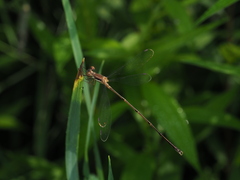
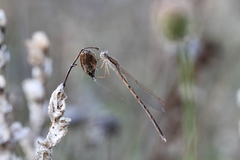
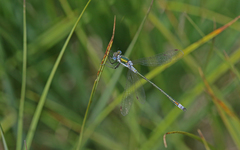
Same family (Lestidae)

Sources
- Wikipedia: https://en.wikipedia.org/wiki/Great_spreadwing
Look it up elsewhere: GBIF · iNaturalist · BugGuide · ITIS · Wikipedia
Text written 2026-10-22 from the sources above and checked sentence by sentence against them. Data fetched 2026-10-22.