 Bug FAQ
Common Winter Damselfly
Sympecma fusca · Order: Odonata · Family: Lestidae
Also called: Brown Emerald Damselfly, Common Winter Emerald Damselfly, Winter Damselfly
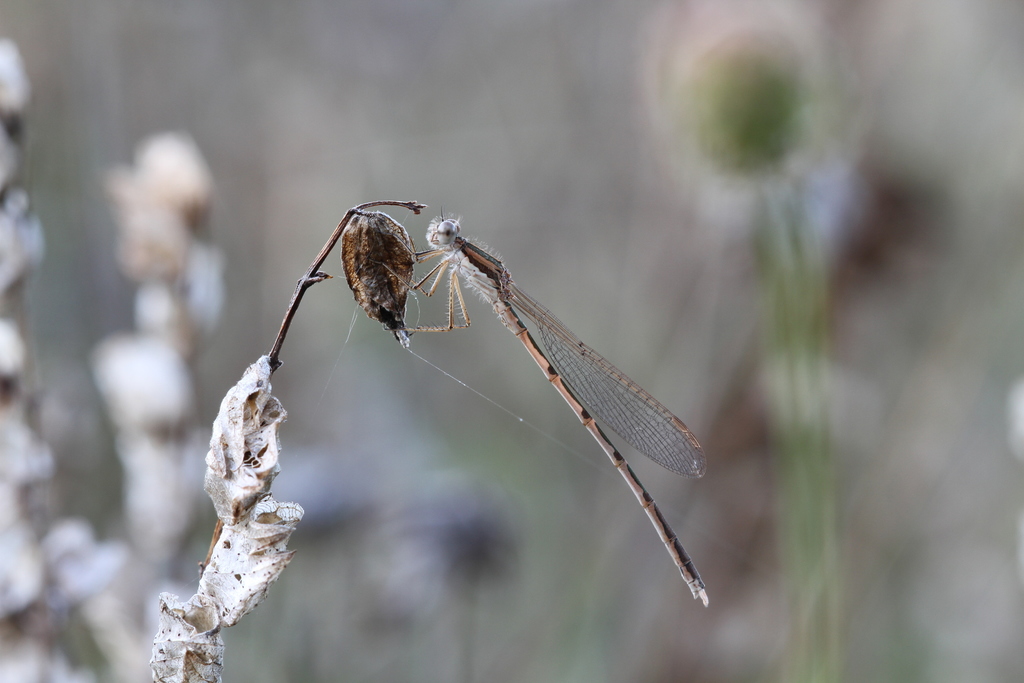
The Common Winter Damselfly is about 38 mm long and lacks the bright blue or red colours of many damselflies, making it easy to overlook. It is found across southern and central Europe, the Mediterranean, North Africa and many Mediterranean islands, and it is present year-round because adults overwinter.
Source: Wikipedia
How to recognize it
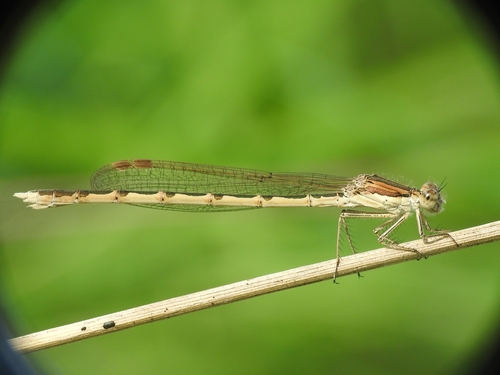
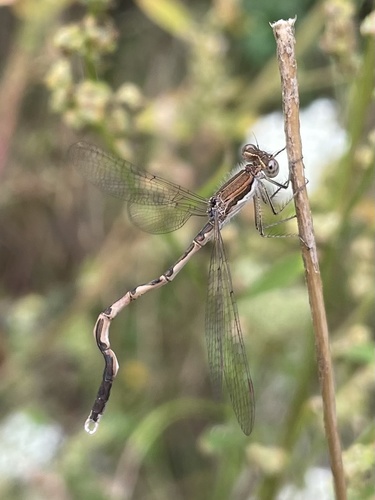
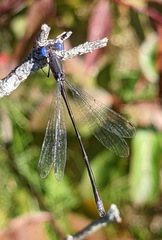
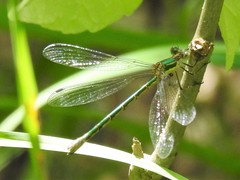
The wings have pale brown pterostigma on both fore- and hind-wings that can be seen with the wings closed because they do not overlap.
Source: Wikipedia
Size
Adults reach about 38 mm (1.5 in) in length.
Source: Wikipedia
Where it lives
It occurs in all types of standing water, including brackish water.
Source: Wikipedia
What it eats
Eggs hatch and the larvae develop quickly, completing development in about two months.
Source: Wikipedia
Life cycle
Adults are present all year because they overwinter as adults. Eggs hatch and larvae develop in roughly two months.
Source: Wikipedia
When you see it
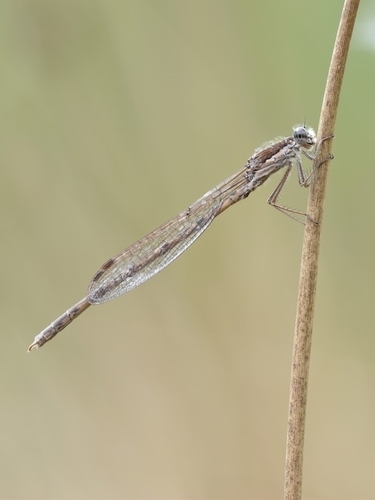
Most breeding activity occurs in April and May. Unlike many damselflies, they rest with their wings folded alongside their bodies.
Source: Wikipedia
Where it comes from
Its range covers much of southern and central Europe to Asia, where it is replaced by Sympecma paedisca. It is also present around the Mediterranean in Europe, North Africa and many Mediterranean islands.
Source: Wikipedia
Lookalikes
It is only similar to Sympecma paedisca; distinguishing them requires close examination, often with magnification.
Source: Wikipedia
More photos
Questions people ask
How can I tell the Common Winter Damselfly apart from similar species?
Look for the pale brown pterostigma that does not overlap and compare the wing position; careful hand-held examination, preferably with magnification, is needed to separate it from Sympecma paedisca.
Source: Wikipedia
When are these damselflies active?
Adults are present year-round because they overwinter as adults, and most breeding happens in April and May.
Source: Wikipedia
Where might I find them in winter?
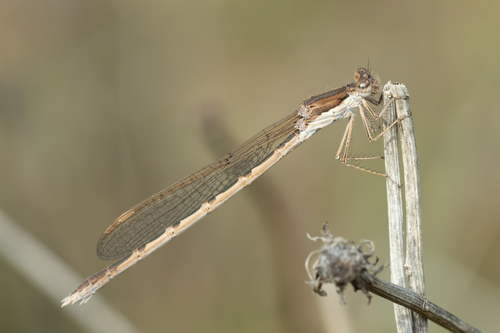
In winter they are usually away from water, perched on dry plant stems in open grassland or heath areas.
Source: Wikipedia
Same family (Lestidae)

Sources
- Wikipedia: https://en.wikipedia.org/wiki/Sympecma_fusca
Look it up elsewhere: GBIF · iNaturalist · BugGuide · Wikipedia
Text written 2026-10-22 from the sources above and checked sentence by sentence against them. Data fetched 2026-10-22.