 Bug FAQ
Mexican Paper Wasp
Mischocyttarus mexicanus · Order: Hymenoptera · Family: Vespidae
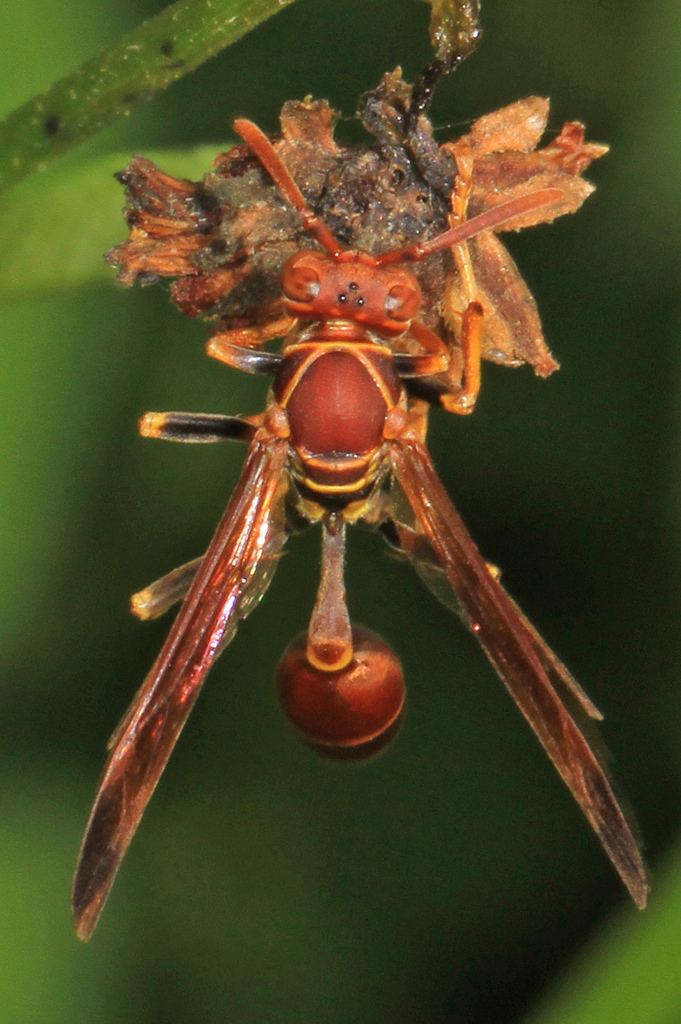
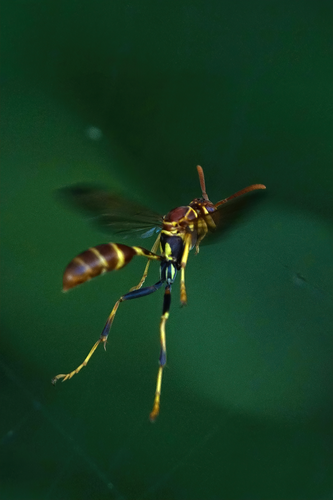
Mexican paper wasps are orange-yellow and can be recognized by unique tarsal and larval features. They build paper nests on palms, oak trees, Spanish moss and even on human structures, and the colonies can last up to eight months. These wasps forage for both arthropod prey and nectar, visiting flowers such as palmetto and Lyonia.
Source: Wikipedia
How to recognize it
Adults have asymmetrical lobes on their tarsal segments and larvae have forward-projecting abdominal appendages.
Source: Wikipedia
Size
They are typically orange-yellow in color.
Source: Wikipedia
Where it lives
Nests are found on a variety of plants such as saw palmetto, cabbage palm, oak trees, Spanish moss, and also on human constructions.
Source: Wikipedia
What it eats
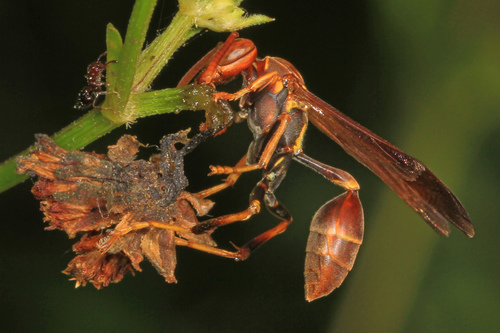
They collect arthropod prey and also feed on nectar from flowers like palmetto and Lyonia.
Source: Wikipedia
Life cycle
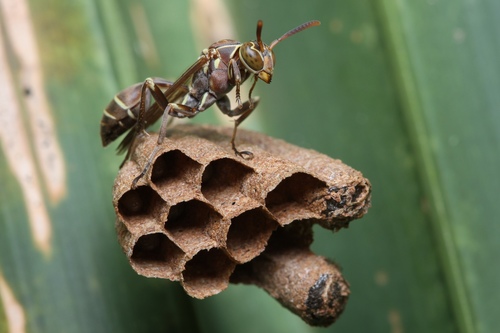
Nests consist of an open-cell paper comb attached to leaves, and a colony can last about eight months though many fail early.
Source: Wikipedia
When you see it
Nests can be started any time of year, with solitary (haplometrotic) nests more common in winter and spring and group (pleometrotic) nests more common in fall.
Source: Wikipedia
Where it comes from
Their range extends from the southern United States through Mexico to Costa Rica, with sightings in Texas.
Source: Wikipedia
Lookalikes
In Florida, the papaya fruit fly can appear brown or dark orange-yellow, resembling this wasp. Other Mischocyttarus species such as M. flavitarsis and M. angulatus look similar.
Source: Wikipedia
Where it is found in the US
Recorded in 8 of 51 states and DC. Most records: Florida, South Carolina, Texas, Georgia, Louisiana, North Carolina, Alabama, Mississippi.
Darker = more records. Counts are museum and citizen-science records, not population size.
Source: GBIF
Status: native in North America; native in United States. Source: iNaturalist
Months it is reported in the US
Source: GBIF
More photos
Questions people ask
How can I tell a Mexican paper wasp from similar insects?
Look for the orange-yellow color and the distinctive asymmetrical tarsal lobes in adults; larvae have forward-projecting abdominal appendages.
Source: Wikipedia
Where are Mexican paper wasp nests usually found?
They commonly attach paper nests to palms, oak trees, Spanish moss, and sometimes to the sides of buildings.
Source: Wikipedia
What do Mexican paper wasps eat?
They hunt arthropod prey and also visit flowers for nectar, especially palmetto and Lyonia blossoms.
Source: Wikipedia
Same family (Vespidae)


Sources
- Wikipedia: https://en.wikipedia.org/wiki/Mischocyttarus_mexicanus
Look it up elsewhere: GBIF · iNaturalist · BugGuide · Wikipedia
Text written 2026-10-23 from the sources above and checked sentence by sentence against them. Data fetched 2026-10-22.