 Bug FAQ
Mexican Bean Beetle
Epilachna varivestis · Order: Coleoptera · Family: Coccinellidae
Also called: Ladybird Beetle
Source: Wikipedia
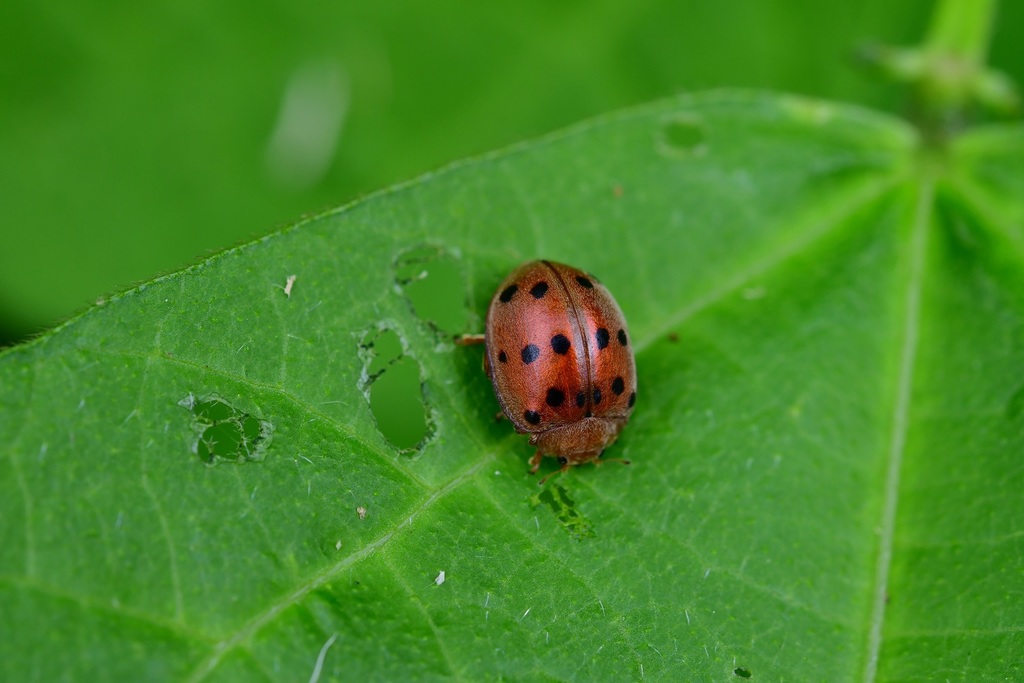
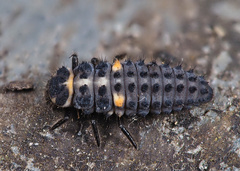
Adults are small lady-beetles about 6 to 7 mm long with eight black spots on each wing cover and colors that range from bright red to rusty brown or golden yellow. They appear in late spring, lay hundreds of eggs on bean leaves, and the larvae grow from about 1.6 mm to roughly 1 cm before pupating under the foliage. Found across Mexico and the eastern United States and favor moist, irrigated fields, they can become abundant in western U.S. areas but avoid very dry habitats.
Source: Wikipedia
How to recognize it
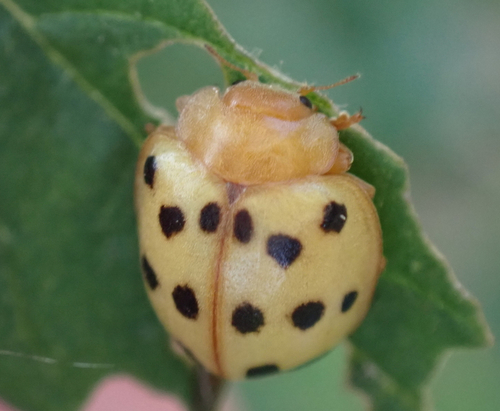
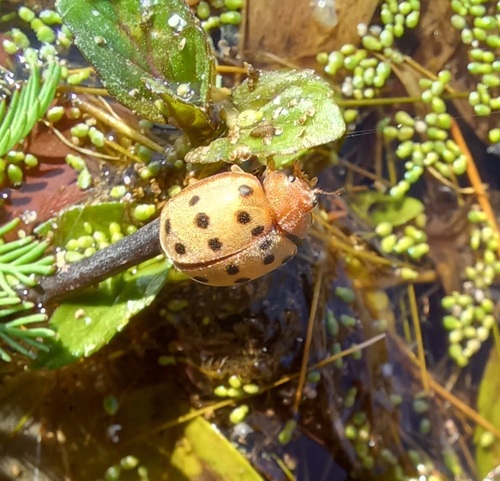
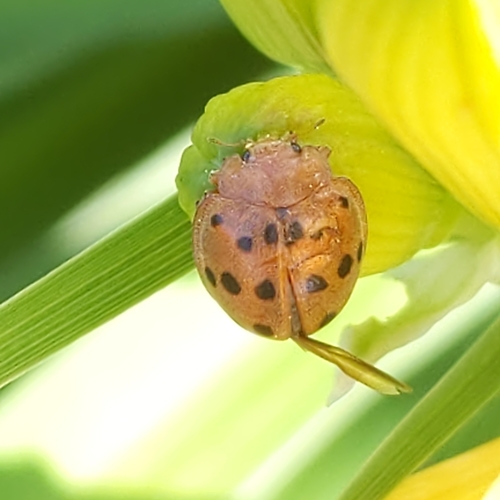
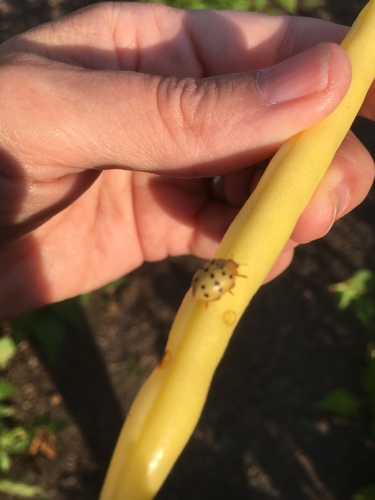
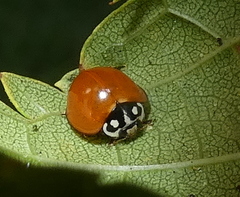
Each adult has eight black spots on each elytron and may be bright red, rusty brown, or golden yellow.
Source: Wikipedia
Size
Adults measure about 6 to 7 mm long, while newly hatched larvae are roughly 1.6 mm and grow to about 1 cm before pupation.
Source: Wikipedia
How to get rid of it
The parasitoid wasp Pediobius foveolatus is used as a biological control agent against it. Systemic insecticides are often applied at planting when the beetle is a frequent problem.
Source: Wikipedia
Where it lives
The beetle occurs throughout Mexico and the eastern U.S., especially in wetter, heavily irrigated regions west of the Rockies. It cannot survive in extremely dry environments.
Source: Wikipedia
What it eats
Both adults and larvae chew leaf, flower and pod tissue of beans and other legumes, with adults favoring leaves.
Source: Wikipedia
Life cycle
After a few weeks of feeding, larvae pupate together under leaves, then overwinter as adults that may travel long distances to new fields.
Source: Wikipedia
When you see it
Adult beetles become active in late spring.
Source: Wikipedia
Where it comes from
It is probably native to the southern plateau area of Mexico.
Source: Wikipedia
Lookalikes
Unlike most North American lady beetles that prey on insects, this species feeds on plants.
Source: Wikipedia
Where it is found in the US
Recorded in 35 of 51 states and DC. Most records: Pennsylvania, Kentucky, Maryland, Ohio, Colorado, Virginia, New York, New Mexico.
Darker = more records. Counts are museum and citizen-science records, not population size.
Source: GBIF
Status: introduced in Canada; introduced in United States. Source: iNaturalist
Months it is reported in the US
Source: GBIF
More photos
Questions people ask
How can I control Mexican bean beetles?
You can release the parasitoid wasp Pediobius foveolatus and apply systemic insecticides at planting if the beetle is common.
Source: Wikipedia
What plants do Mexican bean beetles damage?
They feed on beans and other legume crops, chewing leaves, flowers and pods.
Source: Wikipedia
Where is the Mexican bean beetle found?
It occurs throughout Mexico and the eastern United States, especially in moist, irrigated areas west of the Rockies, and avoids very dry places.
Source: Wikipedia
Same family (Coccinellidae)

Sources
- Wikipedia: https://en.wikipedia.org/wiki/Mexican_bean_beetle
Look it up elsewhere: GBIF · iNaturalist · BugGuide · ITIS · Wikipedia
Text written 2026-10-24 from the sources above and checked sentence by sentence against them. Data fetched 2026-10-24.