 Bug FAQ
Metaphalangium cirtanum
Metaphalangium cirtanum · Order: Opiliones · Family: Phalangiidae
Source: Wikipedia
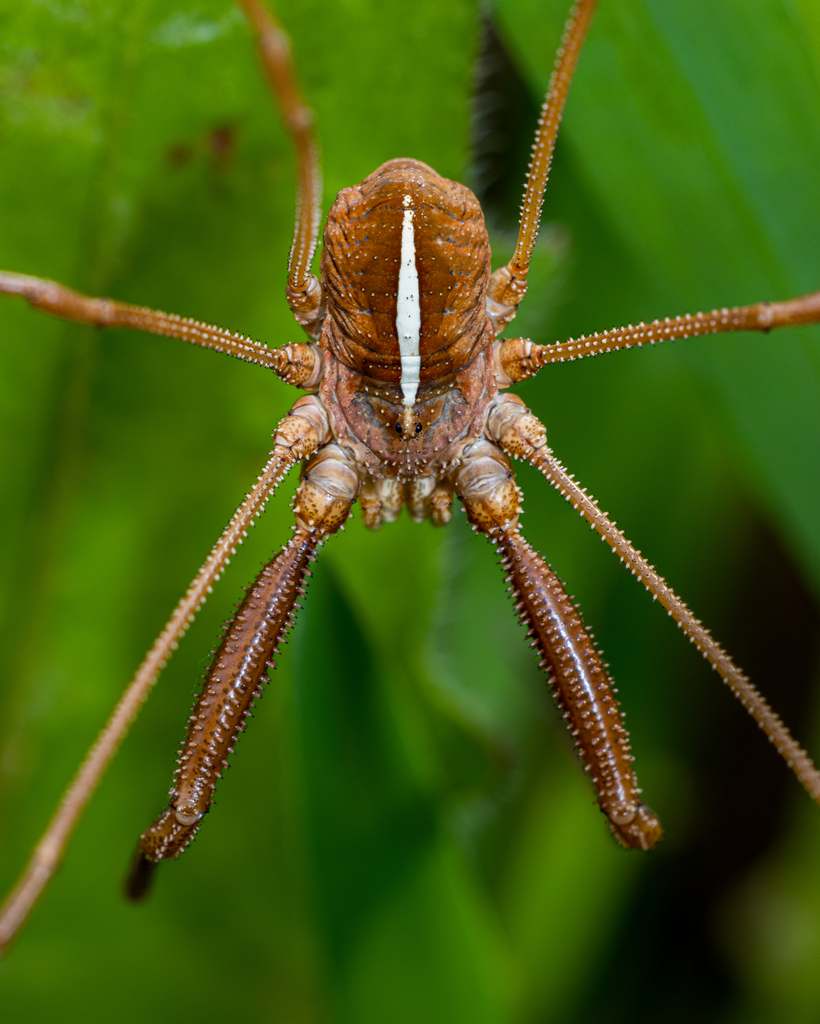
Adults are 4.5 to 9 mm long and reddish-brown with a dark saddle marking on the abdomen outlined in white. They live on sunny wastelands and rocky grasslands across the Mediterranean region and are seen from June to August.
Source: Wikipedia
How to recognize it
The body is reddish brown with a dark brown, angular saddle-shaped mark in the middle of the abdomen, partly outlined in white. A white stripe runs lengthwise from the eye mound to the anus, and a small black thorn is on the front part of the body.
Source: Wikipedia
Size
Adults measure about 4.5 to 9 mm in length.
Source: Wikipedia
Does it bite or sting?
They cannot bite or sting; they have no venom glands or fangs and only release a mild, smelly defensive spray if handled roughly.
Source: Wikipedia
Where it lives
They are found mainly in sunny wasteland and rocky grassland.
Source: Wikipedia
When you see it
Adults are active from June through August.
Source: Wikipedia
Where it comes from
Their range circles the Mediterranean, including countries such as Spain, Italy, Greece, Turkey and North African nations.
Source: Wikipedia
More photos

Questions people ask
Do they bite or sting humans or pets?
No, they have no venom glands or fangs and cannot bite or sting; at most they may emit a mild, irritating spray when disturbed.
Source: Wikipedia
Same family (Phalangiidae)



Sources
- Wikipedia: https://en.wikipedia.org/wiki/Metaphalangium_cirtanum
Look it up elsewhere: GBIF · iNaturalist · BugGuide · Wikipedia
Text written 2026-10-23 from the sources above and checked sentence by sentence against them. Data fetched 2026-10-22.