 Bug FAQ
Metallic Blue Lady Beetle
Curinus coeruleus · Order: Coleoptera · Family: Coccinellidae
Also called: Dark Blue Lady Beetle, Ladybird beetle
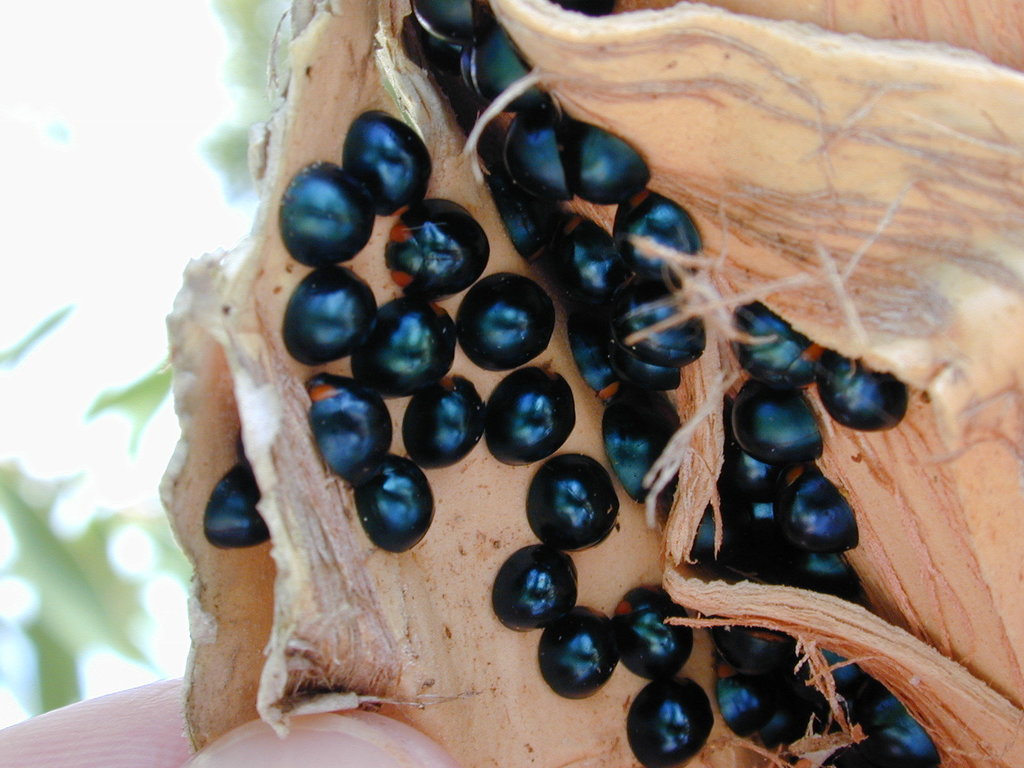
Adults are about 5 mm long, with males showing partly orange-yellow heads and females having dark heads. It originates from South America and has been introduced to parts of Asia and the Pacific, where it preys on several soft-scale insects and thrips.
Source: Wikipedia
How to recognize it
Males have a partly orange-yellow head, while females have a dark brown to black head.
Source: Wikipedia
Where it lives
Found in South America, including Brazil.
Source: Wikipedia
What it eats
Preys on several soft-scale insects and thrips such as Aleurodicus dispersus, Ceratovacuna lanigera, Ferrisia virgata and Thrips palmi.
Source: Wikipedia
Where it is found in the US
Recorded in 3 of 51 states and DC. Most records: Florida, Hawaii, California.
Darker = more records. Counts are museum and citizen-science records, not population size.
Source: GBIF
Status: introduced in United States. Source: iNaturalist
Months it is reported in the US
Source: GBIF
More photos

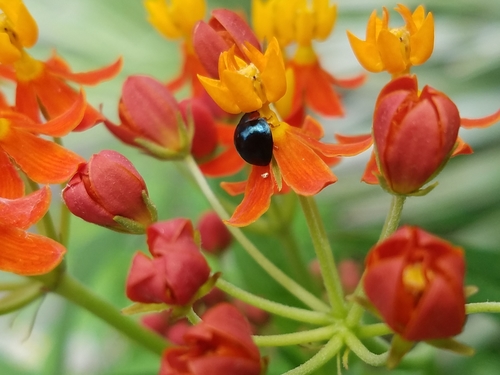
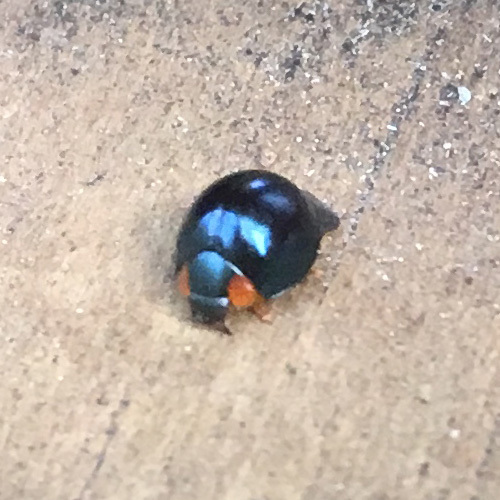
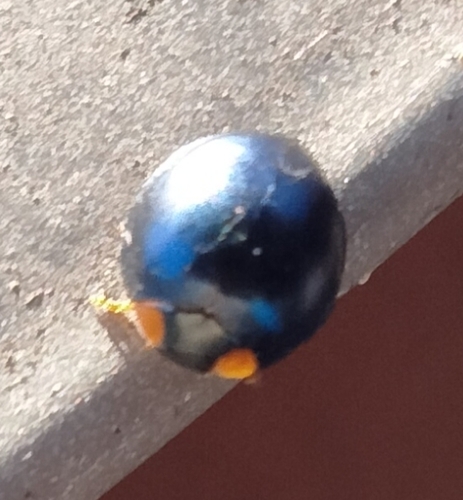
Same family (Coccinellidae)

Sources
- Wikipedia: https://en.wikipedia.org/wiki/Curinus_coeruleus
Look it up elsewhere: GBIF · iNaturalist · BugGuide · ITIS · Wikipedia
Text written 2026-10-23 from the sources above and checked sentence by sentence against them. Data fetched 2026-10-22.