 Bug FAQ
Mealybug Destroyer
Cryptolaemus montrouzieri · Order: Coleoptera · Family: Coccinellidae
Also called: Mealybug Ladybird, Papaya mealybug
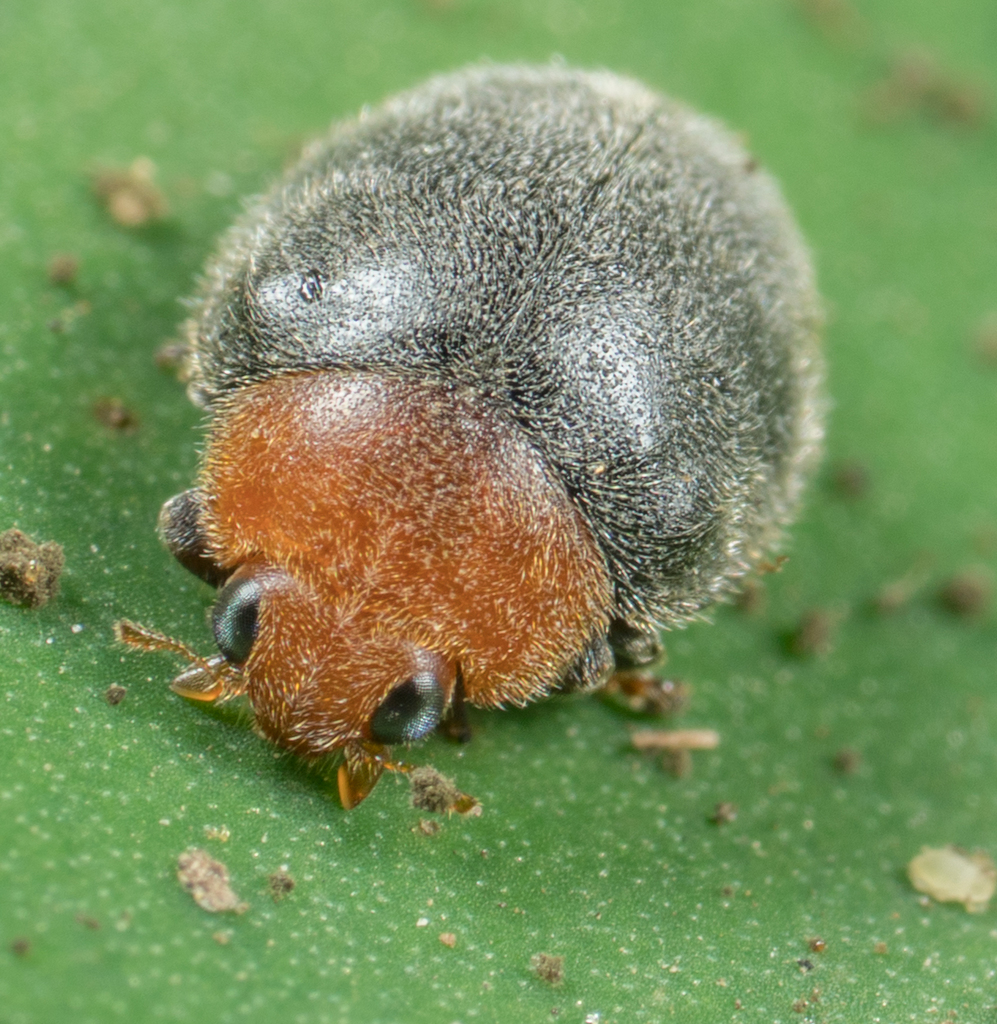
They are small ladybird beetles about 6 mm long, orange-brown with dark brown wing covers. Native to eastern Australia, they have been introduced worldwide to control mealybugs and soft scale insects. Adults and larvae eat mealybug eggs, crawlers and honeydew, reaching adulthood in about 24 days and living two months.
Source: Wikipedia
How to recognize it
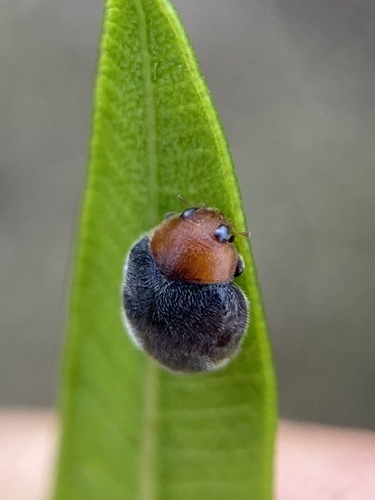
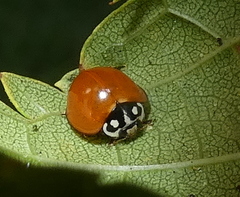
Adults look like tiny ladybirds with dark brown wing covers and orange-brown heads, antennae, pronotum, wing tips and legs.
Source: Wikipedia
Size
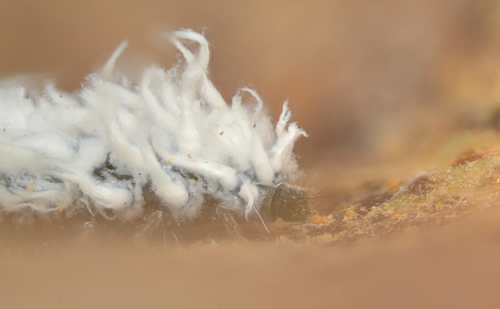
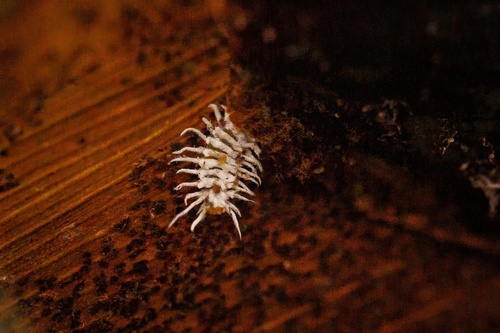
Adults grow to about 6 mm (0.24 in) long, while larvae can be up to 15 mm (0.59 in).
Source: Wikipedia
How to get rid of it
Used worldwide as a biological control agent to suppress mealybug and soft scale populations.
Source: Wikipedia
Where it lives
They are now found across Europe, North Africa, the Afrotropical, Nearctic and Neotropical realms.
Source: Wikipedia
What it eats
Both adults and larvae feed on mealybugs and other soft scale insects, with larvae preferring eggs, young crawlers and honeydew.
Source: Wikipedia
Life cycle
They pass through four larval stages and a pupal stage, becoming adults in about 24 days and living roughly two months.
Source: Wikipedia
When you see it
They were introduced to Western Australia and to California in 1891 for citrus mealybug control.
Source: Wikipedia
Where it comes from
The species originates from eastern Australia, especially Queensland and New South Wales.
Source: Wikipedia
Where it is found in the US
Recorded in 39 of 51 states and DC. Most records: California, Texas, Florida, Hawaii, Georgia, Massachusetts, New York, Colorado.
Darker = more records. Counts are museum and citizen-science records, not population size.
Source: GBIF
Status: introduced in North America; introduced in Canada; introduced in United States. Source: iNaturalist
Months it is reported in the US
Source: GBIF
More photos

Questions people ask
Are they harmful to my house or garden plants?
They are beneficial; they eat mealybugs that damage plants rather than harming the plants themselves.
Source: Wikipedia
What do they look like?
They are tiny ladybirds about 6 mm long, with dark brown wing covers and orange-brown heads, antennae, pronotum, wing tips and legs.
Source: Wikipedia
Where do they come from?
They are native to eastern Australia, especially Queensland and New South Wales, but have been introduced to many other regions for pest control.
Source: Wikipedia
Same family (Coccinellidae)

Sources
- Wikipedia: https://en.wikipedia.org/wiki/Cryptolaemus_montrouzieri
Look it up elsewhere: GBIF · iNaturalist · BugGuide · ITIS · Wikipedia
Text written 2026-10-22 from the sources above and checked sentence by sentence against them. Data fetched 2026-10-22.