 Bug FAQ
Mango Stem Borer
Batocera rufomaculata · Order: Coleoptera · Family: Cerambycidae
Source: Wikipedia


Batocera rufomaculata, the mango stem borer, is a long-horn beetle that lives in many Asian countries and has spread to other regions. Its larvae bore into the trunks of mango, papaya, fig and other trees, which can kill the plants and reduce fruit harvests.
Source: Wikipedia
How to recognize it
Batocera rufomaculata is a long-horn beetle also called the mango stem borer.
Source: Wikipedia
How to get rid of it
The beetle can be parasitically infected by the wasp Avetianella batocerae.
Source: Wikipedia
Where it lives
The larvae live inside the trunks of fig, papaya, mango and Shorea trees, as well as other plant species.
Source: Wikipedia
More photos


Questions people ask
What trees does the mango stem borer damage?
Its larvae bore into mango, papaya, fig and Shorea trees, harming the trunks and reducing fruit production.
Source: Wikipedia
How can I control mango stem borer?
A natural control is the parasitic wasp Avetianella batocerae, which can infect the beetle.
Source: Wikipedia
Is the mango stem borer a pest for mango trees?
Yes, it can cause loss of yield and even kill mango trees in orchards.
Source: Wikipedia
What is the mango stem borer?
It is a long-horn beetle, Batocera rufomaculata, that bores into tree trunks.
Source: Wikipedia
Same family (Cerambycidae)
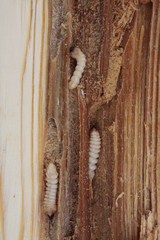 House LonghornHylotrupes bajulusCan damage your home
 Asian Longhorned BeetleAnoplophora glabripennisDamages trees, gardens or crops
 Red Milkweed BeetleTetraopes tetrophthalmus
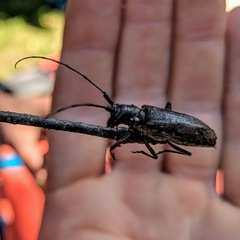 White-spotted SawyerMonochamus scutellatusCan damage your home
 Red Pine Longhorn BeetleStictoleptura rubra
 Spotted Longhorn BeetleRutpela maculataDamages trees, gardens or crops
Sources
- Wikipedia: https://en.wikipedia.org/wiki/Batocera_rufomaculata
Look it up elsewhere: GBIF · iNaturalist · BugGuide · Wikipedia
Text written 2026-10-23 from the sources above and checked sentence by sentence against them. Data fetched 2026-10-23.