 Bug FAQ
Madagascar Hermit Spider
Nephilingis livida · Order: Araneae · Family: Araneidae

Females grow to about 15 to 24 mm, while males are only 3 to 5 mm long. They are often found inside homes in Madagascar and nearby islands such as the Comoros and Seychelles. The species was separated from its close relative Nephilingis borbonica in 2011.
Source: Wikipedia
How to recognize it
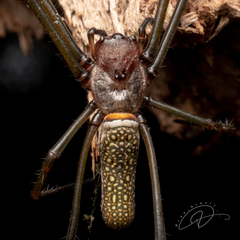
Female abdomens can be creamy, brown, blue or purple with a dark underside. Males have a yellow-brown chest area and a grey abdomen dotted with white spots.
Source: Wikipedia
Size
Females reach 15 to 24 mm in length. Males are much smaller, only 3 to 5 mm long.
Source: Wikipedia
Is it a pest in the house?
They are frequently found in homes in Madagascar.
Source: Wikipedia
Where it lives
They are common inside human dwellings in Madagascar.
Source: Wikipedia
Where it comes from
They occur in Madagascar and nearby islands such as the Comoro Islands and the Seychelles, including Aldabra atoll.
Source: Wikipedia
Lookalikes
They were distinguished from the similar species Nephilingis borbonica in 2011.
Source: Wikipedia
More photos


Questions people ask
Where are Madagascar hermit spiders found?
They live in Madagascar and nearby islands such as the Comoro Islands and the Seychelles.
Source: Wikipedia
How big do they get?
Females grow to about 15 to 24 mm, while males are only 3 to 5 mm long.
Source: Wikipedia
Same family (Araneidae)




Sources
- Wikipedia: https://en.wikipedia.org/wiki/Nephilingis_livida
Look it up elsewhere: GBIF · iNaturalist · BugGuide · ITIS · Wikipedia
Text written 2026-10-23 from the sources above and checked sentence by sentence against them. Data fetched 2026-10-23.