 Bug FAQ
Maculate Ladybird
Harmonia octomaculata · Order: Coleoptera · Family: Coccinellidae
Also called: Lady beetle, Maculate Lady Beetle, Maculate Ladybird Beetle
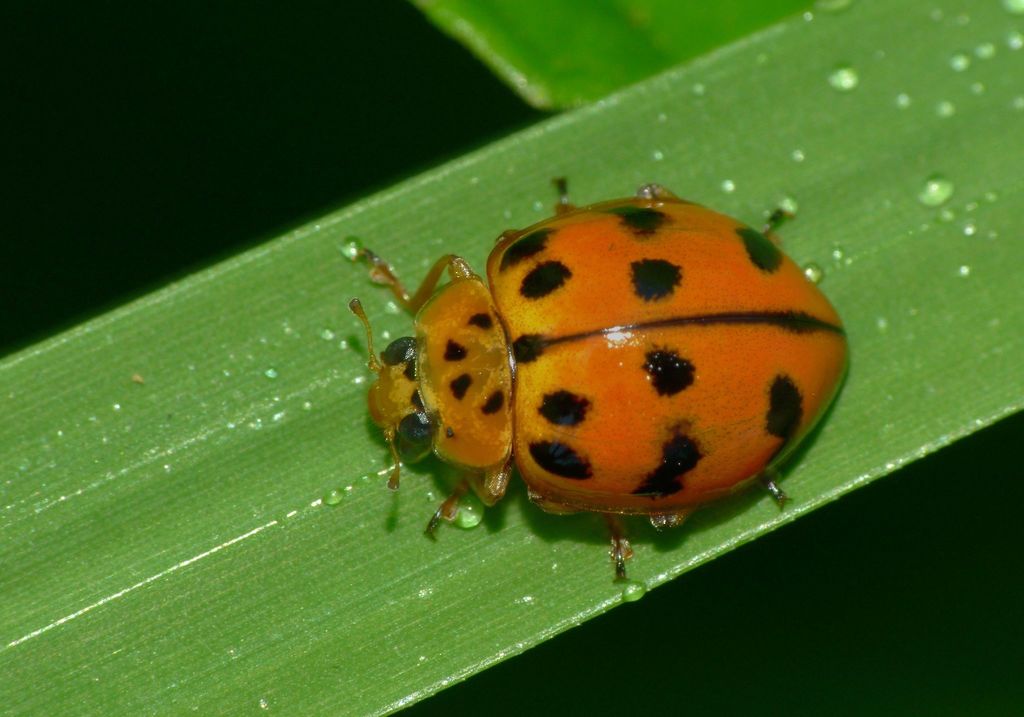
The Maculate Ladybird is a small ladybird about 8 mm long. It is a predator of many whiteflies, aphids, cotton pests and the fall armyworm moth.
Source: Wikipedia
How to recognize it
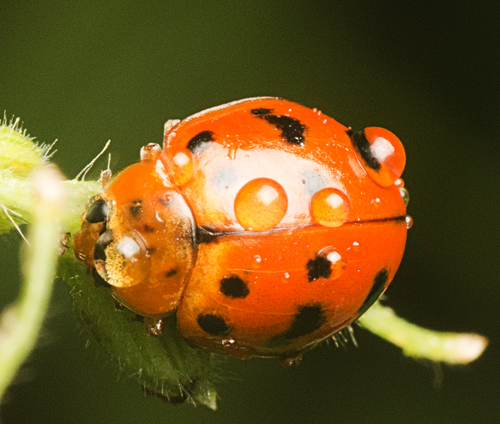
Its wing covers are yellow-orange with two to four black spots. The pronotum is yellow-orange with an M-shaped black marking.
Source: Wikipedia
Size
It measures about 8 mm in length.
Source: Wikipedia
What it eats
It also preys on the cotton pest Phenacoccus solenopsis and the moth Spodoptera frugiperda.
Source: Wikipedia
Life cycle
Males develop in about 42 to 49 days and females in about 49 to 57 days. The fourth-instar larva stops feeding, becomes sluggish and its body swells.
Source: Wikipedia
More photos
Questions people ask
What does the Maculate Ladybird look like?
Its wing covers are yellow-orange with a few black spots, and the pronotum has an M-shaped black mark.
Source: Wikipedia
What does the Maculate Ladybird eat?
It preys on various whiteflies, aphids, the cotton pest Phenacoccus solenopsis and the moth Spodoptera frugiperda.
Source: Wikipedia
Same family (Coccinellidae)

Sources
- Wikipedia: https://en.wikipedia.org/wiki/Harmonia_octomaculata
Look it up elsewhere: GBIF · iNaturalist · BugGuide · ITIS · Wikipedia
Text written 2026-10-23 from the sources above and checked sentence by sentence against them. Data fetched 2026-10-22.