 Bug FAQ
Lobed Argiope
Argiope lobata · Order: Araneae · Family: Araneidae
Also called: Black-lobed Garden Orb-web Spider
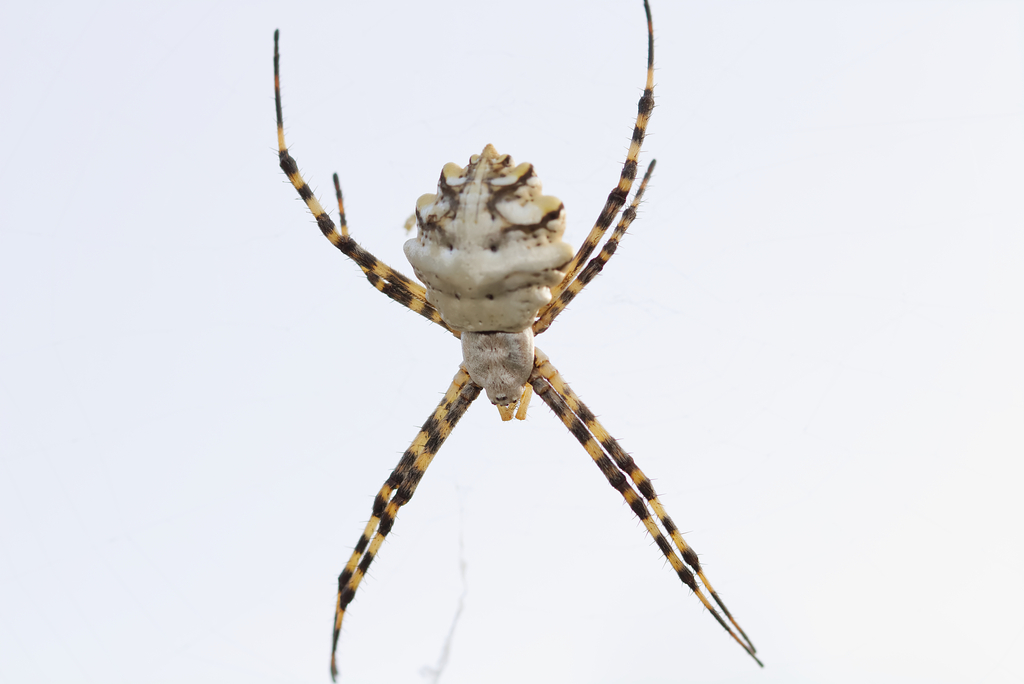
The female Lobed Argiope can be up to 25 mm long, while the male is only about 6 mm. Its silver abdomen has black and red spots, deep furrows and distinctive edge lobes. It builds large orb webs in open grasslands and gardens, hangs head-down in the web hub, and the webs often show a zig-zag stabilimentum.
Source: Wikipedia
How to recognize it
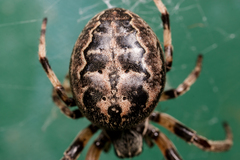
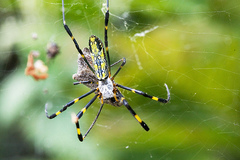
The abdomen is silver with black and red spots, deep furrows and lobed edges.
Source: Wikipedia
Size
Males are about 6 mm long; females can reach up to 25 mm.
Source: Wikipedia
Where it lives
During the day the spider hangs head-down in the centre of its web. It occurs in grassland, succulent Karoo and savanna biomes.
Source: Wikipedia
Where it comes from
Its range extends from the Mediterranean to China, including Myanmar, New Caledonia and northern Australia. In Africa it is found from Morocco and Algeria east to Senegal.
Source: Wikipedia
Lookalikes
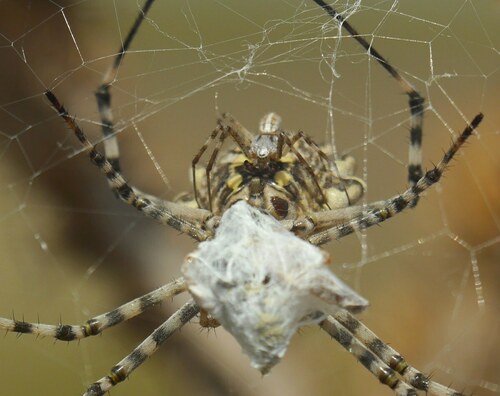
Like other Argiope spiders, its large web often has a prominent zig-zag stabilimentum.
Source: Wikipedia
Where it is found in the US
Recorded in 1 of 51 states and DC. Most records: Kansas.
Darker = more records. Counts are museum and citizen-science records, not population size.
Source: GBIF
More photos


Same family (Araneidae)


Sources
- Wikipedia: https://en.wikipedia.org/wiki/Argiope_lobata
Look it up elsewhere: GBIF · iNaturalist · BugGuide · ITIS · Wikipedia
Text written 2026-10-22 from the sources above and checked sentence by sentence against them. Data fetched 2026-10-22.