 Bug FAQ
Live-oak Root Borer
Archodontes melanopus · Order: Coleoptera · Family: Cerambycidae
Source: Wikipedia
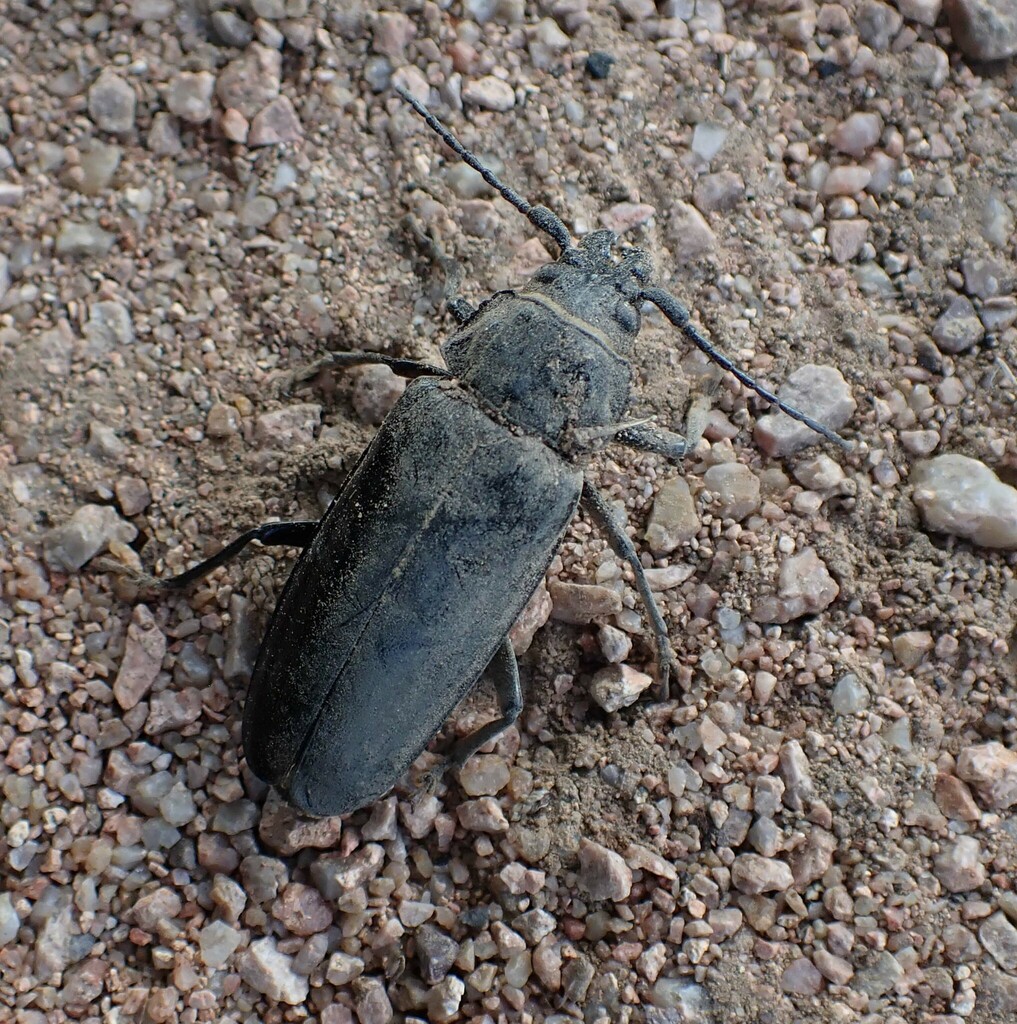
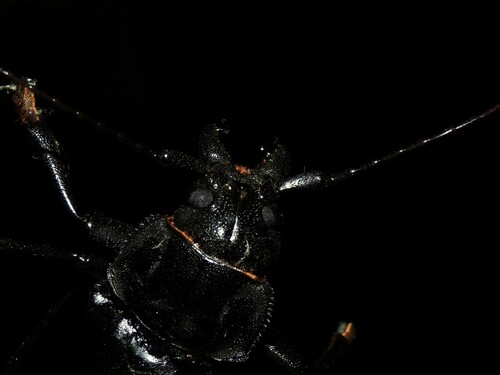
The Live-oak Root Borer is a large beetle about 2¼ inches (57 mm) long, with a short black head and dark brown-almost black wing covers that end in tiny spines. It lives in Central America and the southeastern United States, where it bores into the roots of oaks and other hardwood trees.
Source: Wikipedia
How to recognize it
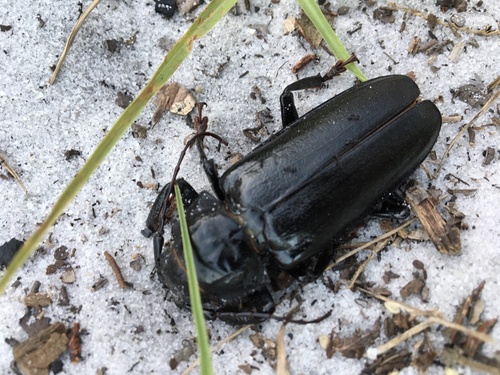
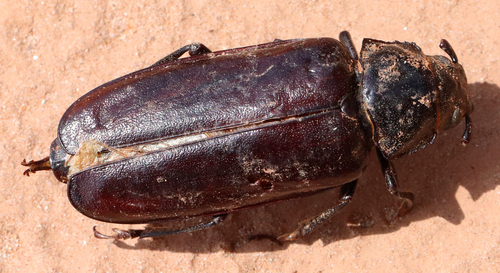
It has a short black head and dark wing covers edged on the sides and suture, each bearing a small spine that extends slightly beyond the rear.
Source: Wikipedia
Size
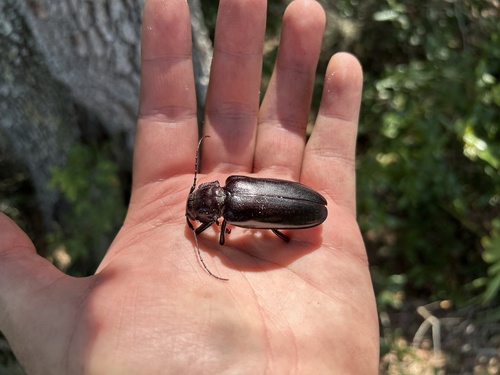
The beetle measures about 2¼ inches long, roughly 57 mm, including its mandibles.
Source: Wikipedia
Where it lives
It inhabits Central America and the southeastern United States, boring into the roots of oak and other hardwood trees.
Source: Wikipedia
What it eats
It feeds by boring into the roots of oaks and other hardwoods.
Source: Wikipedia
Where it is found in the US
Recorded in 13 of 51 states and DC. Most records: Florida, Texas, California, New Mexico, South Carolina, Arizona, Georgia, Oklahoma.
Darker = more records. Counts are museum and citizen-science records, not population size.
Source: GBIF
Status: native in North America; native in United States. Source: iNaturalist
Months it is reported in the US
Source: GBIF
More photos
Questions people ask
How can I recognize a Live-oak Root Borer?
Look for a beetle about 2¼ inches long with a short black head and dark wing covers that have a tiny spine at the end.
Source: Wikipedia
What trees does it damage?
It tunnels into the roots of oak trees and other hardwoods, harming the plants.
Source: Wikipedia
Where is this beetle found?
It is native to Central America and the southeastern United States.
Source: Wikipedia
Same family (Cerambycidae)
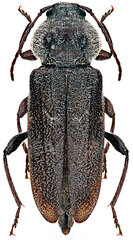 House LonghornHylotrupes bajulusCan damage your home
 Asian Longhorned BeetleAnoplophora glabripennisDamages trees, gardens or crops
 Red Milkweed BeetleTetraopes tetrophthalmus
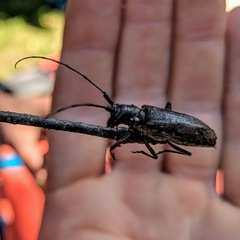 White-spotted SawyerMonochamus scutellatusCan damage your home
 Red Pine Longhorn BeetleStictoleptura rubra
 Spotted Longhorn BeetleRutpela maculata
Sources
- Wikipedia: https://en.wikipedia.org/wiki/Archodontes
Look it up elsewhere: GBIF · iNaturalist · BugGuide · ITIS · Wikipedia
Text written 2026-10-25 from the sources above and checked sentence by sentence against them. Data fetched 2026-10-25.