 Bug FAQ
Common Yellow Scorpion
Buthus occitanus · Order: Scorpiones · Family: Buthidae
Source: Wikipedia

The common yellow scorpion is 60 to 80 mm long and has a yellow-brown body. It lives in hot, dry places under stones, but also occurs in Mediterranean forests up to 1000 m altitude. Its venom causes a painful sting in Europe and can be fatal in North-African populations.
Source: Wikipedia
How to recognize it
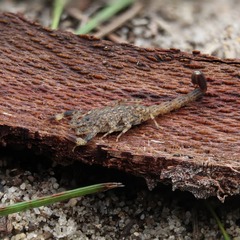
It is colored yellow or yellow-brown.
Source: Wikipedia
Size
Adults measure about 60 to 80 mm in length.
Source: Wikipedia
Does it bite or sting?
Its venom contains the BotIT6 toxin; toxicity varies across its range. In Europe the sting is painful but only mildly toxic, while in North Africa it can be fatal.
Source: Wikipedia
Where it lives
It hides under stones in dry, hot areas with sparse vegetation during the day. It has also been recorded in Mediterranean forests of Spain at elevations above 1000 m, where winter snow can occur.
Source: Wikipedia
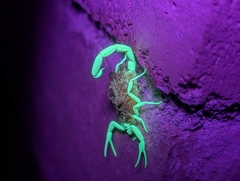
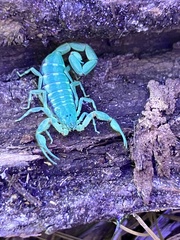
More photos


Questions people ask
How dangerous is the sting of a common yellow scorpion?
The sting is painful and can be mildly toxic in Europe, but in North Africa it may be fatal.
Source: Wikipedia
Where does the common yellow scorpion live?
It lives in dry, hot areas under stones and also in Mediterranean forests up to 1000 m altitude.
Source: Wikipedia
What does the common yellow scorpion look like?
It has a yellow or yellow-brown coloration.
Source: Wikipedia
Same family (Buthidae)





Sources
- Wikipedia: https://en.wikipedia.org/wiki/Buthus_occitanus
Look it up elsewhere: GBIF · iNaturalist · BugGuide · Wikipedia
Text written 2026-10-23 from the sources above and checked sentence by sentence against them. Data fetched 2026-10-22.