 Bug FAQ
Lesser Wax Moth
Achroia grisella · Order: Lepidoptera · Family: Pyralidae
Source: Wikipedia
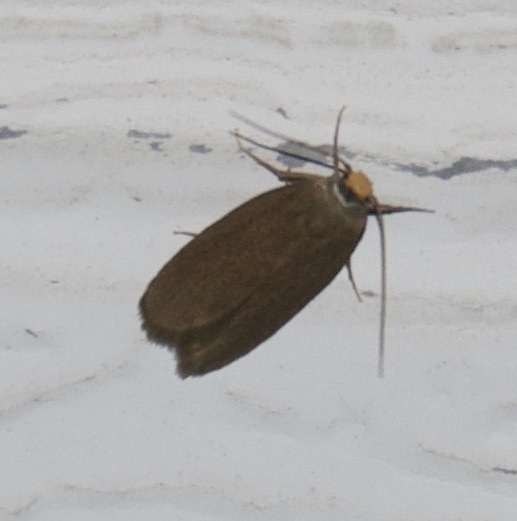
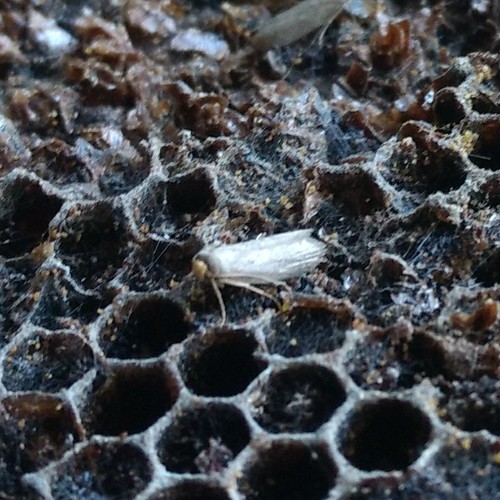
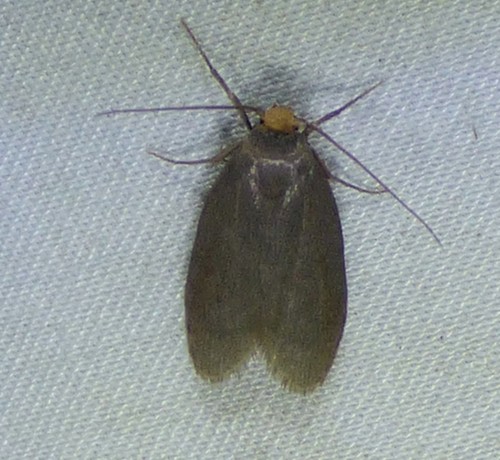
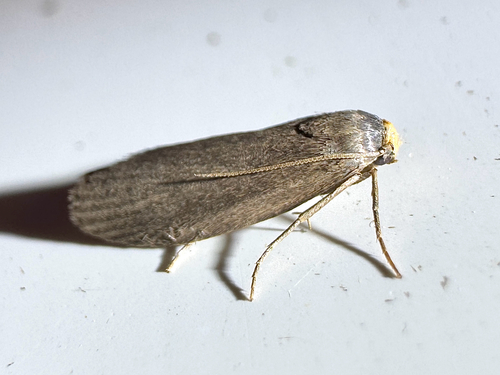
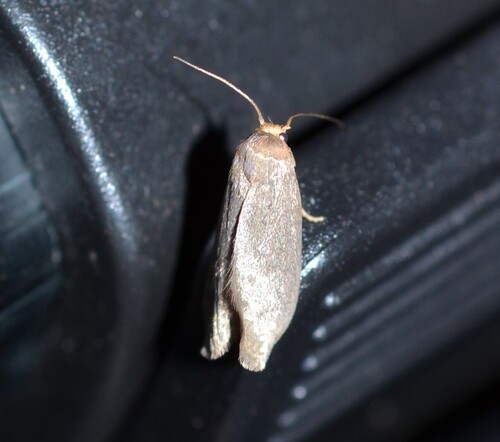
Adult lesser wax moths are about 0.5 inches (13 mm) long with a yellow head and a silver-grey or beige body. They are found wherever honey bees occur, except in cold climates, and their larvae feed on weak bee colonies. Females lay 250 to 300 eggs near hives, and the larvae can damage unoccupied combs, making them a pest for beekeepers.
Source: Wikipedia
How to recognize it
Adults have a distinct yellow head and a silver-grey or beige body.
Source: Wikipedia
Is it a pest in the house?
They eat unoccupied honey bee combs, making them pests to bees and beekeepers. Larvae line their tunnels with frass, protecting themselves from worker bees while feeding on comb.
Source: Wikipedia
How to get rid of it
- Beekeepers should keep hives healthy and functional to prevent infestations.
- Bacillus thuringiensis can be applied; it kills lesser wax moth larvae when they ingest it.
Source: Wikipedia
Where it lives
They occur in most parts of the world except cold regions. They are found wherever honey bee colonies exist.
Source: Wikipedia
What it eats
Only the larval stage feeds, and larvae consume weak bee colonies.
Source: Wikipedia
Life cycle
Females lay eggs in crevices near hives so larvae have nearby food. A female typically deposits 250 to 300 eggs in her lifetime.
Source: Wikipedia
When you see it
They survive better in lower temperatures than greater wax moths but cannot endure prolonged freezing.
Source: Wikipedia
Lookalikes
Greater wax moths may share the same comb, but the greater species usually outcompetes the lesser.
Source: Wikipedia
Where it is found in the US
Recorded in 38 of 51 states and DC. Most records: Texas, California, Mississippi, Pennsylvania, Florida, Louisiana, North Carolina, Alabama.
Darker = more records. Counts are museum and citizen-science records, not population size.
Source: GBIF
Status: introduced in Canada; introduced in United States. Source: iNaturalist
Months it is reported in the US
Source: GBIF
More photos
Questions people ask
How can I prevent a lesser wax moth infestation?
Maintain strong, healthy hives and consider using Bacillus thuringiensis, which is lethal to the larvae.
Source: Wikipedia
What do adult lesser wax moths look like?
They are about half an inch long with a yellow head and a silver-grey or beige body.
Source: Wikipedia
Where are lesser wax moths found?
They occur wherever honey bees live, in most of the world except very cold areas.
Source: Wikipedia
Do they damage my beehives?
Yes, the larvae feed on weak colonies and chew unoccupied comb, which is harmful to beekeepers.
Source: Wikipedia
Same family (Pyralidae)
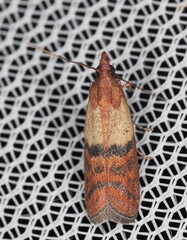 Indian-Meal MothPlodia interpunctellaCan damage your home
 Greater Wax MothGalleria mellonella
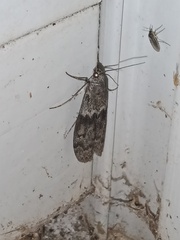 Mediterranean Flour MothEphestia kuehniellaCan damage your home
 Meal mothPyralis farinalisDamages trees, gardens or crops
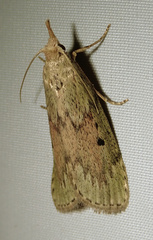 Bee MothAphomia sociellaNuisance, not dangerous
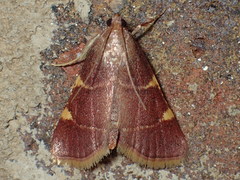 Yellow-fringed Dolichomia MothHypsopygia olinalis
Sources
- Wikipedia: https://en.wikipedia.org/wiki/Lesser_wax_moth
Look it up elsewhere: GBIF · iNaturalist · BugGuide · Wikipedia
Text written 2026-10-26 from the sources above and checked sentence by sentence against them. Data fetched 2026-10-26.