 Bug FAQ
Lesser thorn-tipped longhorn beetle
Pogonocherus hispidus · Order: Coleoptera · Family: Cerambycidae
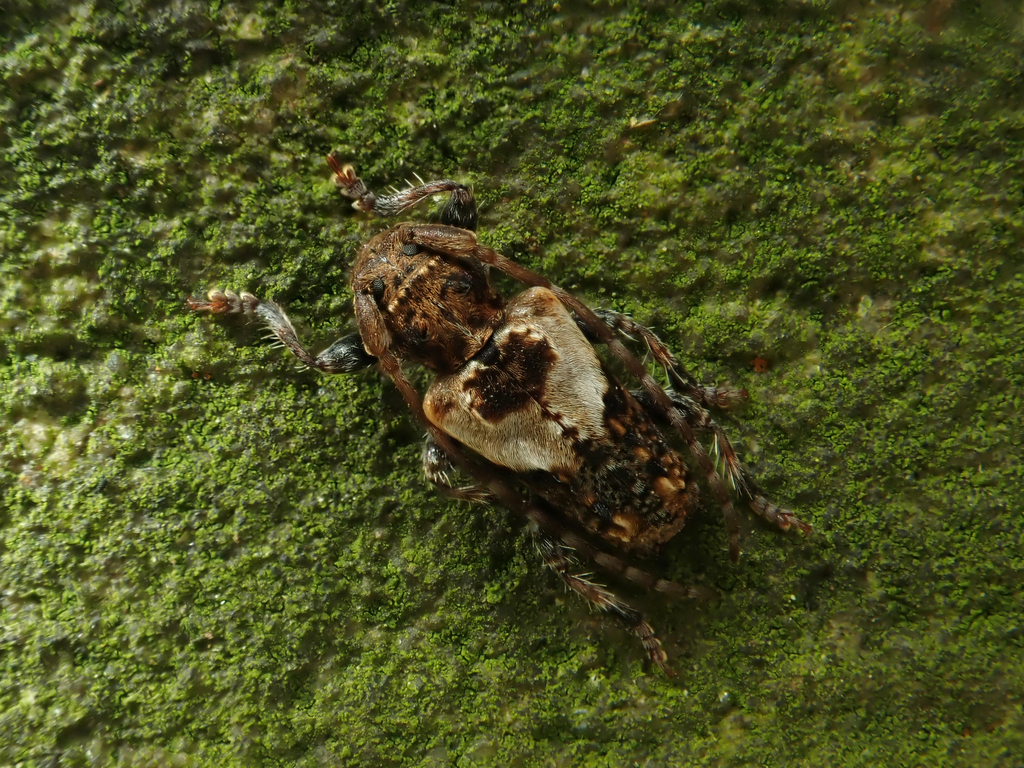
The lesser thorn-tipped longhorn beetle is a small beetle, only about 4 to 6 mm long (0.16 to 0.24 in). It lives across most of Europe and North Africa and feeds on several shrubs and vines such as dogwood, hazel, holly, ivy and spindle.
Source: Wikipedia
How to recognize it
It was first described by Carl Linnaeus in 1758 under the name Cerambyx hispidus.
Source: Wikipedia
Size
Adults measure between 4 and 6 mm in length.
Source: Wikipedia
What it eats
It feeds on the leaves and twigs of dogwood, hazel, holly, ivy and European spindle.
Source: Wikipedia
Where it comes from
Its natural range includes most of Europe and stretches into North Africa.
Source: Wikipedia
Lookalikes
Originally placed in the genus Cerambyx when Linnaeus described it.
Source: Wikipedia
Questions people ask
How big is the lesser thorn-tipped longhorn beetle?
It is only about 4 to 6 mm long.
Source: Wikipedia
What plants does it eat?
It feeds on dogwood, hazel, holly, ivy and European spindle.
Source: Wikipedia
Who first described this beetle?
Carl Linnaeus described it in 1758 under the genus Cerambyx.
Source: Wikipedia
Same family (Cerambycidae)
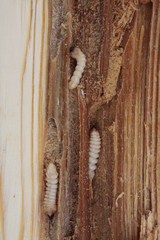 House LonghornHylotrupes bajulusCan damage your home
 Asian Longhorned BeetleAnoplophora glabripennisDamages trees, gardens or crops
 Red Milkweed BeetleTetraopes tetrophthalmus
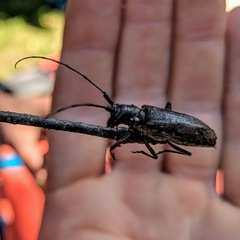 White-spotted SawyerMonochamus scutellatusCan damage your home
 Red Pine Longhorn BeetleStictoleptura rubra
 Spotted Longhorn BeetleRutpela maculataDamages trees, gardens or crops
Sources
- Wikipedia: https://en.wikipedia.org/wiki/Pogonocherus_hispidus
Look it up elsewhere: GBIF · iNaturalist · BugGuide · Wikipedia
Text written 2026-10-23 from the sources above and checked sentence by sentence against them. Data fetched 2026-10-22.