 Bug FAQ
Lesser Tawny Crescent
Batia lunaris · Order: Lepidoptera · Family: Oecophoridae
Also called: Lesser Tawny Tubic

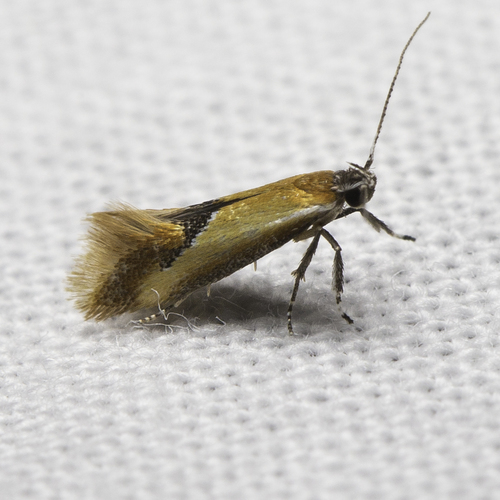
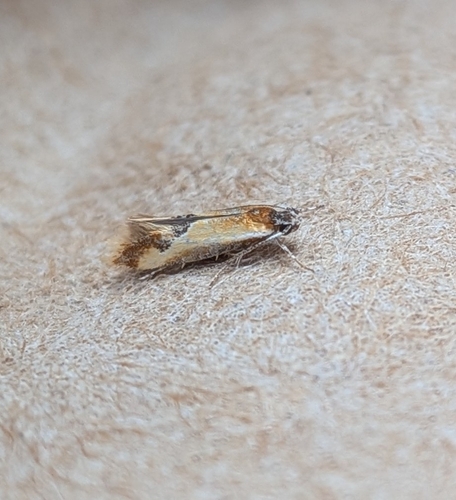
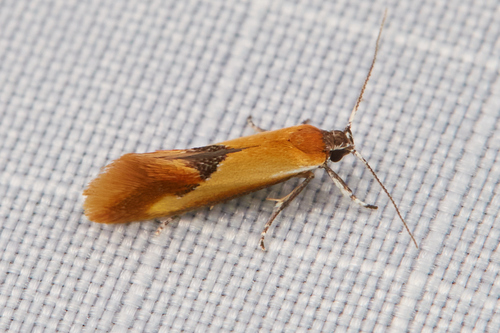
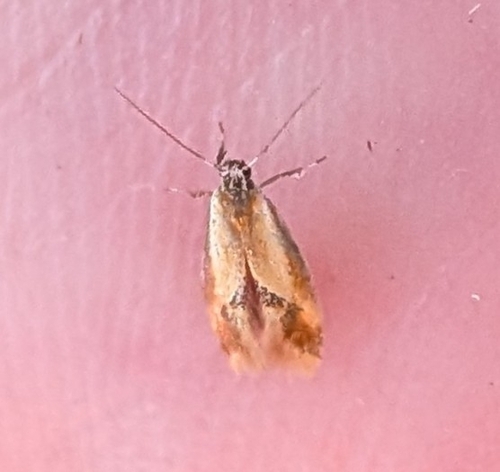
The Lesser Tawny Crescent moth has a wingspan of about 7 to 10 mm and its forewings are dark ochre with darker tips, a hairy fringe, and a distinctive dark blotch at the dorsal margin that forms a pointed patch when the wings are folded back. It is common throughout European woodlands, especially in England, and the adults are on the wing in July and August, though exact timing varies by location. Caterpillars are presumed to live under bark, feeding on rotting wood and sometimes fungi, and the species resembles its close relative B. lambdella but is only about two-thirds as large.
Source: Wikipedia
How to recognize it
The forewings are dark ochre, darker at the tips, and have a hairy fringe.
Source: Wikipedia
Size
Its wingspan ranges from 7 to 10 mm.
Source: Wikipedia
Where it lives
It occurs in many European woodlands and is not rare there. It is especially common across most of England.
Source: Wikipedia
Life cycle
Adults are active in July and August, with the exact timing depending on location.
Source: Wikipedia
When you see it
The adult flight period occurs in July and August, varying by region.
Source: Wikipedia
Where it comes from
The species is found in Europe.
Source: Wikipedia
Lookalikes
It resembles the close relative B. lambdella but is only about two-thirds the size of that species.
Source: Wikipedia
Where it is found in the US
Recorded in 4 of 51 states and DC. Most records: Washington, Oregon, California, New York.
Darker = more records. Counts are museum and citizen-science records, not population size.
Source: GBIF
Status: introduced in Canada. Source: iNaturalist
Months it is reported in the US
Source: GBIF
More photos
Questions people ask
When are adult Lesser Tawny Crescent moths active?
Adults fly in July and August, though the exact timing can vary by location.
Source: Wikipedia
What do the caterpillars of this moth eat?
Caterpillars are thought to live under bark and feed on rotting wood and sometimes fungi, similar to related species.
Source: Wikipedia
How can I tell this moth apart from similar species?
It looks like B. lambdella but is only about two-thirds as large, and its forewings have a dark ochre color with a darker tip, hairy fringe, and a distinctive dorsal blotch that forms a pointed patch when the wings are folded back.
Source: Wikipedia
Where is the Lesser Tawny Crescent moth found?
It is found throughout Europe, being common in many woodlands and especially widespread in England.
Source: Wikipedia
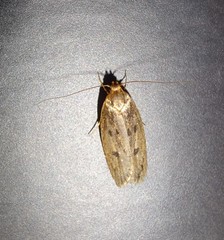
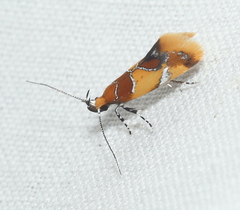
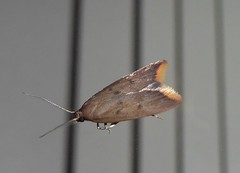
Same family (Oecophoridae)



Sources
- Wikipedia: https://en.wikipedia.org/wiki/Batia_lunaris
Look it up elsewhere: GBIF · iNaturalist · BugGuide · Wikipedia
Text written 2026-10-26 from the sources above and checked sentence by sentence against them. Data fetched 2026-10-26.