 Bug FAQ
Lesser Eucalyptus Longhorn Beetle
Phoracantha recurva · Order: Coleoptera · Family: Cerambycidae
Also called: Eucalyptus Longhorned Borer
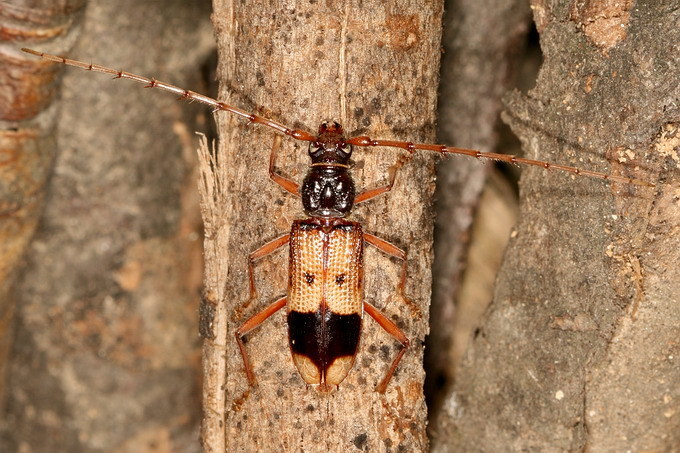
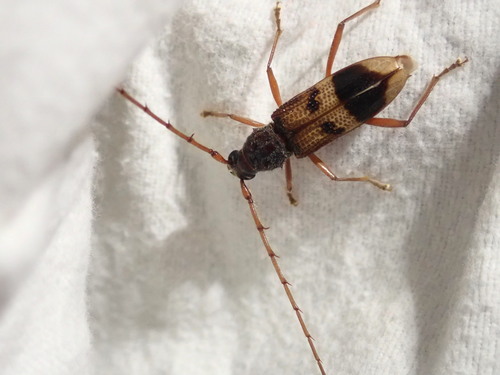
The Lesser Eucalyptus Longhorn Beetle is a medium-sized beetle with a complex cream and brown pattern and a mostly pale base on its wing covers. It is smaller than the similar P. semipunctata and has fewer dark spots.
Source: Wikipedia
How to recognize it
It shows a mix of cream and brown markings, with the base of the wing covers being largely pale and only a few separate dark spots.
Source: Wikipedia
Size
It is smaller than the related P. semipunctata.
Source: Wikipedia
Where it comes from
It originates from Australia but is now found in many countries, including the United States.
Source: Wikipedia
Lookalikes
It resembles P. semipunctata but can be told apart by its smaller size and fewer dark markings.
Source: Wikipedia
Where it is found in the US
Recorded in 3 of 51 states and DC. Most records: California, Arizona, Hawaii.
Darker = more records. Counts are museum and citizen-science records, not population size.
Source: GBIF
Status: introduced in North America. Source: iNaturalist
Months it is reported in the US
Source: GBIF
More photos
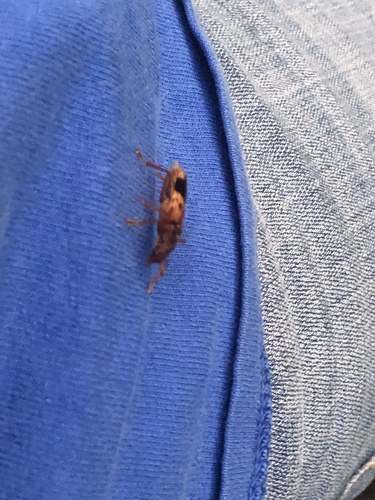
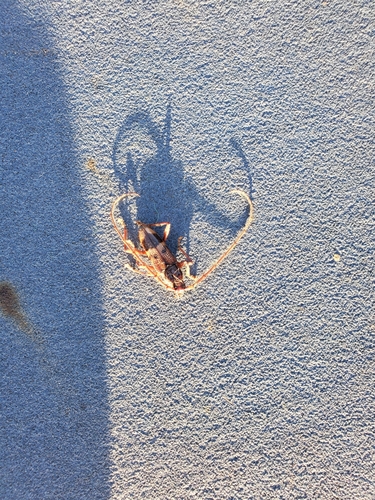
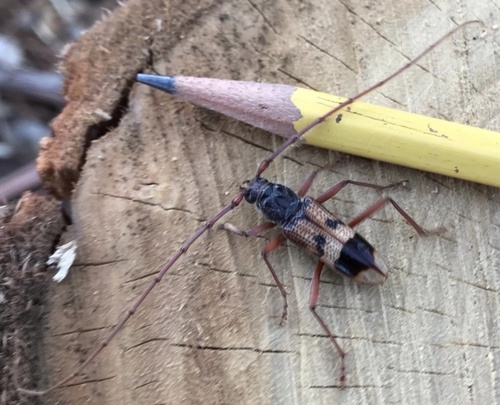
Same family (Cerambycidae)
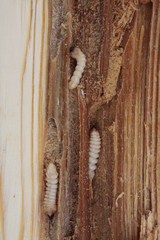 House LonghornHylotrupes bajulusCan damage your home
 Asian Longhorned BeetleAnoplophora glabripennisDamages trees, gardens or crops
 Red Milkweed BeetleTetraopes tetrophthalmus
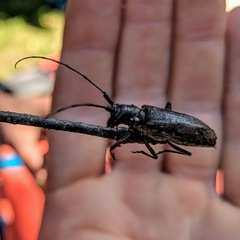 White-spotted SawyerMonochamus scutellatusCan damage your home
 Red Pine Longhorn BeetleStictoleptura rubra
 Spotted Longhorn BeetleRutpela maculataDamages trees, gardens or crops
Sources
- Wikipedia: https://en.wikipedia.org/wiki/Phoracantha_recurva
Look it up elsewhere: GBIF · iNaturalist · BugGuide · Wikipedia
Text written 2026-10-23 from the sources above and checked sentence by sentence against them. Data fetched 2026-10-22.